
Modern hospitals run on data. Every patient visit, every diagnosis, every prescription and every lab result becomes a record that has to be coded, stored, protected and retrieved correctly. The people who keep that machinery running quietly in the background are health information technicians, and the two-year associate degree in health information systems is the qualification that trains them. If you are looking at this field in Istanbul, here is the honest starting point: in our catalogue, exactly one university offers this associate program in the city. That university is Uskudar University, where the program is called Health Information System Techniques, it is taught in Turkish, and the tuition is $2,800 per year. You can confirm the listing yourself on our universities explorer.
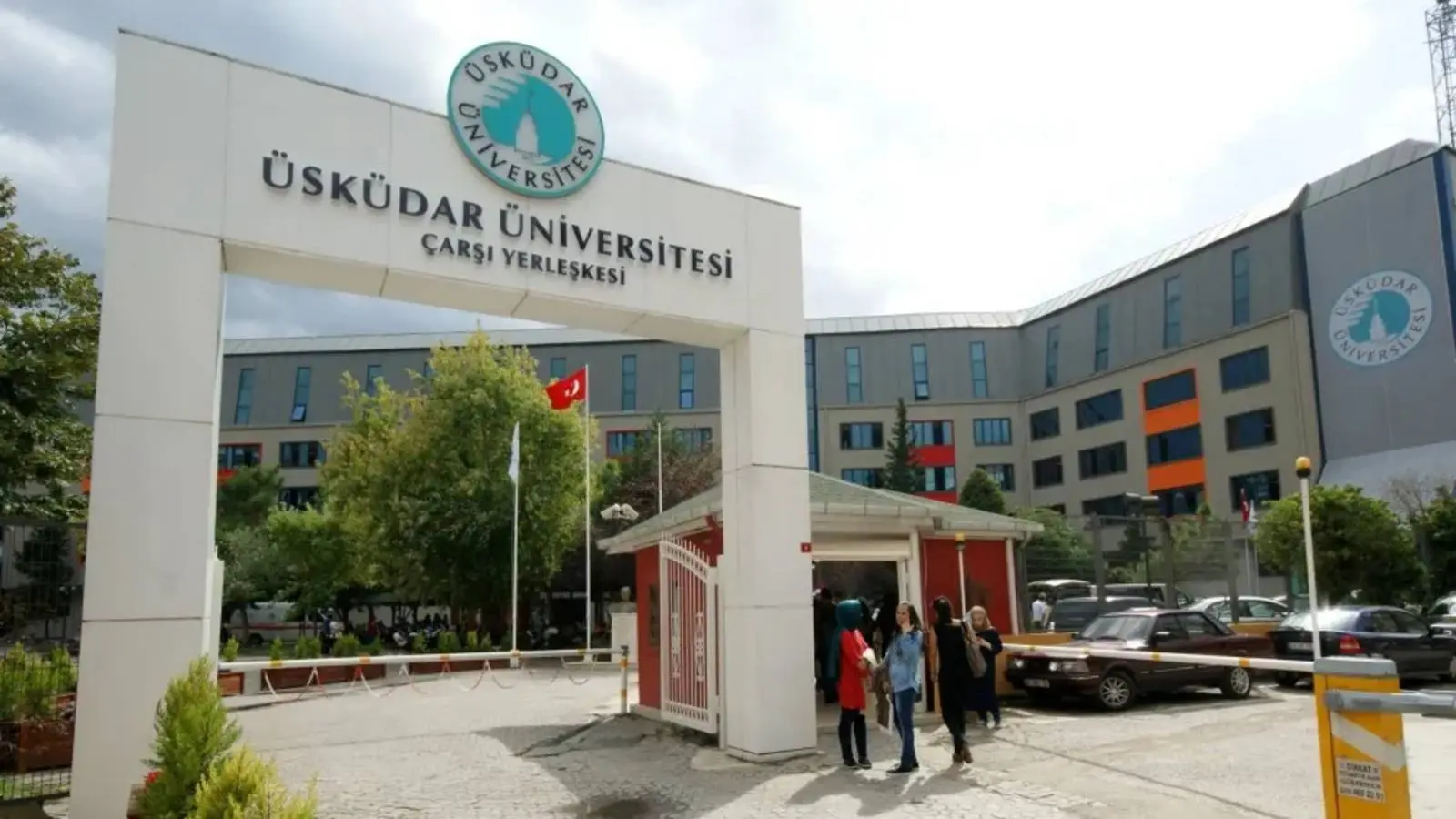
This guide is deliberately candid. A two-year vocational degree with a single provider in our data is a narrow market, and we are not going to pretend otherwise by inventing options that do not exist. Instead, this article goes deep on what actually matters: what the degree is, how Türkiye’s vocational önlisans system works, what you study week to week, the language reality, the real cost of living, the DGS exam that lets you continue to a bachelor’s degree, and the careers that follow. By the end you will know whether this practical, entry-level qualification fits your plans, or whether one of the related programs we link at the end is a better match.
Who This Program Is For
This associate degree suits a specific kind of person, and being honest about that up front saves everyone time. It is for people who are interested in healthcare but are drawn to the administrative, technical and data side rather than the clinical, hands-on patient side. If the idea of organising medical records, working with hospital software, coding diagnoses into standard systems and protecting sensitive patient data sounds satisfying, this is your field. If you want to treat patients, draw blood, run a ward or work at a bedside, this is not the right degree and you should look at nursing or another clinical program instead.
It is a strong fit for school leavers who want a fast, affordable route into healthcare employment without committing to four years of study. It also suits career changers who already work in administration, reception or office roles and want a recognised qualification that opens doors in hospitals and clinics. It works for detail-oriented people who are comfortable with computers, spreadsheets and structured information, and who do not mind the quiet, methodical nature of records work. Finally, it is a sensible first step for students who plan to use the DGS vertical-transfer exam later to reach a bachelor’s degree in health management or management information systems, using the associate degree as an affordable on-ramp rather than a final destination.
What Is an Associate Degree in Health Information Systems?
An associate degree in health information systems is a two-year vocational qualification that trains technicians to manage the flow of health data inside hospitals, clinics and related organisations. It sits at the intersection of three worlds: healthcare, information technology and administration. The graduate is not a doctor or a nurse, and not a software engineer either. The graduate is the person who knows both the medical vocabulary and the digital systems well enough to make sure data is recorded accurately, coded correctly and kept secure.
In practice the work covers several core areas. Medical coding is central: translating diagnoses, procedures and treatments into standardised codes that hospitals, insurers and health authorities all understand. Hospital information system operation is another pillar, since modern Turkish hospitals run on integrated software known as HBYS that handles admissions, appointments, billing and clinical records. Electronic health records, medical documentation, basic health statistics and data privacy round out the picture. It is an entry-level qualification by design, meant to get a competent technician into a hospital records or data unit quickly, not to produce a clinician or a researcher.
One clarification worth making early, because it confuses many applicants. Uskudar also offers a related Health Informatics master’s degree, priced at $3,900 to $4,300 per year, which is a much later and more advanced academic step. That master’s is not what this article is about. This article is about the two-year associate degree, the practical vocational entry point. The master’s is simply worth knowing about as a distant horizon if you eventually fall in love with the field and want to go all the way to graduate level.
“Uskudar's Health Informatics degree at $3,900 to $4,300 per year is this program.”
That is a related master's — a much later, more advanced academic step. This article is about the two-year associate degree, at $2,800 per year.
Türkiye’s Vocational Education System: The Associate Degree Explained
To understand this program properly you need to understand how Türkiye structures vocational higher education, because the associate degree is a specific, well-defined tier with its own rules and its own progression path.
In the Turkish system, the two-year associate degree is called an önlisans. It is delivered by vocational schools, often named Meslek Yüksekokulu, which are typically attached to universities. The önlisans is positioned below the four-year bachelor’s degree, which is called a lisans. The defining feature of the önlisans is that it is applied and occupation-focused. Where a bachelor’s degree spends a lot of time on theory, research methods and broad academic foundations, the associate degree concentrates on the practical skills an employer needs from day one. Programs are shorter, more hands-on, and built around real workplace tasks. The same two-year format is used in fields far beyond health — our guide to tour guide training in Istanbul shows how it works in tourism, for example.
The önlisans is a fully recognised national qualification. It is governed by YÖK, the Council of Higher Education, which is the same body that oversees all Turkish universities. That recognition matters: it means the degree is a genuine higher-education credential, not a private certificate, and it carries weight with Turkish employers and public institutions.
The most important structural feature for ambitious students is the DGS, which stands for Dikey Geçiş Sınavı, the vertical transfer exam. The DGS exists precisely so that an associate degree does not have to be a dead end. After finishing the two-year önlisans, a graduate can sit this national exam and, if they score well, transfer into the third year of a related four-year bachelor’s program. For a health information systems graduate the natural DGS targets are programs such as Health Management and Management Information Systems. This route turns the cheap, fast associate degree into a stepping stone toward a full bachelor’s qualification, and it is one of the smartest reasons to consider the önlisans path in the first place.
Internships are another standard pillar of Turkish vocational education. Most önlisans programs include a mandatory work placement, usually in the summer between the two academic years, so that students graduate with real workplace experience and not just classroom knowledge. For a health information student that placement typically happens in a hospital records department or a health-data unit, where the abstract lessons about coding and HBYS suddenly become concrete daily tasks.
Why Study It in Istanbul
Istanbul is the natural place to study a health-data qualification, and the reasons are mostly about scale. The city is by far the largest healthcare market in Türkiye, home to a dense network of public hospitals, private hospital chains, university medical centres, specialist clinics and diagnostic laboratories. Every one of those institutions generates enormous volumes of patient data, and every one of them needs people who can manage it. For a graduate, that concentration means the highest density of relevant internships and entry-level jobs anywhere in the country.
Istanbul is also the headquarters city for the private hospital groups and the health-technology and insurance companies that increasingly drive demand for skilled health-data staff. Studying in the city puts you physically close to those employers, which matters enormously for an internship placement and for the informal networking that turns a placement into a first job. Beyond the career logic, Istanbul offers the experience of living in one of the world’s great cities, with a transport network, a student culture and an international community that smaller Turkish cities cannot match. The trade-off, which we cover honestly below, is that living costs in Istanbul are higher than in the Anatolian cities, so the affordability of the tuition has to be weighed against the cost of the city itself.
Is the Associate Degree Worth It?
This deserves a straight answer rather than a sales pitch. For the right person, yes, the associate degree is worth it, and the value comes from three things working together: low cost, short duration and a clear path forward.
The financial case is strong. At $2,800 per year, two years of study costs roughly $5,600 in tuition, a fraction of what a four-year bachelor’s degree costs, and the graduate enters the workforce two years sooner, earning rather than paying. The opportunity cost is therefore low. The progression case is equally important: because the DGS exam exists, the associate degree is not a ceiling. A motivated graduate can work for a year or two, then transfer into a bachelor’s program, sometimes while continuing to earn. That optionality is what makes the önlisans genuinely worthwhile rather than a compromise.
The honest caveat is about expectations. This is an entry-level technician qualification. It will not, on its own, make you a hospital manager or a senior IT specialist, and starting salaries for associate-level roles are modest. Its worth depends on you treating it as what it is: an affordable, fast, recognised foot in the door, with a built-in upgrade path if you want one.
How Long Is the Program and How Is It Structured?
The program runs for two academic years, divided into four semesters. The Turkish academic calendar opens in late September or early October and the year ends in late spring, with a long summer break in between. That summer break, especially the one between the first and second years, is when the mandatory internship usually takes place.
Structurally, the first year builds foundations. Students take introductory courses in health systems, medical terminology, basic computing, office software and the fundamentals of how a hospital is organised. The second year moves into the specialist core: medical coding, hospital information systems, electronic health records, health statistics and data privacy. Throughout, the emphasis is applied. Expect computer-lab sessions, software practice and case-based exercises rather than long theoretical lectures. The combination of two years of coursework plus a real internship is what produces a graduate who can step into a records or data unit and be useful quickly.
What You Study
The curriculum is where this degree earns its keep, so it is worth walking through the main components in detail. The exact course list varies, but a health information systems associate program in Türkiye reliably covers the following ground.
Medical terminology and coding. You learn the standardised language of medicine, the vocabulary of anatomy, diseases, procedures and treatments, and then how to translate that language into the coding systems that healthcare runs on. Coding is the heart of the profession: accurate codes drive billing, statistics, insurance claims and public-health reporting, and a small coding error can have large financial and administrative consequences.
Hospital information systems (HBYS). Turkish hospitals operate on integrated software platforms known by the abbreviation HBYS. You learn how these systems handle patient admission, appointment scheduling, clinical records, laboratory orders, pharmacy and billing, and how a technician navigates and maintains the data inside them. This is one of the most directly employable skills in the whole program.
Electronic health records and medical documentation. You study how patient records are created, structured, stored and retrieved in digital form, and the rules that govern medical documentation. Good documentation is a legal and clinical necessity, and technicians are the guardians of its accuracy and completeness.
Health statistics. You learn to compile, organise and present basic health data: admission rates, occupancy figures, treatment volumes and similar measures that hospital managers and health authorities rely on. This is foundational data work, not advanced research, but it is what makes a records unit useful to decision-makers.
Data privacy and KVKW. Health data is among the most sensitive information that exists, and Türkiye protects it under its personal data protection law, known by the abbreviation KVKK. You study the legal and ethical obligations around patient confidentiality, consent and secure data handling. In a field built on private medical information, this is not optional knowledge.
Office and database software. Practical fluency with spreadsheets, word processing, presentation tools and basic database concepts underpins everything else. Much of a technician’s day involves these tools, so the program builds real working competence in them.
Internship. Finally, the mandatory work placement ties it all together. Spending weeks inside a real hospital records or data department turns the classroom topics above into concrete experience, and it is often where students make the contacts that lead to their first job.
Language of Instruction: An Honest Look
This is the single most important practical fact for an international applicant, so we will be blunt about it. The Health Information System Techniques program at Uskudar is taught in Turkish. There is no English-medium version of this associate degree in our catalogue. That has direct consequences you need to plan around.
To succeed, you will need genuine Turkish-language ability, not just survival phrases. The lectures, the textbooks, the medical terminology, the software interfaces and the internship will all be in Turkish. Medical vocabulary is demanding even in your native language, and learning it in a second language adds a real layer of difficulty. Most universities require applicants without Turkish to complete a one-year Turkish preparatory program, often called hazırlık, before starting the degree proper. That preparatory year adds time and cost, but it is also what makes the rest of the program possible, and graduating with strong professional Turkish is itself a valuable asset in the Turkish job market.
The language is the deciding factor: the program is taught in Turkish, with no English-medium version in our catalogue — applicants without Turkish usually complete the one-year preparatory year (hazırlık) first.
The honest bottom line: if you are willing to commit to learning Turkish properly, this Turkish-taught program is workable and even advantageous, because every job this degree leads to in Türkiye operates in Turkish anyway. If you are not prepared to study in Turkish, this specific associate degree is not realistic for you, and an English-taught program in a related field would suit you better.
Universities Offering It in Istanbul: Tuition Compared
Here is the full picture from our catalogue, presented plainly.
| University | City | Language | Level | Tuition/yr |
|---|---|---|---|---|
| Uskudar University | Istanbul | Turkish | Associate | $2,800 |
We need to be candid: only one university in our catalogue offers this associate degree in health information systems in Istanbul. That is not a typo or an omission, it is simply the reality of a narrow vocational niche. The benefit of a single clear option is that the decision is simple; the limitation is that you have no price competition or alternative campuses to compare within the city for this exact program. It is worth repeating that Uskudar also offers a related Health Informatics master’s degree at $3,900 to $4,300 per year as a much later academic step, useful to know if you eventually want to pursue the field to graduate level. If you want to see how this listing sits among other programs, browse the full programs explorer.
Tuition Fees in Istanbul (2026)
The tuition for the associate degree in health information systems at Uskudar University is $2,800 per year. Over the two-year program that totals roughly $5,600 in tuition, which is genuinely affordable for a recognised higher-education qualification in a major city. By the standards of private universities in Istanbul this is at the lower end, and it reflects the practical, vocational nature of an önlisans rather than a longer, more expensive bachelor’s degree.
A few honest notes belong here. If you arrive without sufficient Turkish and need the one-year preparatory course, that adds a year of tuition and living costs to your total, so budget for it. Always confirm the current figure directly before committing, since published tuition can change year to year and may be quoted with or without VAT. For a broader view of how Turkish university pricing and funding work, our guide to scholarships and tuition is a useful companion read.
Cost of Living for Students in Istanbul
For most students the cost of living in Istanbul matters more than the tuition, because it is the larger and the recurring expense. A realistic monthly budget for a student living modestly in Istanbul falls in the range of $400 to $700 per month, depending heavily on lifestyle and especially on accommodation.
Housing is the biggest variable. A bed in a shared student flat or a place in a dormitory sits at the lower end of the range, while a private studio in a central district pushes you toward the top and beyond. Food is manageable if you cook and shop at local markets, and Istanbul’s public transport is extensive and affordable for students with a discounted travel card. Living further from the centre lowers rent but adds commuting time, a familiar trade-off in any large city. Across a typical academic year, a careful student should plan for roughly $4,000 to $7,000 in living costs on top of tuition. Combining that with the modest two-year tuition still makes this one of the more affordable routes into a healthcare-adjacent career in a world-class city.
Scholarships and Funding
Scholarship opportunities for a two-year associate degree are more limited than for bachelor’s or postgraduate study, and it is fair to set expectations accordingly. Vocational associate programs attract fewer dedicated scholarship schemes, and the relatively low tuition means there is less of a gap for a scholarship to fill in the first place.
That said, some funding paths exist. Private universities sometimes offer partial merit discounts or early-enrolment reductions, so it is always worth asking the admissions office directly what is available for the specific intake you are applying to. The flagship government scholarship, Türkiye Bursları, is highly competitive and overwhelmingly oriented toward bachelor’s and graduate study rather than associate degrees, so do not build your plan around it. The most realistic strategy for funding this degree is to combine its already-low tuition with part-time work where your visa permits, modest living, and any partial institutional discount you can negotiate. Our scholarships and tuition guide explains the wider funding landscape in detail.
Recognition and Accreditation
The associate degree from Uskudar University is a recognised önlisans qualification within the Turkish higher-education system, which is governed by YÖK, the Council of Higher Education. This matters for two reasons. First, it confirms that the degree is a genuine, accredited higher-education credential rather than a private training certificate, so it carries real weight with employers and public institutions inside Türkiye. Second, YÖK recognition is what makes the DGS vertical-transfer route possible, since the exam is open to graduates of recognised önlisans programs.
If you plan to use the qualification outside Türkiye, the picture is more nuanced and you should check carefully. Recognition of a Turkish associate degree in another country depends on that country’s own evaluation rules, and you may need to have the credential assessed by the relevant national authority. For a career inside Türkiye, which is where this Turkish-taught, locally-focused degree is genuinely aimed, the YÖK-recognised status is exactly what you need.
The DGS Route: Continuing to a Bachelor’s Degree
The DGS deserves its own section because it is the feature that most changes the value of this degree. DGS stands for Dikey Geçiş Sınavı, the vertical transfer exam, and it is the official bridge from a two-year associate degree to a four-year bachelor’s degree in Türkiye.
Here is how it works in practice. After graduating from the önlisans, you sit the national DGS exam. Your score, combined with your associate-degree performance, determines which bachelor’s programs you can transfer into and at which universities. A successful transfer places you into the third year of the four-year program, so the two years you already spent are not wasted, you effectively complete a bachelor’s in a total that is much shorter than starting from scratch. For a health information systems graduate, the natural targets are closely related fields such as Health Management and Management Information Systems, both of which build directly on the data, administration and healthcare foundations you gained in the associate degree.
This is why we keep describing the önlisans as a stepping stone rather than a dead end. A common and smart strategy is to finish the associate degree, work for a year or two to gain experience and earn money, and then use DGS to upgrade to a bachelor’s qualification when you are ready. The associate degree gives you an early, affordable entry into the workforce, and the DGS keeps the door to a full degree open behind it.
Admission Requirements
Admission to a Turkish associate program is generally accessible, which is part of the appeal. The core requirement is a completed high-school diploma or its recognised equivalent. Associate programs typically have lower academic entry barriers than competitive bachelor’s degrees, and many private-university önlisans programs admit international students on the basis of their school results rather than a high-stakes national entrance exam.
The most significant practical requirement for this specific program is Turkish-language ability, because the degree is taught in Turkish. Applicants who cannot demonstrate sufficient Turkish are usually required to complete the one-year preparatory year first. Beyond that you will need standard documentation: your diploma and transcripts, often translated and officially certified, a copy of your passport, and any forms the university specifies. Requirements vary by institution and by year, so confirm the exact list with the admissions office before you apply. If you would like help checking your eligibility and assembling documents, you can contact our advisors.
How to Apply: Timeline
Planning the timeline backward from a late-September start makes the process much less stressful. Turkish universities generally open applications for the autumn intake in the spring and continue through the summer, but the most desirable programs and any scholarship deadlines come earlier, so beginning early is always the safer choice.
A sensible sequence looks like this. Roughly nine to twelve months before you want to start, research the program, confirm the current tuition and check the language requirement. Six to nine months out, prepare and certify your documents, because translation and official attestation can take longer than expected. Then submit your application during the official window and wait for your acceptance, which from a private university often arrives reasonably quickly. Once you hold a letter of acceptance, you can begin the student visa and residence-permit process, which has its own lead time. If you will need the Turkish preparatory year, factor it in at the front so your overall plan stays realistic. Our broader study in Türkiye guide walks through the whole journey step by step.
Student Visa and Residence Permit
International students who are not Turkish citizens normally need a student visa to study in Türkiye, followed by a residence permit once they arrive. The sequence is consistent and predictable. First you secure your letter of acceptance from the university. With that letter you apply for a student visa at the Turkish consulate or embassy in your home country, before you travel. After you arrive in Türkiye and enrol, you apply for a short-term residence permit tied to your studies, which legalises your stay for the duration of the program and is renewed as needed.
Keep a few practicalities in mind. You will generally need to show proof that you can support yourself financially, so the cost-of-living figures above are relevant to the paperwork as well as to your budget. Start the visa process as soon as you have your acceptance letter, because consular timelines vary and waiting until the last minute is the most common avoidable mistake. The university’s international office is usually experienced with these procedures and is your best on-the-ground source of guidance once you are admitted.
Careers After the Associate Degree
The whole point of this vocational degree is employment, so let us be concrete about where it leads. Graduates typically work in the records, documentation and data units of healthcare organisations, where their combined knowledge of medical terminology and information systems makes them directly useful.
Common roles include working in a hospital medical-records department, where you organise, code and maintain patient files and ensure documentation is accurate and complete. A closely related path is the health-data or medical-coding technician role, focused specifically on translating clinical activity into standardised codes for billing, statistics and reporting. Clinics and diagnostic centres need the same skills on a smaller scale. Beyond direct healthcare, insurance companies employ people who can read and verify medical coding for claims processing, and public-health offices and health authorities need staff who can manage and report health data. As Turkish healthcare continues to digitise, demand for people who understand both the medical and the data sides of this work is steady and growing.
Be realistic about the starting point. These are entry-level technician positions with modest starting salaries, and the associate degree opens the door rather than placing you in management. The encouraging part is the trajectory: with a few years of experience, and especially with a bachelor’s degree gained through the DGS route, you can progress into supervisory roles, health-information management or specialist data positions that pay considerably more.
Work Environment and Internships
The day-to-day work environment for a health information technician is office-based and computer-centred, usually inside or attached to a hospital or clinic. It is mostly desk work: navigating the HBYS software, processing and coding records, compiling statistics, checking documentation for accuracy and handling data carefully under privacy rules. It is methodical and detail-focused rather than physical, and although it sits inside a healthcare setting, it generally does not involve direct patient care.
Internships are where students first experience this environment, and they are a built-in part of the program. The typical placement happens in a hospital records or data department, often during the summer between the two years of study. There you apply the coding, documentation and software skills you learned in class to real records under supervision, which both cements your learning and shows you the realities of the job. Just as importantly, the internship is a networking opportunity: many students secure their first permanent role through the department where they interned, because an employer who has already seen you work is far more likely to hire you. Treat the internship seriously and it can become the single most valuable part of the whole degree.
Common Mistakes Applicants Make
A few avoidable mistakes come up again and again, and knowing them in advance saves real disappointment.
The first and biggest is underestimating the language requirement. Some applicants assume they can manage a Turkish-taught program with minimal Turkish, then struggle badly with medical terminology delivered in a second language. Take the language seriously and budget for the preparatory year if you need it. The second mistake is confusing this degree with a clinical qualification. This is a data and administration degree, not nursing or another patient-care field; applicants who wanted hands-on clinical work end up disappointed. Read the curriculum and be sure it is what you want.
The third mistake is ignoring the DGS route until it is too late. Students who think only about the next two years miss the chance to plan deliberately for a bachelor’s transfer, which is one of the degree’s best features. The fourth is leaving the visa and document process to the last minute, where certified translations and consular timelines cause needless stress. The fifth is budgeting only for tuition and forgetting that living costs in Istanbul are the larger expense. Plan for the full picture, language included, and the path is straightforward.
DON’T
- Assume you can manage the Turkish-taught program with minimal Turkish
- Confuse this data-and-administration degree with a clinical qualification
- Ignore the DGS transfer route until it is too late to plan for it
- Budget only for tuition and forget Istanbul living costs
DO
- Take the language seriously and budget for the preparatory year if needed
- Read the curriculum and be sure it is what you want
- Plan deliberately for a bachelor's transfer via DGS
- Start the visa and document process early
Related Programs You Might Consider
If after reading this you suspect a different program suits you better, that is a useful conclusion, and there are strong neighbouring options to weigh. If you are drawn to the information-systems and data side and want a full bachelor’s degree rather than a vocational associate, our guide to management information systems in Türkiye covers a field that this associate degree can actually feed into through DGS. If the technology itself interests you more than the healthcare context, the software engineering in Türkiye guide explores a more technical, higher-ceiling path. And if reading this has clarified that you actually want hands-on patient care after all, our nursing in Türkiye guide covers the clinical route that this degree deliberately is not. Comparing these honestly is the best way to be sure the health information associate degree is genuinely the right fit.
Frequently Asked Questions
Is the associate degree in health information systems a clinical or nursing qualification?
No. It is a data and administration qualification. You learn medical coding, hospital information systems, records management and data privacy, not patient care. If you want clinical work, nursing is the program to look at instead.
Which university in Istanbul offers this associate degree?
In our catalogue, only Uskudar University offers it in Istanbul, under the name Health Information System Techniques. It is a two-year önlisans taught in Turkish, with tuition of $2,800 per year.
Is the program taught in English?
No. It is taught in Turkish, and there is no English-medium version in our catalogue. You will need genuine Turkish-language ability, and most applicants without Turkish must complete a one-year preparatory year first.
How much does it cost in total?
Tuition is $2,800 per year, so roughly $5,600 over the two years. On top of that, budget $400 to $700 per month for living costs in Istanbul, plus the cost of a preparatory year if you need one.
Can I continue to a bachelor’s degree afterward?
Yes. The DGS vertical-transfer exam lets associate graduates transfer into the third year of a related four-year bachelor’s program. Natural targets include Health Management and Management Information Systems.
Is the degree officially recognised?
Yes. It is a YÖK-recognised önlisans within the Turkish higher-education system, which also makes you eligible for the DGS exam. For use outside Türkiye, check that country’s own recognition rules.
What jobs can I get with it?
Typical roles are in hospital medical-records units, as a health-data or medical-coding technician, and in clinics, insurance firms and public-health offices. These are entry-level positions, with progression possible through experience or a later bachelor’s degree.
Are there scholarships for this associate degree?
Funding for associate programs is more limited than for bachelor’s or postgraduate study. Ask the university about partial discounts, and treat the major government scholarships as unlikely for an önlisans. The low tuition itself is the main affordability advantage.
Is it worth doing?
For someone who wants an affordable, fast, recognised entry into healthcare data work, and who is willing to study in Turkish, yes. Its value rises further if you use it as a stepping stone to a bachelor’s degree through DGS rather than as a final qualification.
Ready to take the next step? Book a free consultation with our advisors to check your eligibility, plan the language requirement and map out your application, or start exploring options now in our programs explorer.
Have a question about this article?
Our advisors will guide you for free so you can choose the best path.
Free consultationWhy students choose us
Real partnerships, honest pricing, and support that doesn't stop at admission.
Scholarships & smart discounts
We match you with merit scholarships (often 25–100%) plus sibling and early-payment discounts, so you pay the lowest fair price for your program.
Free, end-to-end guidance
As an authorized agent, our advice and application support cost you nothing. We prepare and submit everything for you — no guesswork.
57 partner universities
Direct partnerships across Türkiye and Northern Cyprus with 5,500+ programs. We find the program that fits you, not just any offer.
Transparent, honest fees
Every tuition figure comes straight from our live catalog and is shown upfront. No hidden costs, no surprises before you commit.
No entrance exam needed
Most private universities admit you on your academic record — many fully in English — so you can apply without YÖS or SAT.
With you to visa & arrival
From choosing a program to your student visa, residence permit and settling in, we stay by your side at every step.