Prepare for a Local Administrations Master's in Istanbul (2026)

Every city you have ever lived in works because thousands of decisions are made about it every day. Who collects the rubbish, how a budget is split between parks and roads, why one neighbourhood gets a new metro line and another waits, how a municipality plans for a growing population or a shrinking one: all of this is the work of local administration. It is one of the least glamorous and most consequential fields in public life, because it is where government actually touches people. If you are drawn to how cities and regions are run, and you want the skills to work inside or alongside municipal government, a master’s in local administrations is built precisely for that.
In our catalogue, a master’s in local administrations in Istanbul is offered by three universities, with annual tuition ranging from roughly $3,000 to $9,000 depending on the institution and the track you choose. These are Turkish-taught programs, which is a detail we will return to repeatedly, because it shapes who the program genuinely suits and how you should prepare for it. You can explore the full, filterable picture on our programs explorer.
This guide walks through everything a prospective applicant needs to weigh: who the program is for, what you actually study, the honest truth about the language of instruction, the real costs of studying and living in Istanbul, how recognition and accreditation work, the admission and visa steps, and where the qualification can take you afterwards. The aim is a realistic picture rather than a sales pitch, so that you can decide for yourself whether this path fits your goals.
Who This Program Is For
A master’s in local administrations, sometimes labelled local governments, local government and decentralisation, or urban and local administration, is a postgraduate program. That means it builds on an existing bachelor’s degree rather than starting from zero. The typical entrant holds an undergraduate qualification in a relevant field: political science, public administration, law, economics, sociology, urban and regional planning, international relations, business, or another social science. What these backgrounds share is a grounding in how institutions, societies, and economies work, which the master’s then focuses specifically on the local and municipal level.
This program suits several kinds of people. It suits public-sector professionals already working in municipalities, provincial bodies, or government agencies who want to formalise and deepen their expertise to move into more senior roles. It suits recent graduates in the social sciences who are drawn to public service and want a specialised qualification before entering the job market. It suits people working in non-governmental organisations, consultancies, or international bodies whose work intersects with local government, urban policy, or regional development. And it suits anyone planning an academic path, because a master’s is the standard step toward a PhD and a future in research or teaching on governance and public administration.
It is just as important to be clear about who the program is not for. A master’s in local administrations is an academic and professional qualification in governance, policy, and public management. It is not, by itself, a guaranteed appointment to a public post, because civil-service and municipal hiring in most countries runs through its own examinations, competitions, and legal requirements. The degree strengthens your candidacy and your competence considerably, but it does not bypass the recruitment systems that govern public employment. Going in with that understood will save you disappointment later.
“A master's in local administrations is a guaranteed appointment to a public post.”
The degree strengthens your candidacy and competence considerably, but civil-service and municipal hiring runs through its own examinations, competitions and legal requirements.
Why Study Local Administrations in Istanbul
Istanbul is an unusually fitting place to study this subject, because the city is itself one of the largest and most complex local-government challenges on earth. A metropolis of more than fifteen million people, spread across two continents, with a municipal structure that has to deliver transport, water, housing, waste, planning, and social services at enormous scale, Istanbul is a living laboratory of local administration. Studying the field here means studying it in a place where its problems and solutions are visible all around you, not just in textbooks.
The cost picture is another strong draw. Compared with what you would pay for an equivalent postgraduate program in public administration or governance in Western Europe, North America, or much of the English-speaking world, Istanbul is markedly more affordable, with annual fees in our catalogue starting around $3,000. When you add a cost of living that is lower than most Western capitals, the total cost of a two-year master’s becomes realistic for many students who would be priced out elsewhere.
There is also the wider experience of living in Istanbul. The city bridges Europe and Asia, carries layers of imperial and republican history, and offers a cultural depth that turns a degree into something larger than a line on a CV. For students from the region, particularly Iran, the Middle East, Central Asia, and the Caucasus, Istanbul combines geographic and cultural proximity with genuine international exposure. You remain close to home while stepping into a large, diverse, and internationally connected academic environment.
Finally, Türkiye has its own rich and distinctive tradition of local government, shaped by Ottoman administrative history, a long republican experience, and decades of reform and decentralisation debate. For a student of the field, that tradition is itself a subject worth studying, and Istanbul, as the country’s largest municipality, is the natural place to study it. The questions that occupy Turkish local government, rapid urbanisation, migration, metropolitan governance, service delivery at scale, are the same questions facing fast-growing cities across the developing world, which gives the learning here a relevance that travels.
Is a Master’s in Local Administrations Worth It?
Whether a degree is “worth it” depends on your goals, your starting point, and the alternatives in front of you. For local administrations specifically, the honest answer is that it is worth it for people whose career genuinely points toward public service, governance, urban policy, or research, and less so for those hoping a master’s will, on its own, hand them a secure government post it cannot directly grant.
On the positive side, the program builds a genuinely useful body of knowledge and skill. You come away understanding how municipalities are financed and structured, how public policy is made and evaluated, how urban services are planned and delivered, and how law, politics, and administration interact at the local level. These are valuable competencies for anyone working in or with the public sector, and they transfer across municipalities, agencies, NGOs, and consultancies. For anyone aiming at a PhD and an academic career in public administration or political science, the master’s is a necessary step rather than an optional one. The relatively modest tuition in Istanbul also improves the return on the investment.
On the realistic side, weigh several things honestly. The program is Turkish-taught, so unless you already have strong Turkish or are prepared to invest in learning it, there is a real language hurdle, and this field is especially language-dependent because so much of it concerns Turkish law, institutions, and policy. The qualification strengthens but does not guarantee public employment, which has its own recruitment routes. And as with any postgraduate degree, the value comes from what you do with it: the internships and placements you pursue, the research you produce, and the network you build. Approached as a serious investment with a clear plan, it is worth it. Approached as a vague hope, it disappoints. The clearer your goal, the better the return.
How Long Is the Program and How Is It Structured?
A master’s in local administrations in Türkiye typically takes about two years of full-time study, though the exact length depends on the track you choose and how quickly you complete your thesis or final requirements. There are two common formats, and the universities in our catalogue offer them in different combinations.
The thesis track is the more research-intensive option. It usually combines around a year of taught coursework with a substantial research project, written up and defended as a master’s thesis. This is the format to choose if you intend to continue to a PhD, because it trains you in research design, policy analysis, data handling, and academic writing. It is also generally preferred by employers in research-oriented or analytical roles. The thesis track tends to take the full two years or a little longer, depending on how the research progresses.
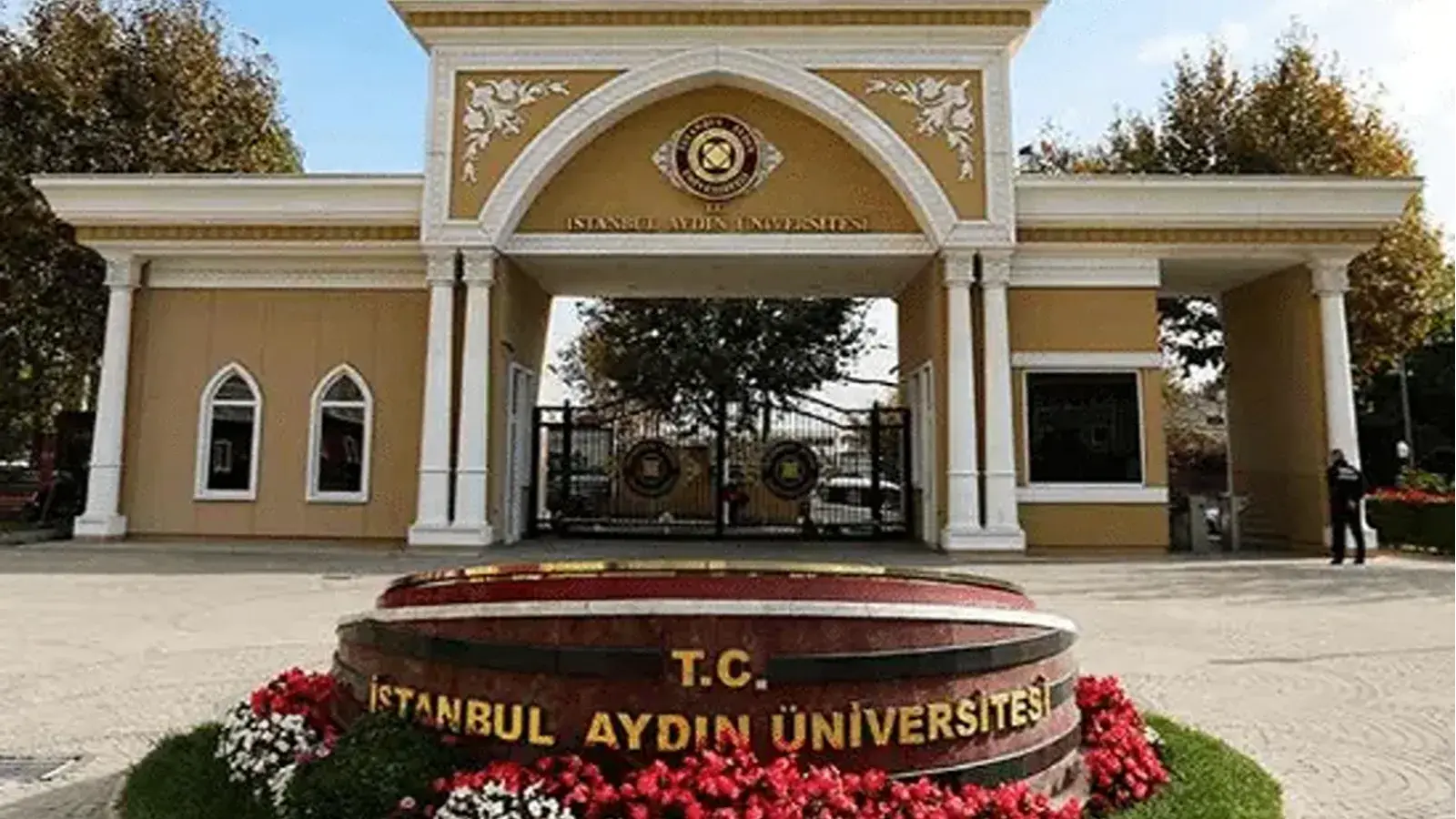
The non-thesis track is more coursework-focused and is often somewhat shorter. Instead of a full research thesis, students typically complete a larger set of taught modules and a smaller final or term project. This format suits people who want the specialised knowledge and the qualification primarily for professional or applied reasons rather than to launch a research career. It can be a faster, more direct route to the credential, though if you later decide you want a PhD, the thesis track is the stronger preparation. One university in our catalogue, Istanbul Aydin University, also offers the field at associate level, which is a different and shorter qualification aimed at a more vocational entry point rather than the postgraduate master’s most readers here will want.
Across both tracks, the taught component covers the core of the discipline, while the research or project component lets you apply it to a question you care about, whether that is metropolitan transport, municipal finance, participatory budgeting, or service delivery in a growing district. Choosing the track that matches your goal is one of the most important early decisions you will make, so think it through rather than defaulting to whichever is offered first.
What You Study
The exact curriculum varies by university, but a master’s in local administrations covers a recognisable core built around how local government works and how it can work better. The subjects below appear, in some form, across most programs.
Local government structures and systems introduce the institutions themselves: municipalities, metropolitan municipalities, provincial administrations, and the legal and constitutional framework that defines their powers and duties. You learn how authority is distributed between central and local government and how that distribution shapes what cities can actually do.
Public administration and management covers how public organisations are run: how they are structured, how decisions are made, how performance is measured, and how modern management ideas apply, and sometimes fail to apply, in a public-sector setting.
Public finance and municipal budgeting is one of the most practically important areas. You study how local governments raise revenue, allocate budgets, manage debt, and account for spending, because in the end most administrative choices are also financial choices.
Urban policy and planning connects governance to the physical city: land use, housing, transport, infrastructure, and the planning processes that shape how a city grows. This is where local administration meets the lived experience of residents most directly.
Local government law grounds everything in the legal framework. Because so much of what a municipality can and cannot do is set by law, this is a central subject, and it is also one of the reasons the Turkish-taught nature of these programs matters so much, since the law in question is Turkish.
Public policy analysis teaches you how policies are designed, implemented, and evaluated, and how to judge whether an intervention actually achieves what it intended. This analytical skill is valuable across the entire public and non-profit sector.
Decentralisation, governance, and citizen participation examine contemporary debates: how power is being devolved or recentralised, how citizens can be involved in local decisions, and how transparency and accountability can be strengthened.
Research methods and the thesis round out the program for thesis-track students. You learn to design research, gather and analyse data, and write to academic standards, culminating in your own original project. If your interests lean toward the broader political and institutional context, our guide to studying political science and public administration in Turkey is a useful companion read.
Language of Instruction: An Honest Look
This is the single most important practical point in the whole guide, so it deserves a clear and honest treatment. The local administrations master’s programs in our catalogue are all Turkish-taught. That is not a minor detail you can sort out later. It shapes who the program realistically suits and how you must prepare.
This field is more language-dependent than most. Local administration is, at its heart, the study of a particular country’s institutions, laws, finances, and policies. The Turkish local-government system, its municipal law, its budgeting rules, its planning framework, is the substance of the program, and that substance is taught, read, discussed, and assessed in Turkish. Unlike a technical subject where formulas are universal, here the content is bound up with the language and the legal-political culture it describes. Trying to study it without strong Turkish is not realistic.
So what does this mean for you concretely? If you do not already speak Turkish well, you should plan to reach roughly a B2 to C1 level before you can study comfortably. Many universities offer a one-year Turkish preparatory program for exactly this purpose, and many international students complete it before starting their master’s proper. This adds a year and some cost, but it is an investment that makes the rest of the degree workable rather than a constant struggle. The upside is that strong Turkish is also precisely what makes the qualification useful afterwards, since the careers it leads toward are largely conducted in Turkish.
Language check: do not assume you can get by in English — these programs are Turkish-medium, so plan to reach roughly B2–C1 or complete a one-year Turkish preparatory program first.
The honest takeaway is this: do not assume you can get by in English. While Türkiye has many English-taught programs in other fields, the local administrations options in our catalogue are Turkish-medium, and the nature of the subject makes that especially fitting. If you are committed to this specific program, commit also to the language. If a language barrier is a deal-breaker, it is far better to know that now than after you arrive. If you would like help thinking it through, you can contact us and we will be straight with you about what the program demands.
Universities Offering Local Administrations in Istanbul: Tuition Compared
Here are the universities in our catalogue that offer local administrations in Istanbul, with their levels and tuition. All are Turkish-taught.
| University | City | Language | Levels | Tuition/yr |
|---|---|---|---|---|
| Istanbul Aydin University | Istanbul | Turkish | Associate, Master | $3,000 to $9,000 |
| Istanbul Nisantasi University | Istanbul | Turkish | Master | $3,850 |
| Istanbul Okan University | Istanbul | Turkish | Master | $3,500 to $4,500 (whole program) |

Three universities in our catalogue offer the field in Istanbul. Istanbul Aydin University spans the widest range, offering it at both associate and master’s level, with tuition running from around $3,000 to $9,000 depending on the level and track. Istanbul Nisantasi University offers the master’s at around $3,850 a year, and Istanbul Okan University offers it at roughly $3,500 to $4,500 for the whole program rather than per year. The practical message is that this is an affordable field across the board, with all three institutions clustered at the lower end of postgraduate tuition. The full, filterable list, where you can compare these and check the latest details, is in the programs explorer.
Tuition Fees in Istanbul (2026)
For the 2026 intake, tuition for a master’s in local administrations in Istanbul in our catalogue ranges from about $3,000 to $9,000 per year, with most options sitting toward the lower part of that band. Istanbul Okan University, at roughly $3,500 to $4,500 for the whole program, and Istanbul Nisantasi University, at around $3,850, are both modestly priced, while Istanbul Aydin University spans a wider range depending on whether you take the associate or master’s level and which track you choose.
A few things are worth understanding about these numbers. First, they are annual figures, so a two-year master’s costs roughly twice the yearly amount, before living expenses. Second, tuition at private universities, which these are, can change from year to year, and the exact fee sometimes depends on the specific track and on any institutional discounts. Always confirm the current figure directly before committing. Third, because the options here are clustered fairly closely on price, it is worth choosing on the basis of the program’s content, structure, and fit rather than on a few hundred dollars of difference.
For a fuller picture of how fees and funding work across Turkish universities, including the kinds of discounts and payment arrangements that are sometimes available, see our dedicated guide to scholarships and tuition. It is worth reading before you make a final decision, because the headline tuition is not always the whole story.
Cost of Living for Students in Istanbul
Tuition is only one part of your budget. As a rough guide, a student in Istanbul can expect to spend somewhere between $400 and $700 a month on living costs, depending heavily on lifestyle and, above all, on accommodation. Over a year, that works out to roughly $4,800 to $8,400, which for many students is comparable to or larger than the tuition itself, so it deserves careful planning.
Accommodation is the biggest single variable. University dormitories and shared flats are the most economical options, while a private apartment in a central, sought-after neighbourhood costs considerably more. Where you live also affects your transport costs and daily convenience, so it is worth thinking about the trade-off between rent and commute. Food is reasonable if you cook and shop at local markets, and more expensive if you eat out frequently. Public transport in Istanbul is extensive and student discounts help keep costs down, but the city is large, so commuting time and cost are real considerations.
Other regular expenses include health insurance, which is required for your residence permit, mobile and internet, books, and personal spending. None of these is individually large, but together they add up, so build them into your plan. The overall message is that Istanbul is affordable by the standards of major international cities, but “affordable” still means budgeting carefully and being realistic about how your choices, especially housing, drive your monthly total.
Scholarships and Funding
Funding for postgraduate study in Türkiye comes from several directions, and it is worth understanding the landscape before you assume you will pay full price. The most prominent government scheme is Türkiye Bürsları, the national scholarship program, which is competitive and covers tuition along with a stipend and other benefits for successful applicants. It is well worth investigating if your profile is strong, though you should not count on it, given how competitive it is.
Beyond the national scheme, individual private universities frequently offer their own tuition discounts and merit-based reductions. These vary by institution and year, and they are often conditional on your academic record, so it is always worth asking the university directly what is available for your specific program. Sometimes the effective price you pay is lower than the published figure once a discount is applied.
For a thorough overview of the options, eligibility, and how to approach funding strategically, read our guide to scholarships and tuition. And if you would like personalised help identifying which funding routes realistically fit your background, you can book a free consultation and we will talk it through honestly.
Recognition and Accreditation: An Honest Look
Recognition is a question every serious applicant should ask, and it deserves an honest answer. The universities in our catalogue operate within the Turkish higher education system and are recognised by YÖK, the Council of Higher Education, which governs and accredits universities in Türkiye. A degree from a YÖK-recognised university is a legitimate, accredited qualification within Türkiye and is widely recognised internationally as a Turkish higher education degree.
For this field specifically, there is an important nuance to understand. A master’s in local administrations is strongly oriented toward the Turkish governance and legal system. That makes it extremely valuable if you intend to work in or with Turkish public institutions, but it also means the substantive knowledge is country-specific in a way that a more universal subject is not. If you plan to work in local government in another country, the academic qualification will be recognised as a legitimate master’s, but you would need to learn that country’s particular institutional and legal framework, and any public-sector role would run through that country’s own recruitment rules.
The practical advice is straightforward. If you intend to build a career connected to Türkiye, its institutions, its NGOs, its consultancies, or international organisations operating in the region, this degree is well aligned and its Turkish focus is a strength. If you intend to return to your home country, value the transferable skills, policy analysis, public finance, management, research, while recognising that the specifically Turkish content will need to be translated to your own context. Either way, an accredited degree is one thing and a public appointment is another; the degree supports your candidacy, but employment in the public sector follows that sector’s own routes. Go in with clear eyes, and you will not be surprised later.
Admission Requirements
Admission requirements vary by university, but for a master’s in local administrations you can expect most of the following. First and foremost, you need a relevant bachelor’s degree, typically in political science, public administration, law, economics, sociology, international relations, urban planning, business, or a related social science. Universities want to see that you have the foundational understanding the master’s will build on, though some programs accept applicants from a broader range of backgrounds.
You will need to submit your academic transcripts and your degree certificate, and a reasonable grade point average strengthens your application, particularly for the more competitive or thesis-track options. Because these are Turkish-taught programs, you should expect to demonstrate Turkish language proficiency, or to complete a Turkish preparatory year before starting. Some programs may also consider applicants who commit to reaching the required level through preparatory study.
Other common elements include a copy of your passport, passport-style photographs, and sometimes a statement of purpose or letters of recommendation, especially for thesis-track or research-oriented admission where the department wants to understand your interests. Some universities may ask for an interview. Requirements differ from one institution to another and can change between intakes, so always confirm the current, exact list with the specific university or with us before you assemble your file. If you would like help checking your eligibility against a particular program, get in touch and we will give you an honest assessment.
📋 Application file — tick as you gather
How to Apply: Timeline
While exact dates vary by university, a realistic timeline for a master’s intake looks something like this. Start your research roughly nine to twelve months before you intend to begin. This is when you compare programs, weigh the universities in our catalogue, think hard about the language question, and decide whether you need a Turkish preparatory year, which affects your whole schedule.
Six to nine months before you start, prepare your documents. Gather and, where required, translate and officially certify your transcripts and degree certificate, sort out your passport, and write your statement of purpose if one is needed. If you are applying for scholarships such as Türkiye Bürsları, note that these often have their own earlier deadlines, so check them well in advance and do not let them slip past.
Three to six months before, submit your applications. Many private universities have rolling or multiple intake windows, but applying earlier gives you more time for the visa and residence steps and avoids a last-minute scramble. Once you receive an offer and an acceptance letter, you move into the visa and travel phase, which we cover next. Throughout, keep digital and physical copies of everything, and confirm each requirement directly with the university, because details change. If managing this feels overwhelming, that is exactly the kind of thing we help with, so reach out and we can guide you step by step.
Student Visa and Residence Permit
Once you have an official acceptance letter from a Turkish university, the visa and residence process follows a well-trodden path, but it requires attention to detail and timing. The first step for most international students is to apply for a student visa at the Turkish embassy or consulate in your home country. You generally cannot enter Türkiye to study long-term on a tourist arrangement and then convert it, so the student visa from your home country is the proper route. You will need your acceptance letter, a valid passport, proof of funds, and the other documents the consulate specifies.
After you arrive in Türkiye and settle in, you must apply for a residence permit, the ikamet, within the period set by the authorities. This is what legalises your stay for the duration of your studies. The application involves registering with the migration authority, providing your acceptance and enrolment documents, proof of accommodation, valid health insurance, and the relevant fees. Your university’s international student office is usually a major help here, and they handle these applications routinely for incoming students.
The two pieces of advice that matter most are to start early and to keep your documents in order. Visa and residence processes can take time, and missing a deadline or a required document causes avoidable stress. Keep multiple copies of everything, follow the instructions your university gives you, and ask for help when you are unsure. If you want a clearer overview of what studying in Türkiye involves end to end, our study in Turkey guide pulls the practical pieces together in one place.
Careers After a Master’s in Local Administrations
A master’s in local administrations opens onto a range of careers connected to government, governance, and public life. The most direct destination is local government itself: municipalities and metropolitan municipalities, provincial and district administrations, and the agencies that support them. Roles span administration, planning, budgeting, project management, policy, and analysis. For people already working in these bodies, the master’s is often the qualification that supports promotion into more senior or specialised positions.
Beyond local government, the central public administration also employs people with this expertise, in ministries and agencies dealing with the interior, urbanisation, environment, and regional development. The non-governmental and international sector is another major destination: NGOs working on urban issues, civil-society organisations, think tanks, and international bodies and development agencies all need people who understand how local government works and how policy is made and delivered. Consultancies that advise the public sector on management, planning, and finance form a further avenue.
For those drawn to research and academia, the master’s is the gateway to a PhD in public administration, political science, or urban studies, and from there to a career in university teaching and research. The skills the program builds, policy analysis, public finance, management, research, and an understanding of how institutions actually function, are valuable well beyond any single job title. The honest caveat, repeated because it matters, is that public-sector employment runs through its own recruitment systems, and the careers most open to you also depend on where you intend to work and on the language you command. Plan with your destination clearly in mind.
Türkiye’s Local Government and Public Sector
It helps to understand the wider context your degree sits within. Türkiye has a large, active, and much-debated system of local government, shaped by a long administrative history and by decades of reform. Metropolitan municipalities govern the largest cities, ordinary municipalities cover towns and districts, and provincial special administrations and other bodies fill in the structure. The questions that animate this system, how much power should sit locally versus centrally, how services should be financed and delivered, how rapid urbanisation and migration should be managed, are live and consequential, which makes the field intellectually rich for a student.
Istanbul sits at the centre of all this. As the country’s largest municipality, with a budget and a service-delivery challenge larger than those of many entire countries, it is where the toughest problems of local administration are confronted daily. Studying here means studying the field at its most demanding and most visible, surrounded by the institutions, debates, and people that make local government work, or sometimes struggle to.
More broadly, the challenges Turkish local government faces are shared by fast-growing cities across the developing world. Urbanisation, infrastructure pressure, migration, climate adaptation, and the perennial need to deliver services with limited resources are global themes. A student who understands how a megacity like Istanbul wrestles with them gains a perspective that is relevant far beyond Türkiye, which is part of what makes studying the subject here worthwhile even for those who do not intend to stay.
How to Choose the Right Program
With three universities in our catalogue offering this subject, the choice is manageable but still worth making thoughtfully. Start with your end goal. If you are aiming at a research career or a PhD, prioritise the thesis track and look closely at each department’s research strengths and faculty. If your aim is professional advancement or entry into applied public-sector or NGO work, a coursework-focused, non-thesis route may serve you better and more quickly.
Next, weigh the practical factors. Tuition across the three is clustered fairly closely, so let content, structure, and fit carry more weight than small price differences. Look at the specific curriculum: does it emphasise the areas you care about, whether that is municipal finance, urban planning, law, or policy analysis? Consider the campus location and how convenient it is for you, the schedule and whether it suits someone who may be working, and the department’s connections to municipalities and public bodies, which can shape internship and placement opportunities.
Then return, as always, to the language question, because it underlies whether any of these programs will actually work for you. Be honest with yourself about your Turkish and about your willingness to invest in it. If you would like a second opinion that weighs all of this against your particular situation, that is precisely what we do, so book a free consultation and we will give you a straight assessment.

“If you would like a second opinion that weighs all of this against your particular situation — including a straight answer on the language question — that is precisely what we do, and the consultation is free.”
Mary — Türkiye Apply admissions team
Common Mistakes Applicants Make
A few recurring mistakes are worth flagging so you can avoid them. The most common is underestimating the language requirement. Because some Turkish universities advertise English-taught programs in other fields, applicants sometimes assume they can study local administrations in English too. In our catalogue, these programs are Turkish-taught, and the subject, rooted in Turkish law and institutions, makes Turkish essential rather than optional. Plan for the language from the start, including a preparatory year if you need one.
A second mistake is expecting the degree to function as an automatic ticket into the public sector. It strengthens your candidacy and your competence significantly, but public-sector hiring runs through its own examinations and competitions. Treat the master’s as a powerful support to your career rather than a guarantee of a post. A third mistake is overlooking how country-specific the content is. If you intend to work outside Türkiye, value the transferable analytical and management skills while recognising you will need to learn your own country’s framework.
Other frequent missteps include budgeting only for tuition and forgetting living costs, leaving applications and especially scholarship deadlines too late, and choosing a program on price alone when the options are closely priced and fit matters more. Finally, many applicants fail to confirm current details directly with the university, relying on out-of-date information. Fees, requirements, and intake dates change, so always verify before you commit. Avoiding these mistakes will save you time, money, and disappointment.
Related Programs You Might Consider
If you are weighing local administrations against neighbouring fields, several of our other guides may help you compare. If your interest is in the broader political and institutional picture rather than the specifically local level, our guide to political science and public administration in Turkey is the natural companion. If you are drawn to the legal dimension that runs through so much of local government, our guide to studying law in Turkey is worth a look. And if your interest sits where public institutions meet religious life, our guide to the master’s in communication in religious services in Istanbul covers that distinctive path.
If your interest leans toward the economic and financial side of public decision-making, our guide to studying economics in Turkey covers that path, and if you are interested in how organisations and people are managed more generally, our guide to business and management studies in Turkey may be useful. Reading across these guides can help you confirm that local administrations really is the right fit, or point you toward a neighbouring field that suits you better. The programs explorer lets you compare all of these side by side.
Frequently Asked Questions
Do I need a background in political science to study local administrations?
Not necessarily. A relevant social-science bachelor’s is the usual basis, which can be political science, but equally public administration, law, economics, sociology, international relations, urban planning, or business. Some programs accept a broader range of backgrounds. What matters is a foundation in how institutions and societies work, which the master’s then focuses on the local level.
Can I study local administrations in English in Istanbul?
In our catalogue, the local administrations programs in Istanbul are Turkish-taught. There is no English-medium option among them, and because the subject is rooted in Turkish law, institutions, and policy, Turkish is genuinely central to it. Plan to reach a strong level of Turkish, around B2 to C1, or complete a one-year Turkish preparatory program before starting.
How long does the master’s take?
About two years of full-time study for the thesis track. The non-thesis track can be somewhat shorter, since it replaces the full research thesis with additional coursework and a smaller project. If you add a Turkish preparatory year, factor in the extra time accordingly.
How much does it cost?
In our catalogue, annual tuition ranges from about $3,000 to $9,000, with most options between roughly $3,500 and $4,500. On top of tuition, budget around $400 to $700 a month for living costs in Istanbul. Always confirm current fees directly with the university.
Will this degree get me a job in government?
It strengthens your candidacy considerably and builds directly relevant skills, but it does not by itself guarantee a public post. Civil-service and municipal employment runs through its own examinations, competitions, and legal requirements in every country. Think of the master’s as a powerful support to a public-sector career rather than an automatic appointment.
What jobs can I do after graduating?
Common destinations include municipalities and metropolitan municipalities, provincial and district administrations, ministries and central agencies, NGOs and think tanks working on urban and governance issues, international and development organisations, and consultancies advising the public sector. Those who continue to a PhD can pursue academic and research careers.
Is the degree useful outside Türkiye?
The qualification is recognised internationally as a legitimate Turkish master’s, and the analytical, financial, and management skills transfer well. However, the substantive content is strongly tied to the Turkish system, so if you work elsewhere you will need to learn that country’s particular institutions and law. The degree is best aligned with careers connected to Türkiye or to international work in the region.
Choosing where and how to pursue a master’s in local administrations is a significant decision, and you do not have to make it alone. If you would like honest, personalised guidance on which program fits your background, budget, and goals, including a straight answer on the language question, book a free consultation. You can also browse and compare every option, including the universities discussed here, in our programs explorer.
Have a question about this article?
Our advisors will guide you for free so you can choose the best path.
Free consultationWhy students choose us
Real partnerships, honest pricing, and support that doesn't stop at admission.
Scholarships & smart discounts
We match you with merit scholarships (often 25–100%) plus sibling and early-payment discounts, so you pay the lowest fair price for your program.
Free, end-to-end guidance
As an authorized agent, our advice and application support cost you nothing. We prepare and submit everything for you — no guesswork.
57 partner universities
Direct partnerships across Türkiye and Northern Cyprus with 5,500+ programs. We find the program that fits you, not just any offer.
Transparent, honest fees
Every tuition figure comes straight from our live catalog and is shown upfront. No hidden costs, no surprises before you commit.
No entrance exam needed
Most private universities admit you on your academic record — many fully in English — so you can apply without YÖS or SAT.
With you to visa & arrival
From choosing a program to your student visa, residence permit and settling in, we stay by your side at every step.