
Medical microbiology sits at the centre of modern healthcare. Every blood culture that identifies a bloodstream infection, every swab that confirms a resistant bacterium, every test that distinguishes one virus from another passes through the hands of people trained in this field. If you want to build a career around diagnosing infection, tracking antimicrobial resistance, or doing the laboratory and research work that keeps hospitals safe, a master’s in medical microbiology is one of the most direct routes there. Istanbul, with its dense network of universities, teaching hospitals, and research laboratories, is a sensible place to pursue it.
In our catalogue, a master’s in medical microbiology in Istanbul is offered by two universities, with annual tuition ranging from roughly $4,050 to $10,000 depending on the institution and whether you choose a thesis or non-thesis track. One of those universities also runs the program at doctoral level for students who want to continue to a PhD. These are all Turkish-taught programs, which is an important detail we will return to several times, because it shapes who the program suits and how you should prepare. You can see the full, filterable picture on our programs explorer.
This guide walks through everything a prospective applicant needs: who the program is for, what you actually study, the honest truth about language, the real costs of studying and living in Istanbul, how recognition works, the admission and visa steps, and where the qualification can take you afterwards. The aim is to give you a realistic picture, not a sales pitch, so you can decide whether this is the right path for you.
Who This Program Is For
A master’s in medical microbiology is a postgraduate program, which means it builds on an existing bachelor’s degree rather than starting from scratch. The typical entrant already holds an undergraduate qualification in a relevant field: medicine, dentistry, pharmacy, veterinary medicine, biology, molecular biology and genetics, biochemistry, nursing, medical laboratory sciences, or another life or health science. What these backgrounds share is a foundation in cell biology, chemistry, and the basic vocabulary of disease, which the master’s then deepens and focuses specifically on microorganisms and infection.
This program suits several kinds of people. It suits clinical professionals, such as doctors or pharmacists, who want to specialise in laboratory diagnostics or infection control. It suits science graduates who enjoyed microbiology modules in their bachelor’s and want to turn that interest into a profession. It suits laboratory technicians and nurses who want to move into more senior, specialised, or research-oriented roles. And it suits anyone planning an academic career, because a master’s is the standard stepping stone toward a PhD and a future in university research or teaching.
It is equally important to say clearly who this program is not for. A master’s in medical microbiology is not a back door into becoming a medical doctor. It does not grant you the right to diagnose or treat patients clinically, prescribe medication, or practise medicine. If your goal is to become a physician, the route is a full undergraduate medical degree, and you should read our guide to studying medicine in Turkey instead. Medical microbiology is a laboratory and research science. It is enormously valuable, but it is a distinct profession with its own scope and its own career ladder.
Why Study Medical Microbiology in Istanbul
Istanbul is the largest city in Türkiye and one of the largest in Europe, with a concentration of universities, hospitals, and laboratories that few cities can match. For a field like medical microbiology, which depends heavily on practical laboratory work and proximity to clinical settings, that density matters. Universities here often have working relationships with teaching hospitals and diagnostic laboratories, which means students can encounter real samples, real workflows, and real questions rather than only textbook scenarios.
The cost picture is another major draw. Compared with the tuition you would pay for an equivalent postgraduate science program in Western Europe, North America, or much of the English-speaking world, Istanbul is significantly more affordable, with annual fees in our catalogue starting around $4,050. When you add the lower cost of living relative to most Western capitals, the total cost of a two-year master’s becomes manageable for many international students who would be priced out elsewhere.
There is also the broader experience of living in Istanbul itself. The city bridges Europe and Asia, carries thousands of years of history, and offers a cultural depth that turns a degree into something larger than a credential. For students from the region, particularly Iran, the Middle East, Central Asia, and beyond, Istanbul combines geographic and cultural proximity with international exposure. You are close to home but stepping into a genuinely international academic environment.
Finally, Türkiye has invested heavily in its health and research infrastructure over the past two decades. Modern hospitals, growing laboratory capacity, and a maturing research culture mean the country is an increasingly relevant place to train in the health sciences. For microbiology specifically, the relevance is sharpened by global concerns such as antimicrobial resistance and pandemic preparedness, fields in which trained specialists are in steady demand everywhere.
Is a Master’s in Medical Microbiology Worth It?
Whether any degree is “worth it” depends on your goals, your starting point, and the alternatives in front of you. For medical microbiology specifically, the honest answer is that it is worth it for people whose career plans genuinely require deeper specialisation in this area, and less so for those hoping it will substitute for a different qualification it cannot replace.
On the positive side, a master’s deepens both your theoretical knowledge and your practical laboratory skill in a way that opens doors. Diagnostic laboratories, hospital microbiology departments, pharmaceutical and biotechnology companies, public health agencies, and research institutes all value people who understand microorganisms in depth and can work reliably in a lab. For anyone aiming at a PhD and an academic or senior research career, the master’s is not optional but a necessary step. The tuition in Istanbul is also relatively modest, which improves the return on the investment compared with more expensive destinations.
On the realistic side, you should weigh several things. The program is Turkish-taught, so unless you already have strong Turkish or are willing to invest in learning it, there is a real language hurdle. The qualification is a research and laboratory credential, not a clinical licence, so it does not directly let you practise medicine. And as with any postgraduate degree, the value comes from what you do with it: the placements you seek, the research you produce, and the network you build. Treated as a serious professional investment with clear goals attached, it is worth it. Treated as a vague hope that a master’s will sort out your career on its own, it disappoints. The clearer your plan, the better the return.
How Long Is the Program and How Is It Structured?
A master’s in medical microbiology in Türkiye typically takes about two years of full-time study, though the exact length depends on which track you choose and how quickly you complete your thesis or final requirements. There are two common formats, and one of the universities in our catalogue explicitly offers both.
The thesis track is the more research-intensive option. It usually combines a year or so of taught coursework with a substantial research project, written up and defended as a master’s thesis. This is the format you want if you intend to continue to a PhD, because it trains you in research design, laboratory methodology, data analysis, and academic writing. It is also generally preferred by employers in research-heavy settings. The thesis track tends to take the full two years or slightly longer, depending on how the research goes.
The non-thesis track is more coursework-focused and is often somewhat shorter. Instead of a full research thesis, students typically complete a larger set of taught modules and a smaller final project or term project. This format suits people who want the specialised knowledge and qualification primarily for professional or applied reasons rather than to launch a research career. It can be a faster, more direct route to the credential, though if you later decide you want a PhD, the thesis track is the stronger preparation.
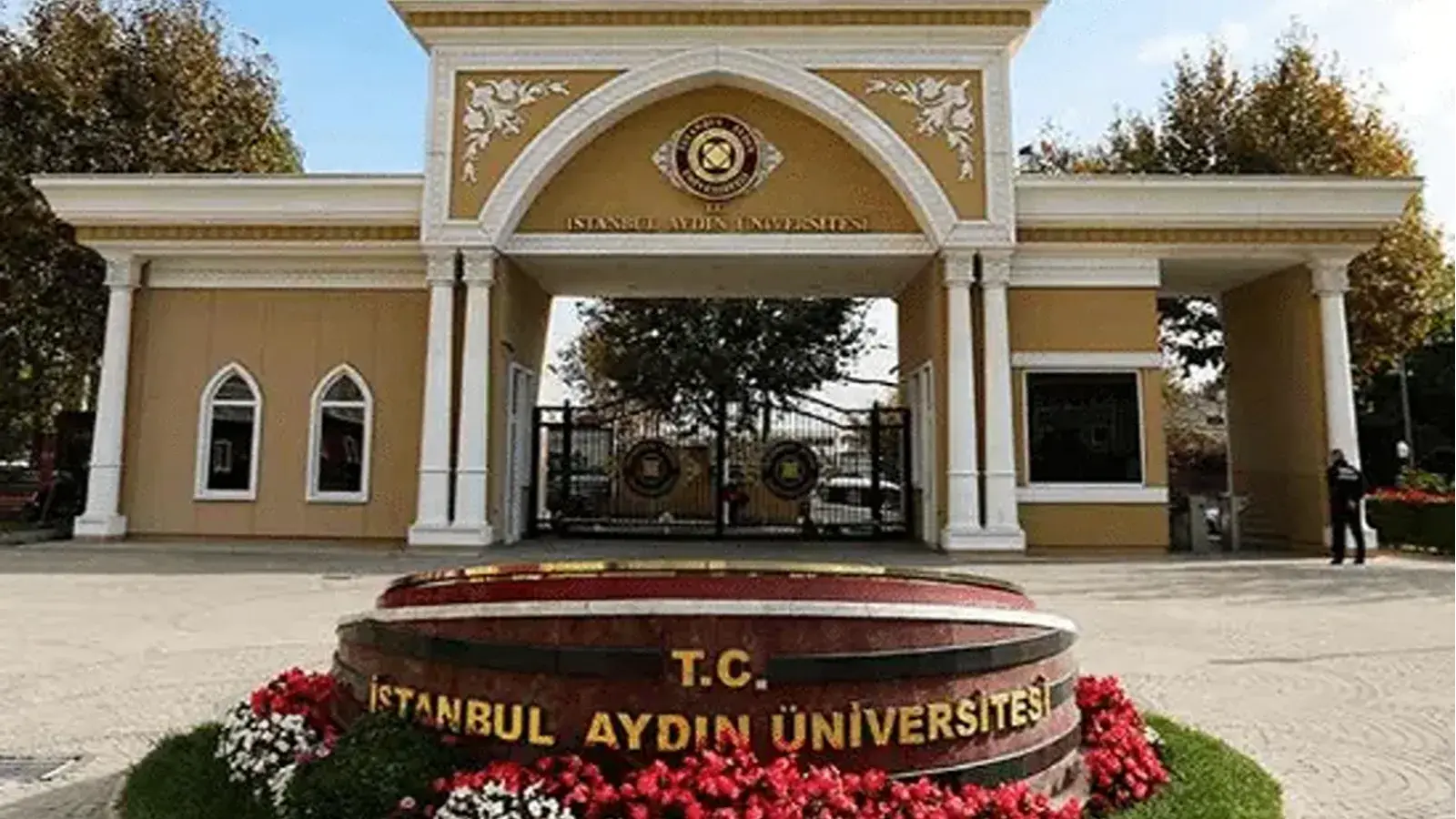
Beyond the master’s, one university in our catalogue, Istanbul Aydin University, also offers medical microbiology at PhD level, with tuition listed at $12,000 a year. That matters because it gives you a clear, planned pathway: you can complete a thesis master’s and then continue to doctoral study at the same institution if you decide to pursue an academic or senior research career. Having that progression mapped out in advance is genuinely useful when you are choosing where to start.
What You Study
The exact curriculum varies by university, but a master’s in medical microbiology covers a recognisable core. The field is essentially the study of microorganisms that cause human disease, how to detect them, how they resist treatment, and how the body responds, so the subjects below appear in some form almost everywhere.
Bacteriology is the study of bacteria, including the pathogens responsible for many common and serious infections. You learn how to identify them, culture them, and characterise their properties, which underpins much of clinical laboratory work.
Virology focuses on viruses, from the common respiratory and gastrointestinal viruses to the pathogens behind major outbreaks. You study how viruses are structured, how they replicate, and how laboratories detect and distinguish them.
Mycology covers fungi and the infections they cause, which range from superficial to life-threatening, particularly in patients whose immune systems are compromised.
Parasitology deals with parasites, including the protozoa and worms responsible for a large share of disease worldwide, and the laboratory methods used to detect them.
Immunology explains how the human immune system recognises and fights microorganisms. This underpins everything from understanding why infections happen to interpreting diagnostic tests that rely on immune responses.
Antimicrobial resistance is one of the most important and fast-moving topics in the field. You study how bacteria and other microbes become resistant to the drugs meant to kill them, how laboratories test for resistance, and why this is one of the defining health challenges of our era.
Diagnostic methods and laboratory techniques form the practical backbone of the program. You learn culturing, staining, microscopy, biochemical identification, serology, and increasingly molecular methods such as PCR and sequencing. This hands-on competence is much of what makes a microbiology graduate employable.
Research methods, biostatistics, and the thesis round out the program for thesis-track students. You learn how to design experiments, analyse data, and write up findings to academic standards, culminating in your own original research project. If you are interested in the molecular side of all this, you may also find our guide to molecular biology and genetics in Turkey a useful companion read, since the techniques overlap considerably.
Language of Instruction: An Honest Look
This is the single most important practical point in the whole guide, so it deserves a clear and honest treatment. The medical microbiology master’s programs in our catalogue are all Turkish-taught. That is not a minor detail you can plan around later. It shapes who the program realistically suits and how you must prepare.
In practice, Turkish-taught means that lectures, seminars, reading, assessments, and especially the laboratory and clinical components are conducted in Turkish. For a field like medical microbiology, the laboratory and hospital dimension makes language even more central than in a purely theoretical subject. If your training involves time in diagnostic laboratories or clinical settings, you will be working alongside Turkish-speaking staff, reading Turkish documentation, and communicating in Turkish. Trying to do that without solid command of the language is not realistic.
So what does this mean for you concretely? If you do not already speak Turkish well, you should expect to reach roughly a B2 to C1 level before you can study and work comfortably in these settings. Many universities offer a one-year Turkish preparatory program for exactly this purpose, and many international students take it before starting their master’s proper. This adds a year and some cost, but it is an investment that makes the rest of the degree workable rather than a constant struggle.
Language check: every medical microbiology master's in our catalogue is Turkish-taught — plan to reach roughly B2 to C1, or budget for a one-year Turkish preparatory program first.
The honest takeaway is this: do not assume you can get by in English. While Türkiye does have a number of English-taught programs in other fields, the medical microbiology master’s options in our catalogue are Turkish-medium. If you are committed to this specific program, commit also to the language. If a language barrier is a deal-breaker for you, that is useful to know now rather than after you have arrived. We would always rather tell you the truth up front so you can plan well. If you want help thinking it through, you can contact us and we will be straight with you about what the program demands.
Universities Offering Medical Microbiology in Istanbul: Tuition Compared
Here are the universities in our catalogue that offer medical microbiology in Istanbul, with their levels and tuition. All are Turkish-taught.
| University | City | Language | Levels | Tuition/yr |
|---|---|---|---|---|
| Istanbul Atlas University | Istanbul | Turkish | Master | $4,050 |
| Istanbul Aydin University | Istanbul | Turkish | Master, PhD | $9,000 to $12,000 |

Two universities in our catalogue offer medical microbiology in Istanbul. Istanbul Atlas University offers the master’s at the lower end of the tuition range, around $4,050 a year, while Istanbul Aydin University offers it at a higher tuition with both thesis and non-thesis options, and importantly also runs the program at doctoral level for students who want to continue to a PhD. That gives you a useful choice: a more budget-friendly master’s at one institution, or a single university where you can complete both the master’s and the PhD if you plan to go all the way. The full, filterable list, where you can compare these and check the latest details, is in the programs explorer.
Tuition Fees in Istanbul (2026)
For the 2026 intake, tuition for a master’s in medical microbiology in Istanbul in our catalogue ranges from about $4,050 to $10,000 per year. The lower figure is Istanbul Atlas University. The higher range, roughly $9,000 to $10,000 a year, is Istanbul Aydin University, where the figure varies with the thesis or non-thesis choice. If you continue to the PhD at Aydin, tuition is listed at $12,000 a year.
A few things are worth understanding about these numbers. First, they are annual figures, so a two-year master’s costs roughly twice the yearly amount, before living expenses. Second, tuition at private universities, which these are, can change year to year, and the exact fee sometimes depends on the specific track and any institutional discounts. Always confirm the current figure directly before committing. Third, the gap between the cheaper and more expensive options is meaningful, so it is worth weighing what each institution offers against the price, rather than simply choosing on cost alone.
For a fuller picture of how fees and funding work across Turkish universities, including the kinds of discounts and payment arrangements that are sometimes available, see our dedicated guide to scholarships and tuition. It is worth reading before you make a final decision, because the headline tuition is not always the whole story.
Cost of Living for Students in Istanbul
Tuition is only one part of your budget. As a rough guide, a student in Istanbul can expect to spend somewhere between $400 and $700 a month on living costs, depending heavily on lifestyle and, above all, on accommodation. Over a year, that works out to roughly $4,800 to $8,400, which for many students is comparable to or larger than the tuition itself, so it deserves careful planning.
Accommodation is the biggest single variable. University dormitories and shared flats are the most economical options, while a private apartment in a central, sought-after neighbourhood costs considerably more. Where you live also affects your transport costs and daily convenience, so it is worth thinking about the trade-off between rent and commute. Food is reasonable if you cook and shop at local markets, and more expensive if you eat out frequently. Public transport in Istanbul is extensive and student discounts help keep costs down, but the city is large, so commuting time and cost are real considerations.
Other regular expenses include health insurance, which is required for your residence permit, mobile and internet, books and laboratory supplies, and personal spending. None of these is individually large, but together they add up, so build them into your plan. The overall message is that Istanbul is affordable by the standards of major international cities, but “affordable” still means budgeting carefully and being realistic about how your choices, especially housing, drive your monthly total.
Scholarships and Funding
Funding for postgraduate study in Türkiye comes from several directions, and it is worth understanding the landscape before you assume you will pay full price. The most prominent government scheme is Türkiye Bürsları, the national scholarship program, which is competitive and covers tuition along with a stipend and other benefits for successful applicants. It is well worth investigating if your profile is strong, though you should not count on it, given how competitive it is.
Beyond the national scheme, individual private universities frequently offer their own tuition discounts and merit-based reductions. These vary by institution and year, and they are often negotiable or conditional on your academic record, so it is always worth asking the university directly what is available for your specific program. Sometimes the effective price you pay is lower than the published figure once a discount is applied.
For a thorough overview of the options, eligibility, and how to approach funding strategically, read our guide to scholarships and tuition. And if you would like personalised help identifying which funding routes realistically fit your background, you can book a free consultation and we will talk it through honestly.
Recognition and Accreditation: An Honest Look
Recognition is a question every serious applicant should ask, and it deserves an honest answer rather than reassurance. The universities in our catalogue operate within the Turkish higher education system and are recognised by YÖK, the Council of Higher Education, which is the body that governs and accredits universities in Türkiye. A degree from a YÖK-recognised university is a legitimate, accredited qualification within Türkiye and is widely recognised internationally as a Turkish higher education degree.
That said, there is an important distinction to understand, and it applies to most health and laboratory fields, not just this one. A recognised academic degree is not the same thing as a licence to practise in a particular country. If you intend to work in clinical or diagnostic laboratories abroad, especially in regulated healthcare systems, the local licensing or registration authority in that country decides whether and how your qualification is accepted. That process may involve credential evaluation, examinations, supervised practice, or additional requirements, depending entirely on the destination country’s rules.
The practical advice is straightforward. If you already know where you intend to work after graduating, research that country’s specific requirements for laboratory or microbiology professionals before you enrol, not after. Requirements differ widely, and it is far better to plan around them from the start. If your plans are academic or research-focused, recognition is usually more straightforward, since research and PhD pathways tend to assess your degree and your work directly. Either way, go in with clear eyes about the difference between an accredited degree and a professional licence. We would rather you know this now than be surprised later.
Admission Requirements
Admission requirements vary by university, but for a master’s in medical microbiology you can expect most of the following. First and foremost, you need a relevant bachelor’s degree, typically in medicine, dentistry, pharmacy, veterinary medicine, biology, molecular biology, biochemistry, nursing, medical laboratory sciences, or a closely related life or health science. Universities want to see that you have the foundational knowledge the master’s will build on.
You will need to submit your academic transcripts and your degree certificate, and a reasonable grade point average strengthens your application, particularly for the more competitive or thesis-track options. Because these are Turkish-taught programs, you should expect to demonstrate Turkish language proficiency, or to complete a Turkish preparatory year before starting. Some programs may also consider applicants who commit to reaching the required level through preparatory study.
Other common elements include a copy of your passport, passport-style photographs, and sometimes a statement of purpose or letters of recommendation, especially for thesis-track or research-oriented admission where the department wants to understand your research interests. Some universities may ask for an interview. Requirements differ from one institution to another and can change between intakes, so always confirm the current, exact list with the specific university or with us before you assemble your file. If you would like help checking your eligibility against a particular program, get in touch and we will give you an honest assessment.
How to Apply: Timeline
While exact dates vary by university, a realistic timeline for a master’s intake looks something like this. Start your research roughly nine to twelve months before you intend to begin. This is when you compare programs, weigh the universities in our catalogue, think hard about the language question, and decide whether you need a Turkish preparatory year, which affects your whole schedule.
Six to nine months before you start, prepare your documents. Gather and, where required, translate and officially certify your transcripts and degree certificate, sort out your passport, and write your statement of purpose if one is needed. If you are applying for scholarships such as Türkiye Bürsları, note that these often have their own earlier deadlines, so check them well in advance and do not let them slip past.
Three to six months before, submit your applications. Many private universities have rolling or multiple intake windows, but applying earlier gives you more time for the visa and residence steps and avoids a last-minute scramble. Once you receive an offer and an acceptance letter, you move into the visa and travel phase, which we cover next. Throughout, keep digital and physical copies of everything, and confirm each requirement directly with the university, because details change. If managing this feels overwhelming, that is exactly the kind of thing we help with, so reach out and we can guide you step by step.
Student Visa and Residence Permit
Once you have an official acceptance letter from a Turkish university, the visa and residence process follows a well-trodden path, but it requires attention to detail and timing. The first step for most international students is to apply for a student visa at the Turkish embassy or consulate in your home country. You generally cannot enter Türkiye to study long-term on a tourist arrangement and then convert it, so the student visa from your home country is the proper route. You will need your acceptance letter, a valid passport, proof of funds, and the other documents the consulate specifies.
After you arrive in Türkiye and settle in, you must apply for a residence permit, the ikamet, within the period set by the authorities. This is what legalises your stay for the duration of your studies. The application involves registering with the migration authority, providing your acceptance and enrolment documents, proof of accommodation, valid health insurance, and the relevant fees. Your university’s international student office is usually a major help here, and they handle these applications routinely for incoming students.
The two pieces of advice that matter most are to start early and to keep your documents in order. Visa and residence processes can take time, and missing a deadline or a required document causes avoidable stress. Keep multiple copies of everything, follow the instructions your university gives you, and ask for help when you are unsure. If you want a clearer overview of what studying in Türkiye involves end to end, our study in Turkey guide pulls the practical pieces together in one place.
Careers After a Master’s in Medical Microbiology
A master’s in medical microbiology opens onto a range of careers, almost all of which revolve around understanding, detecting, or researching microorganisms and infection. The most direct destination is the clinical or diagnostic laboratory. Hospital microbiology departments and independent diagnostic laboratories need specialists who can identify pathogens, perform and interpret tests, monitor antimicrobial resistance, and support clinicians in managing infections. This is the bread-and-butter work the master’s prepares you for.
Beyond the hospital lab, the pharmaceutical and biotechnology industries employ microbiologists in quality control, product development, sterility testing, and research. Public health agencies need microbiologists for surveillance, outbreak investigation, and the kind of population-level monitoring that became so visible during recent global health events. Research institutes and universities offer roles in laboratory research and, for those who continue to a PhD, in academic teaching and independent investigation. There is also demand in food safety, environmental microbiology, and related applied fields where controlling microorganisms matters.
For those drawn to research and academia, the master’s is the gateway to a PhD, and as noted, one university in our catalogue offers that doctoral pathway in the same subject. A PhD opens the door to leading your own research, working at senior levels in research institutes, or building an academic career. The key point across all these paths is that medical microbiology is a genuine, in-demand specialism. Infection, diagnostics, and resistance are permanent features of healthcare, not passing concerns, which gives the field a durable relevance. As always, the careers most open to you also depend on where you intend to work and on meeting any local licensing requirements, so plan with your destination in mind.
Türkiye’s Health and Research Sector
It helps to understand the wider context your degree sits within. Over the past two decades, Türkiye has expanded and modernised its healthcare system considerably, building new hospitals, upgrading laboratory capacity, and increasing the country’s overall medical and research infrastructure. For students in the health sciences, this means training in an environment that is actively developing rather than stagnant, with growing opportunities attached.
The country has also placed increasing emphasis on scientific research and higher education, with universities expanding their research output and their laboratory facilities. For a laboratory-centred field like medical microbiology, that investment is directly relevant, because it shapes the quality of the labs you train in and the research projects you can join. Istanbul in particular, as the country’s largest city and a major medical hub, concentrates much of this activity, which is part of why it is a sensible place to study the subject.
Globally, the importance of microbiology has only grown. Antimicrobial resistance is widely regarded as one of the most serious long-term threats to public health, and the experience of recent pandemics has underscored how vital diagnostic and surveillance capacity is. These pressures mean that well-trained medical microbiologists are valued not just in Türkiye but worldwide. Studying the field in a country that is investing in its health and research sector, in a city with the density of hospitals and laboratories that Istanbul has, positions you within a discipline whose relevance is rising rather than fading.
How to Choose the Right Program
With two universities in our catalogue offering this subject, the choice is manageable but still worth making thoughtfully. Start with your end goal. If you are reasonably sure you want to continue to a PhD and pursue research or academia, the institution that offers both the master’s and the doctorate, Istanbul Aydin University, lets you map out the whole pathway at one place, which has real advantages in continuity. If your priority is a solid, more affordable master’s and you are less certain about a PhD, the lower tuition at Istanbul Atlas University is attractive.
🔬Choose Istanbul Aydin if…
- You plan to continue to a PhD — master's and doctorate at one institution
- You want the choice of thesis and non-thesis tracks
💰Choose Istanbul Atlas if…
- A more affordable master's is the priority, around $4,050 a year
- You are less certain about continuing to a PhD
Next, weigh the thesis versus non-thesis decision, since one university explicitly offers both. Choose thesis if research, a PhD, or research-heavy employment is your aim. Choose non-thesis if you mainly want the specialised qualification for applied or professional reasons and prefer a more coursework-based, potentially quicker route. This decision shapes your two years substantially, so think it through rather than defaulting.
Then look at the practical factors: total cost including living expenses, the location of the campus and its proximity to hospitals and laboratories, the specific curriculum and laboratory facilities, and any funding or discounts available to you. And do not skip the language question, which we have stressed throughout, because it underlies whether any of these programs will actually work for you. If you would like a second opinion that weighs all of this against your particular situation, that is precisely what we do, so book a free consultation.
Common Mistakes Applicants Make
A few recurring mistakes are worth flagging so you can avoid them. The most common is underestimating the language requirement. Because some Turkish universities advertise English-taught programs in other fields, applicants sometimes assume they can study medical microbiology in English too. In our catalogue, these programs are Turkish-taught, and the laboratory and clinical components make Turkish essential. Plan for the language from the start, including a preparatory year if you need one.
A second mistake is confusing a master’s in medical microbiology with a route into clinical medicine. It is not one. If your real goal is to become a doctor, this program will not get you there, and it is better to realise that before you enrol than after. A third mistake is ignoring the difference between an accredited degree and a professional licence to practise abroad. If you plan to work in laboratories in a specific country, research that country’s licensing rules before you commit, not after you graduate.
Other frequent missteps include budgeting only for tuition and forgetting living costs, leaving applications and especially scholarship deadlines too late, and choosing a program on price alone without weighing curriculum, facilities, and the PhD pathway. Finally, many applicants fail to confirm current details directly with the university, relying instead on out-of-date information. Fees, requirements, and intake dates change, so always verify before you commit. Avoiding these mistakes will save you time, money, and disappointment.
DON’T
- Assume you can study this program in English
- Treat the master's as a route into clinical medicine
- Budget only for tuition and forget living costs
DO
- Plan for the language from the start, including a preparatory year if needed
- Research your destination country's licensing rules before you commit
- Confirm current fees, requirements and intake dates directly with the university
Related Programs You Might Consider
If you are weighing medical microbiology against neighbouring fields, several of our other guides may help you compare. If your underlying interest is in clinical practice and treating patients, the proper route is a full medical degree, covered in our guide to studying medicine in Turkey. If you are drawn to the molecular and genetic side of the life sciences, which overlaps heavily with the laboratory techniques used in microbiology, read our guide to molecular biology and genetics in Turkey. And if the data and records side of healthcare appeals more than the laboratory, our guide to the associate in health information systems in Istanbul covers that shorter, more applied route.
If your interest leans toward hands-on patient care in a health setting, our guide to studying nursing in Turkey is worth a look, and if you are interested in health from the angle of food, metabolism, and wellbeing, our guide to nutrition and dietetics in Turkey covers that path. Reading across these guides can help you confirm that medical microbiology really is the right fit, or point you toward a neighbouring field that suits you better. The programs explorer lets you compare all of these side by side.
Frequently Asked Questions
Do I need a medical degree to study medical microbiology?
No. You do not need a degree in medicine specifically. You need a relevant bachelor’s degree, which can be in medicine, but equally in dentistry, pharmacy, veterinary medicine, biology, molecular biology, biochemistry, nursing, medical laboratory sciences, or a related life or health science. The program builds on a foundation in the life sciences rather than requiring a medical qualification.
Can I study medical microbiology in English in Istanbul?
In our catalogue, the medical microbiology master’s programs in Istanbul are Turkish-taught. There is no English-medium option among them. Because the field involves significant laboratory and clinical work in Turkish-speaking settings, you should plan to reach a strong level of Turkish, around B2 to C1, or complete a one-year Turkish preparatory program before starting.
How long does the master’s take?
About two years of full-time study for the thesis track. The non-thesis track can be somewhat shorter because it replaces the full research thesis with additional coursework and a smaller project. If you add a Turkish preparatory year, factor in the extra time accordingly.
How much does it cost?
In our catalogue, annual tuition for the master’s ranges from about $4,050 at Istanbul Atlas University to roughly $9,000 to $10,000 at Istanbul Aydin University. On top of tuition, budget around $400 to $700 a month for living costs in Istanbul. Always confirm current fees directly with the university.
Will this qualification let me work in a laboratory abroad?
The degree is recognised by YÖK as an accredited Turkish higher education qualification, and is widely recognised internationally as such. However, an accredited degree is not the same as a licence to practise. If you plan to work in clinical or diagnostic laboratories in another country, that country’s licensing or registration authority decides how your qualification is accepted, which may involve evaluation, exams, or additional steps. Research the specific country’s rules before you enrol.
What jobs can I do after graduating?
Common destinations include hospital and diagnostic laboratories, the pharmaceutical and biotechnology industries, public health and surveillance agencies, food safety and environmental microbiology, and research institutes and universities. For those who continue to a PhD, academic and senior research careers open up. The specific roles available also depend on your destination country and any local licensing requirements.
Is there a PhD pathway?
Yes. One university in our catalogue, Istanbul Aydin University, offers medical microbiology at PhD level, with tuition listed at $12,000 a year. This means you can complete a thesis master’s and then continue to doctoral study at the same institution, which is a clear and convenient route for anyone aiming at a research or academic career.
Is a master’s in medical microbiology a route into becoming a doctor?
No. It is a laboratory and research qualification, not a clinical medical degree. It does not grant the right to diagnose, treat, or prescribe for patients. If becoming a physician is your goal, you need a full undergraduate medical degree instead, and our guide to studying medicine in Turkey explains that route.
Choosing where and how to pursue a master’s in medical microbiology is a significant decision, and you do not have to make it alone. If you would like honest, personalised guidance on which program fits your background, budget, and goals, including a straight answer on the language question, book a free consultation. You can also browse and compare every option, including the universities discussed here, in our programs explorer.
Have a question about this article?
Our advisors will guide you for free so you can choose the best path.
Free consultationWhy students choose us
Real partnerships, honest pricing, and support that doesn't stop at admission.
Scholarships & smart discounts
We match you with merit scholarships (often 25–100%) plus sibling and early-payment discounts, so you pay the lowest fair price for your program.
Free, end-to-end guidance
As an authorized agent, our advice and application support cost you nothing. We prepare and submit everything for you — no guesswork.
57 partner universities
Direct partnerships across Türkiye and Northern Cyprus with 5,500+ programs. We find the program that fits you, not just any offer.
Transparent, honest fees
Every tuition figure comes straight from our live catalog and is shown upfront. No hidden costs, no surprises before you commit.
No entrance exam needed
Most private universities admit you on your academic record — many fully in English — so you can apply without YÖS or SAT.
With you to visa & arrival
From choosing a program to your student visa, residence permit and settling in, we stay by your side at every step.