
Medicine is the single most sought-after subject for international students coming to Türkiye, and it is easy to see why. The country combines modern, well-equipped medical faculties, English-taught six-year MD programs and large teaching hospitals with tuition that is far lower than in Western Europe or North America. Our catalogue lists 38 medical programs at 24 universities, with 19 universities offering medicine fully in English and tuition ranging from about $6,654 to $44,000 a year.
This complete 2026 guide is written for international students who want to study medicine in Türkiye. It covers why Türkiye is such a strong choice, how the six-year MD is structured, which universities offer the degree and at what price, the scholarships available, and, crucially, how a Turkish medical degree is recognised internationally. You will also find the admission requirements, the application timeline and the visa process, plus the career paths open to you after graduation. Click any university name to open its full profile, and compare every medical program in our programs explorer.
Why Study Medicine in Türkiye in 2026
Türkiye has invested heavily in medical education over the past two decades, and the result is a network of modern faculties attached to large university hospitals where students get genuine clinical exposure. Many private universities teach the full MD in English, with international cohorts drawn from across the Middle East, Africa, Central Asia and beyond, so you study in a global environment without needing Turkish from day one.
The financial case is compelling. A complete medical education in Türkiye costs a fraction of what a private medical degree costs in the United States, the United Kingdom or much of Europe, while still being delivered in well-resourced hospitals with simulation centres, modern laboratories and active research. For many families, Türkiye offers the rare combination of an English-taught, internationally listed medical degree at a genuinely affordable price, in a country that is safe, welcoming and easy to reach by direct flights from most of the region.
Beyond cost and language, the lifestyle matters too. Turkish cities are vibrant and student-friendly, the climate is warm, the food is excellent, and there is a large, established community of international medical students who make settling in straightforward. For a degree that takes six years, that quality of life is not a small consideration.
Is Studying Medicine in Türkiye a Good Idea?
For most international students the answer is yes, as long as you choose a recognised university and plan for the licensing path in the country where you ultimately want to practise. The teaching quality at the established medical faculties is high, the clinical exposure in large hospitals is real, and the degree is widely listed and recognised, which is what matters for sitting licensing exams later. We go through recognition in detail below, because for medicine it is the most important factor of all.
The main thing to plan for is the licensing route home or abroad. A medical degree, wherever you earn it, almost always requires you to pass a local licensing or equivalency examination before you can practise in a given country. That is true of graduates from any country, not just Türkiye, and it is entirely manageable with preparation. The students for whom Türkiye is the best fit are those who want a high-quality, English-taught, affordable medical education and are willing to sit the relevant licensing exam for their target country, which most medical graduates do anyway.
How Long Is Medical School in Türkiye?
Medicine in Türkiye is a six-year undergraduate MD program, entered directly after high school, the same structure used across most of Europe and much of the world. There is no separate pre-med degree, so you begin medical studies immediately.
The Six-Year MD Curriculum
The six years are usually organised in three phases. The first three years are largely preclinical, covering the basic sciences: anatomy, physiology, biochemistry, histology, pathology, pharmacology and microbiology, increasingly taught through integrated, system-based modules rather than isolated subjects. Years four and five are clinical, with rotations through the major specialties such as internal medicine, surgery, paediatrics, obstetrics and gynaecology, psychiatry and the smaller disciplines, carried out in the university hospital. The sixth year is the internship (clerkship), a full year of supervised hands-on clinical practice across departments that prepares you for practice and for licensing exams. On graduation you receive the Doctor of Medicine (MD) degree.
If you choose to study in Turkish but are not yet fluent, you will usually complete a one-year Turkish preparatory year (hazırlık) first, making the total seven years. English-taught students skip this.
English-Taught vs Turkish-Taught Medicine in Türkiye
This is the first question most applicants ask, and Türkiye is unusually accommodating here. Of the universities in our catalogue, 19 offer medicine fully in English, which is a large number by international standards and means you can complete the entire MD, including clinical rotations, in English.
Studying in English removes the language barrier for coursework and exams, and it is the route most international students take. Even so, learning Turkish during your studies is strongly recommended, because your clinical years involve real patients, most of whom speak Turkish, and basic medical Turkish makes those rotations far more valuable. Universities support this with Turkish language classes alongside the medical curriculum.
Tip: even on an English-taught MD, learn Turkish during your studies — your clinical years involve real patients, most of whom speak Turkish, and basic medical Turkish makes those rotations far more valuable.
If you would prefer to study medicine in Turkish, the Turkish-taught programs are often a little cheaper, and you would complete the one-year preparatory year first. Either way, you graduate with the same MD degree.
Medical Universities in Türkiye: Tuition Compared
The table below lists the universities in our catalogue that offer medicine, with the city, language of instruction and annual tuition. Click any university to open its full profile, hospital and campus details, and complete program list.
| University | City | Language | Tuition/yr |
|---|---|---|---|
| Bahcesehir University | Istanbul | English | $28,000 |
| Bezmialem Vakif University | Istanbul | Turkish | $25,000 |
| Biruni University | Istanbul | English / Turkish | $19,000-21,000 |
| Halic University | Istanbul | English / Turkish | $18,000-24,000 |
| Istanbul Arel University | Istanbul | Turkish | $12,000 |
| Istanbul Atlas University | Istanbul | English / Turkish | $18,000-22,500 |
| Istanbul Aydin University | Istanbul | English / Turkish | $25,000 |
| Istanbul Health and Technology University | Istanbul | English / Turkish | $13,000-15,000 |
| Istanbul Medipol University | Istanbul | English / Turkish | $34,000-44,000 |
| Istanbul Nisantasi University | Istanbul | Turkish | $14,500 |
| Istanbul Okan University | Istanbul | English / Turkish | $19,500-21,500 |
| Istanbul Yeni Yuzyil University | Istanbul | Turkish | $13,000 |
| Istinye University | Istanbul | English / Turkish | $23,000-29,000 |
| Maltepe University | Istanbul | English / Turkish | $18,000-20,000 |
| Uskudar University | Istanbul | English / Turkish | $18,000-24,000 |
| Ankara Medipol University | Ankara | English / Turkish | $18,500-20,000 |
| Atilim University | Ankara | English | $16,500 |
| Cyprus Health And Social Sciences University | Cyprus | English | $8,000 |
| Cyprus International University | Cyprus | English | €6,654 |
| Eastern Mediterranean University | Cyprus | English | $18,250 |
| Izmir Tınaztepe University | Izmir | Turkish | $12,700 |
| Lokman Hekim University | Ankara | English / Turkish | $20,000-22,500 |
| Near East University | Cyprus | English / Turkish | €11,849 |
| University of Kyrenia | Cyprus | English / Turkish | €7,615 |

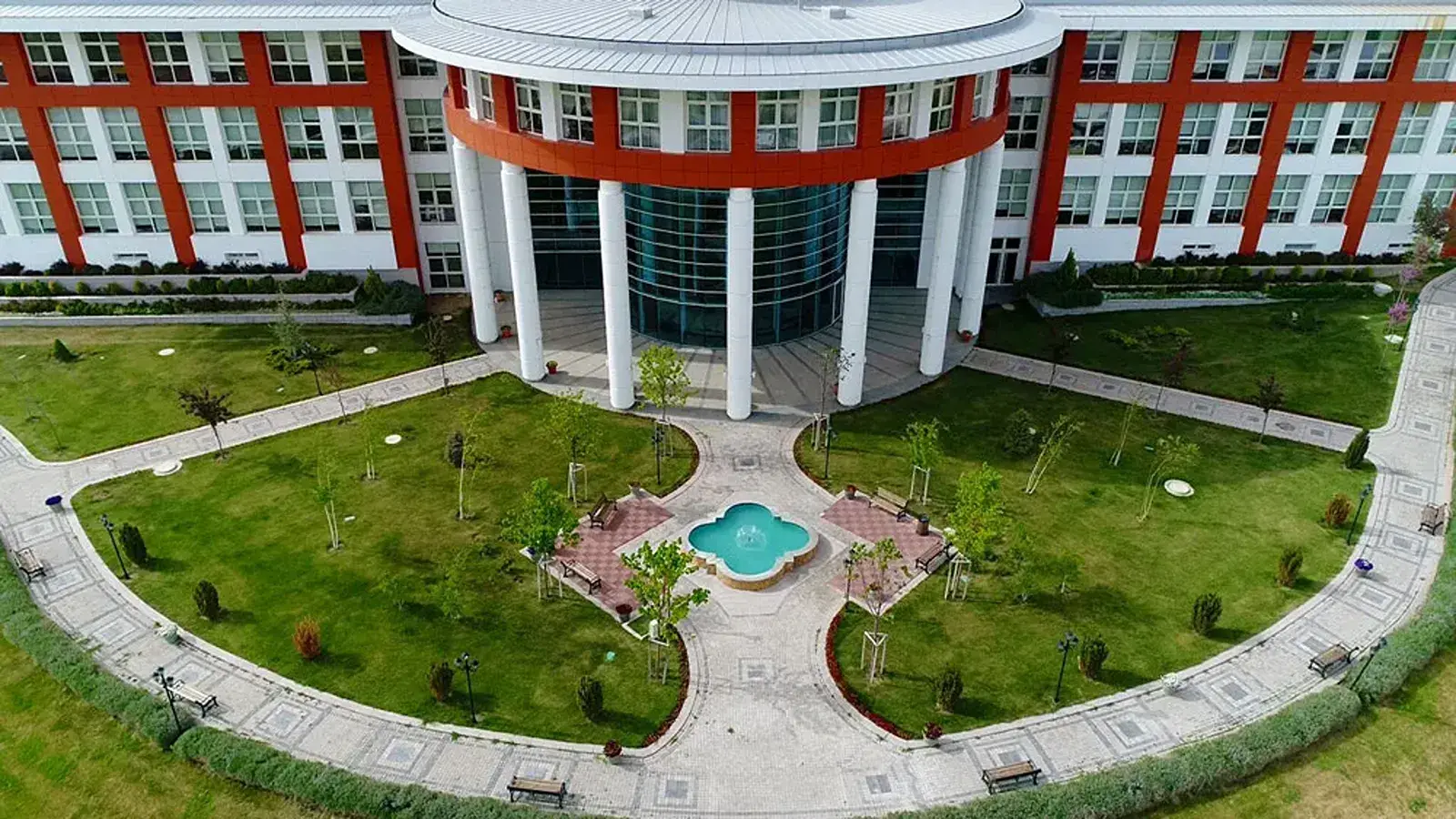
Tuition is per year. Medicine is the most expensive field to study in Türkiye because of the cost of running hospitals, laboratories and clinical training, but even at the top of the range it remains far cheaper than a private medical degree in most Western countries.
Medicine Tuition Fees in Türkiye (2026)
Medical tuition in Türkiye ranges from about $6,654 a year at the most affordable universities to roughly $44,000 a year at the most prestigious private faculties, with many English-taught programs sitting in the broad middle of that range. The figure depends on the university’s reputation, its hospital facilities, the language of instruction and the city.
A few points help you compare fairly. The Northern Cyprus universities and some newer private faculties tend to be at the more affordable end, while the established, highly ranked Istanbul private medical schools sit higher. Remember that the published number is an annual fee, so multiply across six years for the total cost of the degree, and confirm whether the fee is quoted in US dollars or euros. The full, filterable list of fees is in our programs explorer, where you can sort by budget, and our scholarships and tuition guide explains how to bring the cost down.
Budget check: the published number is an annual fee — multiply across six years for the total cost of the degree, and confirm whether the fee is quoted in US dollars or euros.
Cost of Living for Medical Students in Türkiye
On top of tuition, budget roughly $450 to $750 a month for living costs, a little higher than other students because a six-year program means more years of expenses and clinical years can be demanding on time. Istanbul is the most expensive city, especially for rent, while Cyprus, Ankara and Izmir are more affordable.
A realistic monthly budget covers dormitory or shared accommodation, food, transport, study materials and some social life. Medical students often live near their university hospital to cut commuting time during clinical years, so factor location into your accommodation choice. Many universities offer dormitories at controlled prices, and student transport cards reduce travel costs. Our Study in Türkiye guide breaks down the full cost picture across cities.
Scholarships for Medical Students in Türkiye
Because medicine is the most expensive field, scholarships matter even more here. Many private universities offer merit scholarships that reduce medical tuition, awarded on your high-school grades and sometimes an entrance assessment, and some offer partial scholarships specifically to attract strong international students into medicine. On top of that, the usual sibling and cash or early-payment discounts apply and can stack with a merit award.
Because medical fees are high, even a partial scholarship represents a large saving over six years, so it is always worth asking what each university can offer before you commit. You can see live discounts in our programs explorer, and our scholarships and tuition guide explains how to combine them. Our advisors also know which universities are most generous with medical scholarships in a given intake.
Is a Turkish Medical Degree Recognised Internationally?
This is the most important question for any prospective medical student, and the answer is reassuring when you choose the right university. The established Turkish medical faculties are listed in the World Directory of Medical Schools (WDOMS), the global reference maintained jointly by the World Federation for Medical Education and the FAIMER foundation. That listing is what allows graduates to register for major international licensing examinations.
In practice, this means a degree from a WDOMS-listed Turkish medical school lets you pursue routes such as the USMLE for the United States (through ECFMG certification), the PLAB pathway for the United Kingdom, and the equivalency or licensing examinations used by many countries in the Middle East, Africa, Asia and Europe. Within Türkiye and across the European Higher Education Area, the degree follows the Bologna framework and is recognised accordingly.
The essential caveat, which applies to a medical degree from anywhere, is that recognition for practising in your specific home country depends on that country’s medical council, and almost always involves passing a local licensing or equivalency exam and having your degree verified. Requirements differ from country to country and can change, so before you enrol you should confirm the rules with the medical council where you intend to practise. We check the listing status of each university and help you understand the recognition pathway for your target country during the consultation, so you make this decision with full information rather than assumptions.
Medicine Admission Requirements in Türkiye
Admission to medicine in Türkiye is competitive but far more accessible than in many Western systems, where places are extremely limited. Typical requirements for an international applicant are:
- A completed high-school diploma with strong grades, particularly in biology, chemistry and physics
- A copy of your passport
- For English-taught programs, proof of English such as IELTS or TOEFL, or a pass in the university’s own English assessment
- At some universities, an entrance examination or an internationally recognised test score
- Health and other supporting documents requested by the specific faculty
Entry is grade-sensitive because medical places are limited, so strong high-school results in the sciences strengthen your application considerably. We review your profile honestly, tell you which medical faculties are realistic for your grades and budget, and prepare and submit the application with you.
How to Apply to Medical School in Türkiye: Timeline
Apply early, because medical places fill quickly. Most students begin three to four months before the Fall intake, which is the main entry point for medicine. A typical timeline:
- Free consultation, where we review your grades, budget and target country and suggest realistic medical faculties.
- Choose university and program, confirming language, tuition, scholarships and recognition for your home country.
- Apply and receive admission, where we prepare and submit your documents and secure your acceptance letter.
- Visa and travel, where we guide you through the student visa, residence permit and accommodation.
Because medicine is so popular, the strongest scholarships and the places at the most sought-after faculties are gone earliest, so starting ahead of the crowd genuinely matters.
Student Visa and Residence Permit for Medical Students
After you receive your acceptance letter, you apply for a student visa at the Turkish consulate in your home country, providing the acceptance letter, passport, photographs, proof of funds and the visa form. We walk you through the exact list. You enter Türkiye on this visa to begin your studies, then convert your status into a student residence permit (ikamet) after you arrive and enrol, which covers you for the duration of the six-year program. The university’s international office assists with enrolment, and we support you through the residence-permit steps, which involve an online appointment, biometrics and health insurance.
Careers After Studying Medicine in Türkiye
After earning your MD, the path forward depends on where you want to practise. Many graduates return to their home country, sit the required licensing or equivalency examination, and begin practice or specialty training there. Others pursue international licensing routes, such as the USMLE for residency in the United States or the PLAB pathway for the United Kingdom, both of which are open to graduates of WDOMS-listed schools. Some remain in Türkiye for specialty training (residency), which is entered through the national TUS examination.
Whichever route you take, a medical degree is among the most globally portable qualifications there is, and the clinical experience you gain in Türkiye’s large teaching hospitals is solid preparation for licensing exams and residency anywhere. Planning your licensing path early, ideally before you even enrol, makes the transition from graduation to practice much smoother.
Best City to Study Medicine: Istanbul, Ankara, Izmir or Cyprus
Most medical programs are in Istanbul, which has the largest concentration of private medical faculties and major teaching hospitals, the widest choice of English-taught programs, and unmatched clinical variety, at a higher cost of living. Ankara, the capital, has strong, more affordable options. Izmir offers a relaxed coastal alternative, and Northern Cyprus is a popular, budget-friendly choice with English-taught medicine on a Mediterranean island and a large international student community.
If you are also weighing other health degrees, our advisors can compare medicine against related fields against your goals, and our guide to choosing the right university and major walks through the decision.
Tips for International Medical Students in Türkiye
A few pieces of advice make a six-year journey smoother. Confirm recognition for your target country before you enrol, since this is the single most important factor for a medical degree. Apply early, because medical places and scholarships go first. Prioritise high-school grades in the sciences, as entry is competitive. Learn Turkish alongside your English-taught studies, because your clinical years involve Turkish-speaking patients and basic medical Turkish makes those rotations far more useful. Budget realistically across all six years, not just the first. And keep your documents, transcripts and passport scans organised from the start, since you will reuse them for admission, the visa, the residence permit and, later, licensing applications.
Studying Medicine in Northern Cyprus vs Mainland Türkiye
A choice many applicants face is whether to study medicine on the Turkish mainland or in Northern Cyprus, and both have genuine advantages. Mainland Türkiye, and Istanbul in particular, offers the largest and most varied teaching hospitals, the widest selection of English-taught faculties, and the busiest clinical environments, which means more patient exposure and a wider range of cases during your clinical years. The trade-off is a higher cost of living, especially for accommodation in Istanbul.
Northern Cyprus has become a popular destination for international medical students because it combines English-medium teaching, a relaxed Mediterranean island lifestyle and a noticeably lower cost of living with established universities that have large international cohorts. Tuition at some Cyprus medical faculties is among the most affordable in our catalogue. The clinical environment is smaller than a megacity like Istanbul, which some students prefer for its more personal feel. Both routes lead to the same MD qualification, and the right choice comes down to your budget, the kind of city you want to live in, and the specific universities’ recognition status for your target country, which we help you confirm.
What Medical Faculties and Teaching Hospitals Offer
The quality of a medical education depends heavily on facilities, and Türkiye’s established faculties are well equipped. Most are attached to a university hospital, which is where your clinical years take place and where you encounter real patients across every specialty. Beyond the hospital, you can expect modern anatomy and dissection laboratories, clinical simulation centres where students practise procedures on high-fidelity mannequins before working with patients, well-stocked medical libraries with access to international journals and databases, and research laboratories for students who want to get involved in academic medicine early.
When you compare medical universities, the hospital and its size matter as much as the campus, because a larger, busier hospital generally means more diverse clinical exposure and a richer learning environment during the crucial clinical years. Each university profile on our site lists the affiliated hospital and campus facilities, so you can weigh this alongside tuition and language when you build your shortlist.
Medical Specialties You Can Pursue After an MD
Graduating with an MD is the start, not the end, of a medical career, and your degree opens the door to specialty training. After qualifying, doctors typically pursue a residency in a chosen specialty, whether in Türkiye through the national TUS examination or abroad through the relevant licensing route. The full range of specialties is available, from internal medicine, general surgery, paediatrics, cardiology and neurology to anaesthesiology, radiology, dermatology, psychiatry, obstetrics and gynaecology and the surgical subspecialties.
Your years of clinical rotations are designed partly to help you discover which specialty suits you, so you do not need to decide in advance. What matters at the application stage is choosing a recognised faculty with strong clinical training, because that is the foundation everything else is built on. Many graduates also spend a year or two in general practice or research before committing to a specialty, which is a perfectly normal part of the path.
Common Mistakes International Medical Students Make
A few avoidable mistakes cause most of the problems we see. The biggest is not confirming recognition for the country where the student plans to practise before enrolling, then discovering complications years later. The second is leaving the application too late, missing the strongest scholarships and the places at the most sought-after faculties. A third is choosing on price alone, without weighing the hospital, the language of instruction and the recognition status, which can turn out to be a false economy over a six-year degree. And a fourth is neglecting Turkish, which leaves students struggling during clinical rotations with Turkish-speaking patients. Each of these is easy to avoid with the right guidance, which is exactly what our free consultation is designed to provide.
DON’T
- Enrol before confirming recognition in the country where you plan to practise
- Leave the application too late
- Choose on price alone
- Neglect Turkish before your clinical rotations
DO
- Confirm the recognition pathway before you enrol
- Apply early — scholarships and sought-after places go first
- Weigh the hospital, language and recognition status too
- Learn Turkish alongside your studies
Medicine vs Other Health Degrees in Türkiye
Medicine is the most demanding and most expensive of Türkiye’s health degrees, so it is worth knowing how it compares to the alternatives before you commit. Dentistry is a five-year degree leading to a dental qualification, with its own strong international demand and tuition that is usually a little lower than medicine. Pharmacy is a five-year degree focused on medicines, pharmacology and pharmaceutical care, and is a popular choice for students drawn to healthcare who prefer the laboratory and community-pharmacy side over clinical practice. Nursing is a four-year degree with excellent global employability and far lower tuition, while physiotherapy and rehabilitation and nutrition and dietetics are growing four-year fields for students interested in patient care and wellness without the length and cost of medicine. And if your interest in medicine extends to animals, veterinary medicine in Türkiye is a five-year clinical degree of its own.
All of these are available in English at a number of Turkish universities, and all follow the same affordable, internationally recognised model as medicine. If you are drawn to healthcare but not certain medicine is the right fit, it is worth comparing the length, cost, daily work and career outcomes of each before deciding. Our advisors can map these options against your goals during a free consultation, and you can browse every health program side by side in our programs explorer.
Frequently Asked Questions About Studying Medicine in Türkiye
Can I study medicine in English in Türkiye?
Yes. 19 universities in our catalogue offer the full six-year MD in English, including clinical rotations, so you do not need Turkish to enrol.
How long is medical school in Türkiye?
Medicine is a six-year MD program entered directly after high school. If you study in Turkish without being fluent, a one-year preparatory year is added.
How much does it cost to study medicine in Türkiye?
Tuition ranges from about $6,654 to $44,000 a year, depending on the university, language and city. Scholarships and discounts can reduce this.
Is a Turkish medical degree recognised internationally?
Established Turkish medical schools are listed in the World Directory of Medical Schools, which allows graduates to pursue licensing exams such as the USMLE and PLAB. Recognition for practice in your home country depends on its medical council, so confirm the rules before enrolling.
Do I need an entrance exam to study medicine in Türkiye?
Some universities require an entrance examination or a recognised test score, while others admit on high-school grades and English proficiency. We tell you which applies to each faculty.
Can I do residency after studying medicine in Türkiye?
Yes. You can pursue residency in Türkiye through the TUS exam, or licensing and residency abroad through routes like the USMLE or PLAB, depending on your target country.
When should I apply for medicine?
Apply three to four months before the Fall intake, because medical places and scholarships fill earliest.
Is studying medicine in Türkiye safe and suitable for international students?
Yes. Turkish cities are student-friendly, the universities have large international cohorts, and dedicated international offices help you settle in.
Can I transfer to a Turkish medical school from another country?
Transfers are sometimes possible depending on your completed credits and the receiving university’s rules. We can check transfer options for your situation during a consultation.
Do Turkish medical universities have their own hospitals?
Most established medical faculties are attached to a large university hospital where clinical training takes place. The affiliated hospital is listed on each university profile.
Is medicine cheaper in Northern Cyprus than in Istanbul?
Often, yes. Several Northern Cyprus medical faculties are among the most affordable in our catalogue, with a lower cost of living than Istanbul, while still teaching in English.
Want help finding a recognised, English-taught medical program that fits your grades and budget? Book a free consultation and we will shortlist the right medical faculties for you, or compare every option now in our programs explorer.
Have a question about this article?
Our advisors will guide you for free so you can choose the best path.
Free consultationWhy students choose us
Real partnerships, honest pricing, and support that doesn't stop at admission.
Scholarships & smart discounts
We match you with merit scholarships (often 25–100%) plus sibling and early-payment discounts, so you pay the lowest fair price for your program.
Free, end-to-end guidance
As an authorized agent, our advice and application support cost you nothing. We prepare and submit everything for you — no guesswork.
57 partner universities
Direct partnerships across Türkiye and Northern Cyprus with 5,500+ programs. We find the program that fits you, not just any offer.
Transparent, honest fees
Every tuition figure comes straight from our live catalog and is shown upfront. No hidden costs, no surprises before you commit.
No entrance exam needed
Most private universities admit you on your academic record — many fully in English — so you can apply without YÖS or SAT.
With you to visa & arrival
From choosing a program to your student visa, residence permit and settling in, we stay by your side at every step.