
Law is one of the most respected and intellectually demanding degrees an international student can take in Türkiye, opening into careers in legal advice, business, compliance, international organisations, diplomacy and academia. Our catalogue lists law at 26 universities, with 10 offering English-taught or bilingual options and tuition ranging from about $1,650 to $22,000 a year, a fraction of what a law degree costs in Western Europe, North America or Australia. This guide is honest about one thing most marketing leaves out: a law degree is tied to a legal system, so where and how you intend to use it matters, and we explain exactly what a Turkish law degree can and cannot do for you.
This complete 2026 guide is written for international students who want to study law in Türkiye. It covers why Türkiye is a strong choice, how the four-year degree is structured, which universities offer it and at what price, the scholarships available, the admission requirements and visa process, the careers the degree leads to, and the all-important question of practising law as an international graduate. Click any university name to open its full profile, and compare every program in our programs explorer.
Why Study Law in Türkiye in 2026
Türkiye sits at the crossroads of Europe, the Middle East and Asia, and its legal system belongs to the continental civil-law tradition, drawing historically on Swiss, German and French law. For an international student, studying law here means learning a major civil-law system from the inside, gaining a comparative perspective that is valuable in international and business law, and doing so in a country with a large, active legal profession and modern law faculties. A growing set of English-taught and bilingual programs means international students can access a strong legal education without first mastering Turkish.
The financial case is compelling. A complete law education in Türkiye costs a fraction of what an equivalent degree costs in the West, while still being delivered in well-regarded faculties, many with moot-court facilities, legal clinics and links to the profession. For students who want a rigorous, internationally aware legal education without heavy debt, and a strong foundation for postgraduate study, Türkiye is one of the strongest value propositions anywhere.
Beyond cost, the lifestyle is a genuine draw. Turkish cities are vibrant and student-friendly, the climate is warm, and there is a large, established international student community that makes settling in straightforward. With law being a four-year degree, you also qualify and move on to the next stage, whether work or a master’s, relatively quickly.
Is a Law Degree from Türkiye Worth It?
For most international students the answer is yes, provided you are clear about how you intend to use the degree. Law trains you in rigorous reading, argument, research and writing, skills that are valued far beyond the courtroom, in business, government, compliance, journalism, diplomacy and academia. A Turkish law degree gives you a thorough grounding in a major civil-law system and, on the English-taught programs, a strong dose of international and comparative law that travels well.
The key thing to understand, which we cover in detail below, is that the right to practise as a lawyer is granted by each country and usually requires citizenship, a local traineeship and a bar examination. So the value of a Turkish law degree for an international student is greatest as an academic and professional foundation, as a route into business and international careers, and as a springboard to a master’s, rather than as an automatic licence to practise in Türkiye or your home country. Seen that way, and given the low cost, it is excellent value, but it should be chosen with eyes open, which is exactly what our consultation helps you do.
How Long Is a Law Degree in Türkiye?
Law in Türkiye is a four-year undergraduate degree (LLB), known locally as Hukuk, entered directly after high school. On graduation you receive the law degree, which is the foundation qualification for the legal profession in Türkiye and the prerequisite for postgraduate study in law. The four-year structure aligns with the bachelor-level law degrees offered in much of continental Europe.
The Four-Year Law Curriculum
The four years build from foundations to advanced and applied law. The first year covers introduction to law, constitutional law, Roman law, legal history and the basics of civil law, alongside subjects such as legal methodology. The middle years develop the core of the discipline, including civil law, criminal law, administrative law, law of obligations, property law, commercial and company law, and procedure. The later years add advanced and elective subjects such as international law, European Union law, human rights law, labour law, tax law, intellectual property and private international law, together with practical work in moot courts and legal clinics. This blend of doctrine, case analysis and practical advocacy is what prepares graduates for the profession and for postgraduate study. If you study in Turkish but are not yet fluent, you complete a one-year Turkish preparatory year first, making the total five years.
Branches of Law and Specialisations
Law is broad, and while the undergraduate degree covers the whole field, your electives, dissertation and later master’s let you lean toward an area of interest. Common directions include commercial and corporate law, the natural fit for business careers; international and European Union law, valuable for cross-border work and international organisations; human rights and constitutional law; criminal law and procedure; private law, covering contracts, property and family; labour and social-security law; and intellectual property, tax and competition law. Whichever direction you eventually take, the broad undergraduate core means you graduate with a complete legal education rather than a narrow specialisation, and you choose your focus later through a master’s or in practice.
English-Taught vs Turkish-Taught Law in Türkiye
This is a question that matters more in law than in almost any other field, because Turkish law is written, argued and practised in Turkish. Of the universities in our catalogue, 10 offer law fully or partly in English, and these programs are an excellent option for international students, but it helps to understand what they involve.
Studying Law in English
English-taught and bilingual law programs typically deliver the core subjects in English with a strong emphasis on international, comparative and European Union law, which is exactly the content that is most portable across borders. They are well suited to students aiming at international organisations, cross-border business, arbitration, diplomacy or a master’s abroad. Even on an English-taught program, learning Turkish during your studies is highly valuable, because Turkish legal sources, internships and any path toward local practice all rely on it, and universities offer Turkish classes alongside the law curriculum.
Studying Law in Turkish and the Preparatory Year
Most Turkish law faculties teach primarily in Turkish, since that is the language of Turkish law, and the Turkish-taught programs can be more affordable. If you choose this route without being fluent, you complete the one-year Turkish preparatory year first, with a placement test to confirm your level. Studying in Turkish gives you the deepest access to Turkish law and is the realistic route if you ever intend to qualify locally, while the English-taught route is more international in focus. Either way you graduate with a law degree, so the choice comes down to your goals, language and budget, and it is one of the most important decisions to get right, which our advisors talk through with each student.
🌍Choose ENGLISH-TAUGHT if…
- You aim at international organisations, cross-border business, arbitration or diplomacy
- You want strong international, comparative and European Union law content
- You may continue to a master’s abroad
⚖️Choose TURKISH-TAUGHT if…
- You want the deepest access to Turkish law — the realistic route if you ever intend to qualify locally
- A more affordable program matters to your budget
- You are ready for the one-year preparatory year if not yet fluent
Universities Offering Law: Tuition Compared
The table below lists the universities in our catalogue that offer law, with the city, language of instruction and annual tuition. Click any university to open its full profile, moot-court and campus details, and complete program list.
| University | City | Language | Tuition/yr |
|---|---|---|---|
| Altinbas University | Istanbul | English | $5,525 |
| Bahcesehir University | Istanbul | English | $10,000 |
| Dogus University | Istanbul | Turkish | $2,988 |
| Fatih Sultan Mehmet Vakif University | Istanbul | Turkish | $7,000 |
| Ibn Haldun University | Istanbul | English / Turkish | $4,800 |
| Istanbul Aydin University | Istanbul | Turkish | $6,500 |
| Istanbul Beykent University | Istanbul | Turkish | $3,950 |
| Istanbul Bilgi University | Istanbul | English | $15,200 |
| Istanbul Gedik University | Istanbul | Turkish | $3,000 |
| Istanbul Kultur University | Istanbul | English / Turkish | $6,290 |
| Istanbul Medipol University | Istanbul | Turkish | $8,000 |
| Istanbul Okan University | Istanbul | Turkish | $3,500 |
| Istanbul Sabahattin Zaim University | Istanbul | Turkish | $3,500 |
| Istanbul Yeni Yuzyil University | Istanbul | Turkish | $2,500 |
| Kadir Has University | Istanbul | English / Turkish | $6,000-7,000 |
| Maltepe University | Istanbul | Turkish | $3,500 |
| Ozyegin University | Istanbul | English / Turkish | $13,000-22,000 |
| Ankara Bilim University | Ankara | Turkish | $3,000 |
| Ankara Medipol University | Ankara | Turkish | $5,000 |
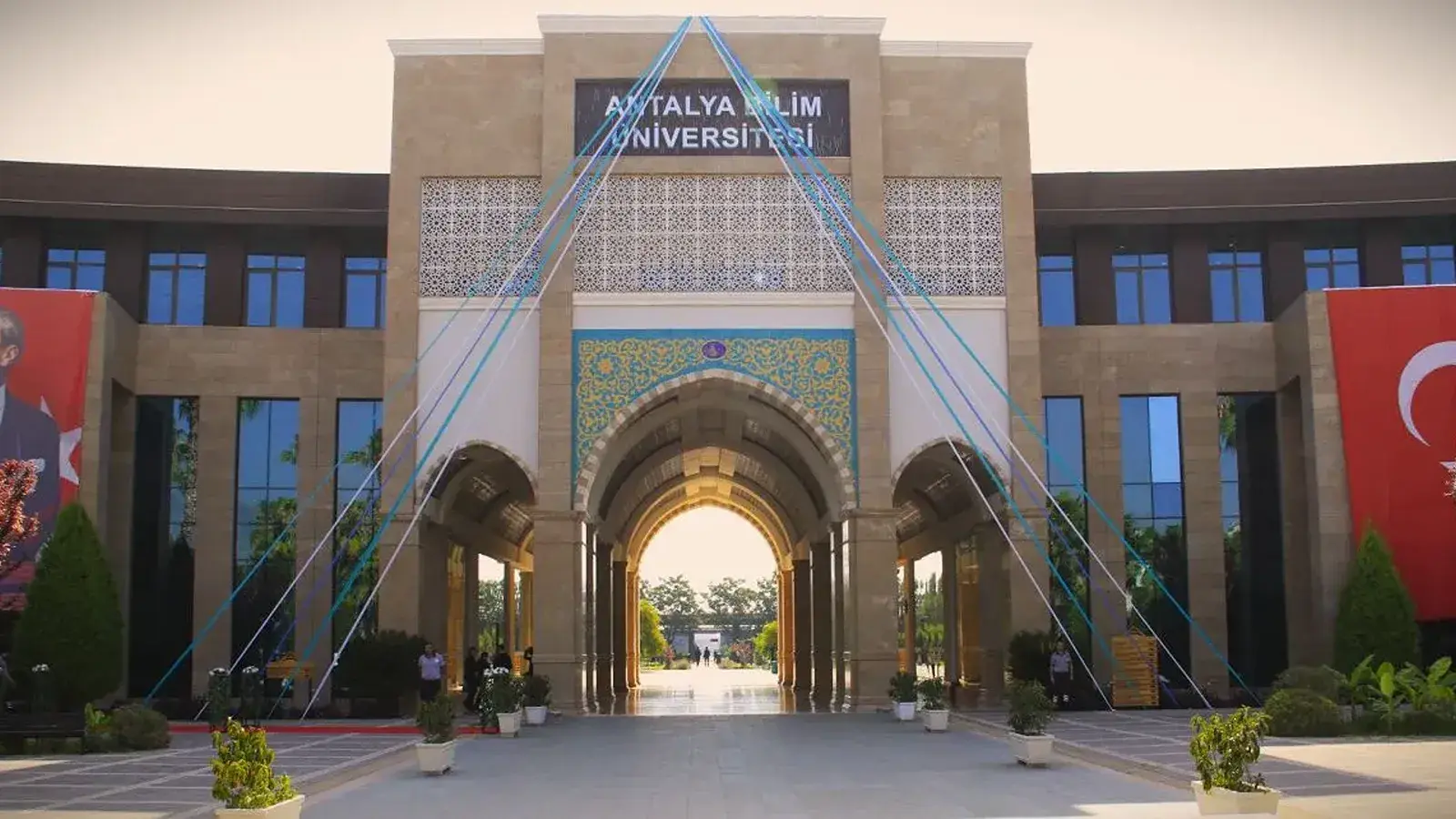
| Antalya Bilim University | Antalya | Turkish | $4,150 |
| Cyprus Aydin University | Cyprus | Turkish | $1,650 |
| Final International University | Cyprus | English | $1,790 |
| Hasan Kalyoncu University | Gaziantep | Turkish | $6,500 |
| Near East University | Cyprus | Turkish | €2,915 |
| University of Kyrenia | Cyprus | English / Turkish | €2,705 |
| Yaşar University | Izmir | English | $8,000 |

Tuition is per year. Law is mid-range in cost among Turkish degrees, more than some social sciences but much less than medicine, and with 26 universities to choose from you can find a program at almost any budget, in Istanbul, Ankara, Izmir, Antalya or Northern Cyprus.
Law Tuition Fees in Türkiye (2026)
Tuition for law in Türkiye ranges from about $1,650 a year at the most affordable universities to roughly $22,000 a year at the most prestigious private faculties, with most programs sitting in the lower-to-middle part of that range. The figure depends on the university’s reputation, whether the program is in English, and the city. The English-taught law programs at the well-known Istanbul private universities tend to sit at the higher end, while Turkish-taught programs and several Northern Cyprus universities are more affordable.
A few points help you compare fairly. Remember that the published number is an annual fee, so multiply across four years for the full cost of the degree, and confirm whether the fee is quoted in US dollars or euros. The full, filterable list of fees is in our programs explorer, where you can sort by budget, and our scholarships and tuition guide explains how to bring the cost down.
Compare fairly: the published number is an annual fee — multiply across four years for the full cost of the degree, and confirm whether the fee is quoted in US dollars or euros.
Cost of Living for Law Students in Türkiye
On top of tuition, budget roughly $400 to $700 a month for living costs, depending on the city. Istanbul is the most expensive, especially for rent, while Ankara, Izmir, Antalya and Cyprus are more affordable. A realistic monthly budget covers dormitory or shared accommodation, food, transport, books and some social life. Law is a reading-heavy degree, so budget a little for textbooks and codes, though much material is available in libraries and online.
Because law tuition is moderate and living costs are low, the total cost of studying across four years remains very competitive internationally. Many universities offer dormitories at controlled prices, and a student transport card reduces travel costs. Our Study in Türkiye guide breaks down the full cost picture across cities.
Scholarships for Law Students in Türkiye
The headline tuition is rarely what students pay. Many private universities offer merit scholarships that reduce law tuition, awarded on your high-school grades and sometimes an entrance assessment, and some offer partial scholarships specifically to attract strong international students. On top of that, the usual sibling and cash or early-payment discounts apply and can stack with a merit award.
A merit scholarship can bring an already-affordable law degree down to a very modest cost over four years, so it is always worth asking what each university can offer before you commit. You can see live discounts in our programs explorer, and our scholarships and tuition guide explains how to combine them. Our advisors also know which universities are most generous with law scholarships in a given intake.
Accreditation, Quality and Recognition of Turkish Law Degrees
Law does not use an engineering-style international accreditation, so the things to check are different. Every Turkish university and its law faculty are accredited by the national Higher Education Council (YÖK), which sets the standards for the degree, and Türkiye follows the Bologna Process and the ECTS credit system used across Europe, so your law degree is recognised as a higher-education qualification across the European Higher Education Area and in many countries beyond it.
What recognition as a qualification does not automatically include is the right to practise law, which every country controls separately. This distinction is the single most important thing to understand before choosing a law degree abroad, so we devote the next section to it. When you compare law faculties, look instead at the university’s reputation, the strength of its English-taught international-law offering if that is your focus, its moot-court and clinic activity, and its links to the profession, and our advisors help you weigh these.
Can International Students Practise Law in Türkiye?
This is the honest, essential section. In Türkiye, as in most countries, the right to practise as a lawyer (avukat) is reserved and regulated. To become a practising lawyer in Türkiye you generally need to be a Turkish citizen, hold the Turkish law degree, complete a one-year legal traineeship (staj) with a bar association, and be admitted to the bar, and roles such as judge and public prosecutor are likewise reserved for citizens. This means a Turkish law degree is not, by itself, a licence for an international graduate to practise law in Türkiye.
“A law degree automatically lets you practise as a lawyer, anywhere.”
Every country controls the right to practise separately — in Türkiye it generally requires Turkish citizenship, the Turkish law degree, a one-year traineeship (staj) and bar admission.
It is just as important to understand recognition in your home country. Whether you can use a Turkish law degree to qualify back home depends entirely on that country’s rules, and many require a recognition assessment, additional examinations or conversion courses before a foreign law degree counts toward local practice. The practical takeaway is that an international student should treat a Turkish law degree as a strong academic and professional foundation, ideal for careers in business, compliance, international organisations, diplomacy and academia, and as a springboard to a master’s, while confirming the specific practice pathway for any country where they later hope to be admitted. We help you research the recognition position for your target country during the consultation, so you choose with full information rather than discovering a barrier later.
Law Admission Requirements in Türkiye
Admission to law in Türkiye is accessible compared with many Western systems. Typical requirements for an international applicant are:
- A completed high-school diploma with good grades
- A copy of your passport
- For English-taught programs, proof of English such as IELTS or TOEFL, or a pass in the university’s own English assessment
- For Turkish-taught programs, Turkish proficiency or completion of the preparatory year
- At some universities, an entrance examination or an internationally recognised test score
Strong results across your high-school subjects help, and because law is reading and argument intensive, evidence of good language and humanities performance is valued. We review your profile honestly, tell you which law faculties suit your grades, language and budget, and prepare and submit the application with you.
How to Apply to Law School in Türkiye: Timeline
Apply early, because the best programs and scholarships fill first. Most students begin two to three months before the Fall intake, which is the main entry point. A typical timeline:
- Free consultation, where we review your grades, budget and goals, explain the practice question honestly, and suggest realistic law faculties.
- Choose university and program, confirming language, tuition, scholarships and the international focus of the curriculum.
- Apply and receive admission, where we prepare and submit your documents and secure your acceptance letter.
- Visa and travel, where we guide you through the student visa, residence permit and accommodation.
Starting ahead of the crowd gives you the best access to scholarships and to places at the most sought-after faculties.
Student Visa and Residence Permit for Law Students
After you receive your acceptance letter, you apply for a student visa at the Turkish consulate in your home country, providing the acceptance letter, passport, photographs, proof of funds and the visa form. We walk you through the exact list. You enter Türkiye on this visa to begin your studies, then convert your status into a student residence permit (ikamet) after you arrive and enrol, which covers you for the duration of the four-year program. The university’s international office assists with enrolment, and we support you through the residence-permit steps, which involve an online appointment, biometrics and health insurance.
Careers After a Law Degree
A law degree opens far more doors than the courtroom, which is good news for international graduates whose path to local practice may be indirect. Graduates work as in-house legal counsel and legal advisors in companies, in compliance, regulatory and risk roles in banks and corporations, in international organisations and NGOs, in diplomacy and the foreign service, in arbitration and dispute resolution, in human rights and policy, in academia and research, and increasingly in legal technology and consulting. The rigorous reading, analysis, drafting and argument that law trains are valued across business, government and the non-profit sector.
For students focused on legal practice, the degree is the foundational step, followed by the traineeship and bar route in whichever jurisdiction they ultimately qualify in, subject to that country’s recognition rules. For the many graduates who build careers in business, international affairs and policy, the law degree is a powerful and portable qualification in its own right. Many graduates also continue to a master’s to specialise or to meet recognition requirements abroad, which can broaden the options further.
Internships, Moot Courts and Legal Clinics
A strong feature of legal education in Türkiye is the emphasis on practical experience. Many law faculties run moot-court competitions, where students argue simulated cases and develop advocacy and research skills, and some operate legal clinics that give students supervised exposure to real legal problems. Internships with law firms, courts, companies and NGOs are common, particularly over the summer, and they build experience, professional networks and, often, a first job lead. When comparing universities, it is worth looking at the strength of these practical opportunities and the faculty’s links to the legal profession and to international organisations, especially if your interest is in international or commercial law.
Law, International Organisations and Business
A practical reason an international student might choose law is its reach into international and commercial careers. A law degree with a strong international and European Union component prepares graduates for roles in cross-border business, trade, arbitration, compliance and the legal departments of multinational companies, as well as for international organisations and NGOs. Türkiye’s position as a regional economic and diplomatic hub, with active trade and a large business sector, gives context to this kind of study and access to relevant internships. If your interests lean toward the commercial side, you may also want to look at our guides to international trade and the MBA, which pair naturally with legal training, and toward international relations if diplomacy and policy appeal.
The Turkish Legal System and Why It Is Worth Studying
Studying Turkish law gives you a thorough grounding in a major civil-law system, the tradition that governs most of continental Europe, Latin America and much of Asia. Turkish law was modernised in the early republic by adapting European codes, so it sits within the same family as Swiss, German and French law, which makes it an excellent vantage point for comparative study. For an international student, understanding how a codified civil-law system reasons, how its courts work, and how it interacts with European and international law is genuinely valuable, particularly for careers that cross borders. It is also intellectually rich, combining history, philosophy, politics and economics with the technical craft of legal analysis.
Master’s (LLM) and PhD Options in Law
After your bachelor’s, Turkish universities offer a wide range of master’s (LLM) and PhD programs in law, including international law, European Union law, commercial law, human rights, criminal law and private law, some taught in English. Continuing to a master’s lets you specialise, strengthens your profile for international careers, and in some cases forms part of the recognition pathway toward practice in another country. Türkiye’s affordable postgraduate tuition makes this an attractive option, and a master’s pairs well with related fields such as international relations or international trade for students aiming at cross-border careers.
Studying Law in Northern Cyprus vs Mainland Türkiye
A choice many applicants face is whether to study law on the Turkish mainland or in Northern Cyprus, and both have advantages. Mainland Türkiye, and Istanbul and Ankara in particular, offers the largest and most prestigious law faculties, the widest selection of English-taught international-law programs, and the best links to the profession, business and international organisations. The trade-off is a higher cost of living, especially in Istanbul.
Northern Cyprus has become a popular destination for international students because it combines English-medium options, a relaxed Mediterranean island lifestyle and a noticeably lower cost of living with established universities that have large international cohorts. As with the mainland, the question of where you can ultimately practise depends on recognition rather than on where you studied, so the right choice comes down to your budget, the city you want, the international focus of the curriculum, and the specific recognition position for your goals, which we help you confirm.
How to Compare Law Schools in Türkiye
With 26 universities offering law, a short checklist keeps the decision clear. Start with your goal, being honest about whether you want an international and business-oriented legal education or a path toward local practice, since this shapes everything. Check language, confirming whether the program is in English or Turkish and whether you are ready for the preparatory year. Weigh the international-law strength, moot-court and clinic activity, and links to the profession. Compare the real cost, taking published tuition and subtracting any discounts, then adding living costs for the city. And consider the city itself, since the major centres offer more internships and connections. Our advisors run through exactly this checklist with each student during a free consultation.
Common Mistakes International Law Students Make
A few avoidable mistakes cause most of the disappointment we see. The biggest is assuming a law degree automatically lets you practise, anywhere, without checking the citizenship, traineeship and recognition rules, which is why we put the practice question front and centre. The second is choosing the wrong language of instruction for the goal, for example taking a Turkish-taught program while aiming at international careers, or expecting an English-taught program to prepare you fully for local Turkish practice. The third is leaving the application too late, missing scholarships and places. And the fourth is ignoring the international-law content when an international career is the aim. Each of these is easy to avoid with honest guidance, which is exactly what our free consultation provides.
DON’T
- Assume a law degree automatically lets you practise, anywhere
- Pick a language of instruction that clashes with your goal
- Leave the application late and miss scholarships and places
- Ignore the international-law content when an international career is the aim
DO
- Check the citizenship, traineeship and recognition rules before enrolling
- Match English- or Turkish-taught to how you will use the degree
- Apply early — two to three months before the Fall intake
- Weigh the international and European Union law strength of the curriculum
Law vs Other Social Science Degrees
Many students weighing law also consider neighbouring fields. Law is the rigorous study of rules, rights and institutions, ideal if you want a structured, high-status discipline that opens into business, government and international work. International relations focuses on diplomacy, global politics and policy, international trade on the commercial and economic side of cross-border business, and an MBA or business administration on management and enterprise. They overlap, and law pairs especially well with any of them at master’s level. If you are drawn to careful argument, institutions and the structure of rights and obligations, law is often the strongest fit. Our advisors can compare the curricula and career outcomes against your interests, and our guide to choosing the right university and major walks through the decision. And if what attracts you is a demanding, high-responsibility profession rather than the courtroom itself, our guide to aviation and pilot training in Türkiye presents a very different path with a similar level of rigour.
What a Law Student Actually Does
Prospective students often ask what the four years feel like day to day, and the honest answer is that law is a demanding but rewarding degree built on reading, thinking and arguing. You spend a great deal of time reading codes, cases and commentary, attending lectures and seminars, and writing structured legal analysis, and you learn to construct and dismantle arguments with precision. Many faculties add moot courts, where you argue simulated cases before a bench, and clinics or internships that bring you into contact with real problems and practitioners. It is a degree that rewards careful reading, clear writing and a genuine interest in how society is ordered, and students who enjoy that mix of intellectual rigour and real-world relevance tend to thrive and to graduate with skills that employers across many sectors value highly.
Tips for International Law Students in Türkiye
A few pieces of advice make the journey smoother. Be clear from the start about how you intend to use the degree, since it shapes the language, university and curriculum you should choose. Confirm the recognition and practice position for any country where you might want to qualify, before you enrol rather than after. Apply early to secure scholarships and places. Learn Turkish even on an English-taught program, since it deepens your access to Turkish law and opens internships. Use moot courts, clinics and internships deliberately, since they build the practical skills and contacts that set graduates apart. And keep your documents, transcripts and passport scans organised from the start, since you will reuse them for admission, the visa, the residence permit and any later recognition process.
Frequently Asked Questions About Studying Law in Türkiye
Can I study law in English in Türkiye?
Yes. 10 universities in our catalogue offer law fully or partly in English, typically with a strong international and comparative-law focus, though learning Turkish remains valuable.
How long is a law degree in Türkiye?
It is a four-year undergraduate LLB entered directly after high school. If you study in Turkish without being fluent, a one-year preparatory year is added.
How much does it cost to study law in Türkiye?
Tuition ranges from about $1,650 to $22,000 a year, depending on the university, language and city. Scholarships and discounts can reduce this.
Can international students practise law in Türkiye after graduating?
Generally no, not automatically. Practising as a lawyer in Türkiye requires Turkish citizenship, a one-year traineeship and bar admission, and judge and prosecutor roles are reserved for citizens. The degree is best used as an academic and professional foundation.
Will a Turkish law degree be recognised in my home country?
It depends entirely on your country’s rules. Many require a recognition assessment, extra exams or conversion courses before a foreign law degree counts toward local practice, so confirm the position before enrolling.
What jobs can I get with a Turkish law degree?
Graduates work in corporate and in-house legal roles, compliance, international organisations, diplomacy, arbitration, human rights, academia and consulting, as well as in business and policy roles that value legal training.
Is a law degree from Türkiye good for international careers?
Yes, particularly the English-taught programs with a strong international and European Union law component, which prepare graduates for cross-border business, organisations and a master’s abroad.
When should I apply for law school?
Apply two to three months before the Fall intake to secure the best scholarships and places.
Can I do a master’s (LLM) in law in Türkiye?
Yes. Turkish universities offer LLM and PhD programs in many specialisations, some in English, at affordable tuition, and a master’s can also support recognition pathways abroad.
Is studying law in Türkiye suitable for international students?
Yes, provided you are clear about your goals. Turkish cities are student-friendly, the universities have large international cohorts, and dedicated international offices help you settle in.
Want help choosing a law program that fits your goals, language and budget, with honest advice on practising and recognition? Book a free consultation and we will shortlist the right law faculties for you, or compare every option now in our programs explorer.
Have a question about this article?
Our advisors will guide you for free so you can choose the best path.
Free consultationWhy students choose us
Real partnerships, honest pricing, and support that doesn't stop at admission.
Scholarships & smart discounts
We match you with merit scholarships (often 25–100%) plus sibling and early-payment discounts, so you pay the lowest fair price for your program.
Free, end-to-end guidance
As an authorized agent, our advice and application support cost you nothing. We prepare and submit everything for you — no guesswork.
57 partner universities
Direct partnerships across Türkiye and Northern Cyprus with 5,500+ programs. We find the program that fits you, not just any offer.
Transparent, honest fees
Every tuition figure comes straight from our live catalog and is shown upfront. No hidden costs, no surprises before you commit.
No entrance exam needed
Most private universities admit you on your academic record — many fully in English — so you can apply without YÖS or SAT.
With you to visa & arrival
From choosing a program to your student visa, residence permit and settling in, we stay by your side at every step.