History of Islamic Science PhD in Istanbul: A Complete Guide (2026)
For several centuries, the most advanced science in the world was produced in the Islamic world. Astronomers in Baghdad and Samarkand refined models of the heavens, mathematicians gave us algebra and decisive advances in trigonometry, physicians wrote medical encyclopaedias studied in Europe for hundreds of years, and scholars of optics, chemistry, and engineering pushed the boundaries of what was known. The history of Islamic science is the field that studies this extraordinary scientific tradition, its discoveries, its institutions, its texts, and its place in the global story of knowledge. For a scholar fascinated by this heritage, a PhD in the history of Islamic science is a chance to research it at the deepest level. Istanbul, heir to the Ottoman scientific tradition and home to vast manuscript collections, is a natural place to do so.
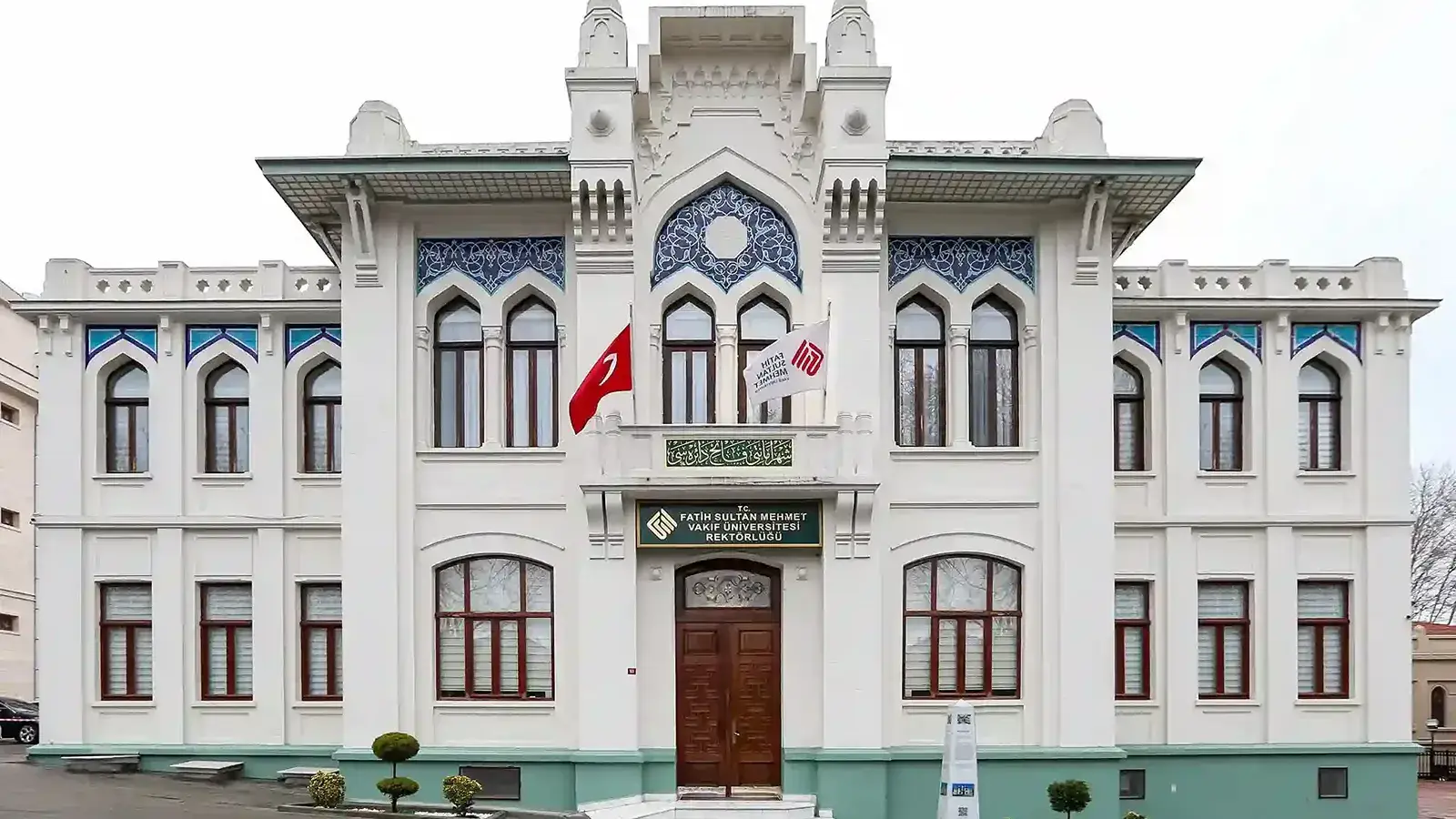
In our catalogue, a PhD in the history of Islamic science in Istanbul is offered by Fatih Sultan Mehmet Vakif University, with annual tuition of around $4,500. This is a Turkish-taught doctoral program, a detail that matters for who it suits, which we explain in full. You can explore the full, filterable picture, including related humanities options, on our programs explorer.
This guide walks through everything a prospective doctoral student needs to weigh: who the program is for, what you actually research, the honest truth about the language and the source-language demands, the real costs of studying and living in Istanbul, how recognition works, the admission and visa steps, and where the qualification can take you afterwards. Because a PhD is a major, multi-year commitment, the aim is a realistic picture, not a sales pitch, so you can decide whether this specialised path fits your goals.
Who This Program Is For
A PhD is the highest academic degree, a research doctorate that builds on a master’s and culminates in an original dissertation contributing new knowledge. A PhD in the history of Islamic science is a specialised field that sits at the intersection of the history of science, Islamic studies, and the history of the Islamic world. It suits people with a strong relevant background, typically a master’s in the history of science, Islamic studies, a relevant science, or a related humanities field, who want to become scholars of this particular tradition.
This program suits several kinds of people. It suits aspiring academics who want to research and teach the history of science, particularly Islamic and Ottoman science, at university level. It suits scholars from the sciences who have developed a deep interest in the history of their discipline and want to study its Islamic heritage rigorously. It suits historians and students of Islamic civilisation drawn specifically to its scientific dimension. And it suits anyone with the linguistic and historical preparation, and the genuine passion, to spend years researching original scientific manuscripts and the world that produced them.
It is honest to recognise that this is a niche, specialised field, smaller than broad disciplines and offered at fewer institutions. That is part of its appeal, the chance to work at the frontier of a fascinating and historically rich area, but it also means the field rewards focus and genuine vocation. This is a path for those with a specific scholarly calling toward the history of science in the Islamic tradition, not a general qualification. If that describes you, it can be a deeply rewarding direction; if your interest is broader, a wider field such as Islamic studies or general history may fit better, and it is worth being clear about that before committing years to a specialised doctorate.
Why Study the History of Islamic Science in Istanbul
Istanbul has a special claim to this field. As the capital of the Ottoman Empire, which carried forward and developed the scientific traditions of the earlier Islamic world, the city was itself a centre of astronomical, medical, and mathematical activity for centuries. It inherited and produced an enormous body of scientific manuscripts, many of which survive in its libraries and archives today. For a field built on the study of original sources, that concentration of primary material is a genuine and rare scholarly advantage.
Fatih Sultan Mehmet Vakif University is itself significant here. The institution has developed a notable focus on the history of science, with dedicated scholarly attention to the Islamic and Ottoman scientific heritage, making it one of the natural homes for this specialised study. For a field offered at relatively few places, an institution that has deliberately cultivated expertise and resources in it is a meaningful draw, since in doctoral study the depth of the department and its faculty matters enormously.
The cost picture is also favourable. Compared with doctoral study in the history of science at Western universities, Istanbul offers serious scholarship at a more accessible price, with tuition in our catalogue around $4,500 a year. When you add a cost of living lower than most Western capitals, a multi-year doctorate becomes more financially manageable, which matters greatly for a long degree, especially in a specialised humanities field where funding elsewhere is scarce and competitive.
Finally, there is the experience of researching this subject in the city where so much of it happened. Istanbul’s observatories, libraries, and scientific heritage are not abstractions but part of the living fabric of the place. For scholars from the region, particularly Iran, the Middle East, and Central Asia, whose own histories are woven into this scientific tradition, Istanbul combines cultural and intellectual proximity with the manuscripts and institutions that make serious research possible.
Is a PhD in the History of Islamic Science Worth It?
Whether a PhD is “worth it” depends heavily on your goals, because it is a long, demanding commitment with a specific purpose. For this specialised field, the honest answer is that it is worth it for those with a genuine scholarly vocation toward the history of science in the Islamic tradition who want an academic or high-level research career and understand what the degree offers.
On the positive side, the PhD is the essential qualification for an academic career, and there is no substitute for it if you want to research and teach in this area. The field itself is intellectually rich and increasingly appreciated, as scholars and the wider world recognise the central place of Islamic science in the global history of knowledge. Doing the doctorate in Istanbul, surrounded by primary sources and at an accessible cost, makes a specialised path that can be hard to fund elsewhere genuinely achievable. For the right person, the chance to spend years uncovering and interpreting an extraordinary scientific heritage is its own profound reward.
On the realistic side, weigh several things honestly. A PhD is a major investment of time, often four to six years, and this is a niche field, so academic positions specifically in the history of Islamic science are limited, though the skills transfer to the broader history of science and Islamic studies. The academic job market in the humanities is competitive everywhere, so the degree does not guarantee a post. And the field makes serious demands on source languages, as we discuss below. Approached with a clear scholarly purpose and realistic expectations, it is profoundly worthwhile. Approached vaguely, it is a long and specialised commitment to an uncertain end. The clearer your calling to this particular field, the better the return.
How Long Is the Program and How Is It Structured?
A PhD in the history of Islamic science in Türkiye typically takes around four to five years of full-time study, sometimes longer depending on the research. Like most doctoral programs, it follows a recognisable structure, building from coursework toward independent research and an original dissertation.
The early phase usually involves advanced coursework and seminars in the history of science, the methods of the field, and the specific scholarly traditions of Islamic and Ottoman science, helping you deepen your knowledge and refine your research focus. This is followed by a qualifying or comprehensive examination, which you must pass to demonstrate mastery and readiness for independent research. Passing it marks your transition to doctoral candidate.
The heart of the degree is the dissertation, an original, book-length work that makes a genuine contribution to scholarship. Under your advisor’s supervision, you design and carry out research, working closely with primary sources, often scientific manuscripts in Arabic or Ottoman Turkish, and write up your findings over a period of years, culminating in the dissertation’s defence before a committee. This is the part that defines the degree and demands the most independence, discipline, and scholarly skill, including the ability to read and interpret historical scientific texts in their original languages.
Throughout, your relationship with your supervisor and the scholarly community matters enormously. In a specialised field, the presence of a faculty member who can genuinely supervise your specific research is especially important, since there are fewer experts than in broad disciplines. When you consider the program, the fit with potential supervisors and the department’s strength in your particular area of interest should weigh heavily, more so than at earlier levels of study.
What You Research
The history of Islamic science is rich and varied, spanning many scientific disciplines across many centuries, and a PhD allows deep specialisation within it. The exact focus depends on your interests and the department’s expertise, but the field encompasses several major areas, and your dissertation will narrow to a specific question within one of them.
Astronomy and the exact sciences are central to the tradition. Islamic astronomers produced sophisticated observational and theoretical work, built major observatories, and refined planetary models, and this remains one of the most studied and celebrated areas of the field.
Mathematics in the Islamic world gave the world algebra, advanced trigonometry, and important developments in arithmetic and geometry. Studying its history means tracing ideas that reshaped the global mathematical tradition.
Medicine and the life sciences were areas of remarkable achievement, with physicians producing influential medical encyclopaedias, hospitals, and pharmacological knowledge that shaped medicine in both the Islamic world and Europe for centuries.
Optics, physics, and mechanics saw major contributions, including foundational work on light and vision and ingenious mechanical and engineering devices, areas that connect science to technology and craft.
The transmission and exchange of knowledge is a crucial theme, examining how science moved between the Greek, Indian, Persian, Islamic, and later European worlds, and how the Islamic tradition both preserved and transformed earlier knowledge.
Scientific institutions and manuscripts form a practical and historical focus: the observatories, libraries, and schools that produced science, and the manuscript traditions through which scientific knowledge was recorded and transmitted, which are also the primary sources of your research.
Ottoman science specifically, given the institution and city, is a natural area of focus, examining the scientific activity of the Ottoman period and its place within the longer Islamic scientific tradition.
Your own research will focus narrowly within one of these areas, working directly with original scientific texts and the scholarly literature. The ability to read primary sources in their original languages, above all Arabic and often Ottoman Turkish, is central to serious work in this field. If your interest is in the broader civilisational context, our guide to history and civilization studies in Istanbul covers a related path, and our guide to Islamic studies in Istanbul covers the wider intellectual tradition.
Language of Instruction and Sources: An Honest Look
This section is the most important practical part of the guide, because the history of Islamic science makes demands on language at two distinct levels, and both matter for whether the path is realistic for you.
First, the language of instruction. The program in our catalogue is Turkish-taught. This means lectures, seminars, coursework, and the everyday academic life of the program are conducted in Turkish. If your Turkish is not already strong, you should plan to reach a high level, often through a one-year preparatory program, before you can study comfortably at doctoral level. This is a real requirement, and unlike some fields where an English option exists, here the medium is Turkish.
Second, and just as important, the languages of the sources. Serious research in the history of Islamic science requires the ability to read original scientific manuscripts, which are typically in Arabic, the lingua franca of Islamic science, and often in Ottoman Turkish, especially for the Ottoman period, and sometimes Persian. These historical and technical texts are demanding, and the ability to read and interpret them is the core scholarly skill of the field. This requirement exists regardless of the language of instruction, and at the doctoral level it is essential rather than optional.
Two language levels: the program is Turkish-taught, and the research itself demands reading scientific manuscripts in Arabic, often Ottoman Turkish, and sometimes Persian — assess both honestly before committing.
Putting these together, the honest takeaway is that this field suits people who either already have, or are genuinely committed to developing, both strong Turkish for instruction and the classical source languages, above all Arabic, that the research demands. This is a significant linguistic undertaking, and it is part of what makes the field specialised. We say this plainly because the language preparation is central to whether you can succeed, and it is far better to assess it honestly before committing years to a doctorate. If you would like an honest view of whether your language background fits research in your area of interest, you can contact us and we will tell you straight.
The University Offering the History of Islamic Science in Istanbul
Here is the university in our catalogue that offers the history of Islamic science in Istanbul, with its level, language, and tuition.
| University | City | Language | Levels | Tuition/yr |
|---|---|---|---|---|
| Fatih Sultan Mehmet Vakif University | Istanbul | Turkish | PhD | $4,500 |
Fatih Sultan Mehmet Vakif University is the institution in our catalogue offering the history of Islamic science in Istanbul, at doctoral level, in Turkish, with tuition around $4,500 a year. The university has developed a notable focus on the history of science and the Islamic and Ottoman scientific heritage, which makes it a fitting and natural home for this specialised doctoral study, and is precisely the kind of dedicated expertise that matters most in a niche field. Because this is the dedicated option in our catalogue for this exact specialisation, it is also worth considering closely related fields, such as Islamic studies and history and civilisation studies, which provide broader homes for related research. The full, filterable list is in the programs explorer.
Tuition Fees in Istanbul (2026)
For the 2026 intake, tuition for the history of Islamic science at Fatih Sultan Mehmet Vakif University in our catalogue is around $4,500 per year. For doctoral study in a specialised humanities field, this is a notably accessible figure compared with equivalent programs at Western universities, where such study is often expensive or dependent on scarce, competitive funding.
A few things are worth understanding about this number. First, it is an annual figure, and a PhD runs several years, so the total accumulates over four to five years or more, before living expenses, though it remains modest by international standards. Second, tuition can change from year to year, and the exact fee may depend on any institutional discounts or funding, so always confirm the current figure directly. Third, for doctoral study it is especially worth asking about funding, assistantships, and scholarships, which can substantially offset or even cover tuition for strong candidates, as we discuss below.
For a fuller picture of how fees and funding work across Turkish universities, including the kinds of discounts and arrangements that are sometimes available, see our dedicated guide to scholarships and tuition. For a multi-year doctorate, the funding picture matters at least as much as the headline tuition.
Cost of Living for Students in Istanbul
Tuition is only one part of your budget, and for a multi-year PhD the cost of living over the full period is a major consideration. As a rough guide, a student in Istanbul can expect to spend somewhere between $400 and $700 a month on living costs, depending heavily on lifestyle and, above all, on accommodation. Over the several years of a doctorate, this is the larger part of the total cost, so it deserves careful long-term planning.
Accommodation is the biggest single variable. University dormitories and shared flats are the most economical options, while a private apartment in a central, sought-after neighbourhood costs considerably more. Where you live also affects your transport costs and your proximity to the libraries and manuscript collections your research depends on, which is a real consideration for a scholar in this field. Food is reasonable if you cook and shop at local markets, and more expensive if you eat out frequently. Public transport in Istanbul is extensive and student discounts help keep costs down, but the city is large.
Other regular expenses include health insurance, which is required for your residence permit, mobile and internet, books and research materials, and personal spending. None of these is individually large, but over the years of a doctorate they add up, so build them into a long-term plan. The overall message is that Istanbul is affordable by the standards of major international cities, a real advantage for a long degree, but “affordable” still means budgeting carefully across the full duration.
Scholarships and Funding
Funding is especially important for doctoral study, and it is worth understanding the landscape thoroughly before committing to a multi-year program. The most prominent government scheme is Türkiye Bürsları, the national scholarship program, which is competitive and, for successful applicants, covers tuition along with a stipend and other benefits, including at the doctoral level. For a specialised PhD where funding elsewhere is scarce, this kind of support can be transformative, so it is well worth a serious application if your profile is strong.
Beyond the national scheme, universities themselves often offer doctoral funding, assistantships, and tuition waivers, particularly for strong research candidates, since departments value good doctoral students who contribute to research. It is always worth asking the university directly about the funding available for its PhD program, as the effective cost for a funded doctoral student can be very different from the published tuition. For research degrees in particular, this conversation should be part of your decision from the start.
Tip: Türkiye Bürsları covers tuition plus a stipend for successful applicants, including at the doctoral level — and universities often offer assistantships and tuition waivers, so ask the department directly about funding from the start.
For a thorough overview of the options, eligibility, and how to approach funding strategically, read our guide to scholarships and tuition. And if you would like personalised help identifying which funding routes realistically fit your background and research plans, you can book a free consultation and we will talk it through honestly.
Recognition and Accreditation: An Honest Look
Recognition matters for any degree, and for a PhD it bears particularly on your future academic career. Fatih Sultan Mehmet Vakif University operates within the Turkish higher education system and is recognised by YÖK, the Council of Higher Education, which governs and accredits universities in Türkiye. A doctorate from a YÖK-recognised university is a legitimate, accredited PhD, recognised internationally as a Turkish doctoral degree.
For an academic career, what matters alongside formal recognition is the scholarly reputation of the institution and your supervisor in this specific field, the quality of your research, and your publications. In academia, and especially in a specialised field where the community is small and international, your standing is built substantially on the work you produce and the scholarly networks you join. The university’s deliberate focus on the history of science is relevant here, but as in any doctoral choice, look closely at the specific faculty and their standing in your area of interest.
The honest, encouraging point is that for a research and academic career, an accredited PhD from a recognised institution with genuine expertise in the field, combined with strong research and publications, is what counts, and these are achievable in Istanbul at an accessible cost. The history of science is an international field, and good work in it travels. If you intend to pursue an academic career in a specific country, it is wise to understand how doctoral qualifications and academic hiring work there, but the fundamentals, a real PhD plus real scholarship, are what build a career. Go in with clear eyes about how academic careers work, and the qualification serves you well.
Admission Requirements
Admission requirements for a PhD are more demanding and more individual than for earlier degrees. First and foremost, you generally need a relevant master’s degree, since a PhD builds directly on master’s-level study and research. A background in the history of science, Islamic studies, a relevant science, or a related humanities field is the usual basis, and your background should connect meaningfully to your intended research. A strong academic record matters, as doctoral admission is selective.
Beyond the master’s, doctoral admission typically requires a research proposal outlining the research you intend to pursue, which is often the most important part of the application and demonstrates your readiness for independent research and your fit with the department. You will also submit academic transcripts and degree certificates, and usually letters of recommendation. Many programs require an interview, and a writing sample is often expected. For this Turkish-taught program, you should expect to demonstrate Turkish proficiency, and crucially, given the field, you should be prepared to demonstrate or develop the source-language skills, above all Arabic and often Ottoman Turkish, that the research requires.
📋 Doctoral application file — tick as you gather
Requirements differ and can change, and doctoral admission is often handled individually, so always confirm the current, exact expectations with the department or with us before applying. Given the specialised and language-intensive nature of this field, an honest early assessment of your fit and preparation is especially valuable. If you would like help with that, get in touch and we will give you a straight view.
How to Apply: Timeline
A doctoral application benefits from a long runway, because the research proposal and the search for a supervisor take time, and in a specialised field, identifying the right department and advisor is especially important. Start your research and preparation roughly a year or more before you intend to begin, identifying potential supervisors whose work aligns with your interests, reading deeply in your intended area, and shaping your research proposal.
Six to nine months before, prepare your materials carefully: refine your research proposal, gather and where necessary translate and certify your transcripts and degree certificates, secure strong letters of recommendation, and prepare a writing sample. If you are applying for funding such as Türkiye Bürsları, note that these have their own, often early, deadlines, and the funding application for a PhD is a major undertaking in itself, so begin it well in advance. Plan also for any Turkish preparation you may need, which affects your whole timeline.
Three to six months before, submit your applications, ideally after making contact with potential supervisors where the program allows it. Once you receive an offer, you move into the visa and travel phase, which we cover next. Throughout, keep careful copies of everything and confirm each requirement directly, because doctoral admission is individual and details vary. A specialised PhD is a years-long commitment, so invest real care in choosing the right program and supervisor from the start. If this feels daunting, that is exactly the kind of thing we help with, so reach out and we can guide you.
Student Visa and Residence Permit
Once you have an official acceptance letter from a Turkish university, the visa and residence process follows a well-trodden path, but it requires attention to detail and timing, and for a multi-year doctorate, the residence permit will be renewed across the duration of your studies. The first step for most international students is to apply for a student visa at the Turkish embassy or consulate in your home country. You generally cannot enter Türkiye to study long-term on a tourist arrangement and then convert it, so the student visa from your home country is the proper route. You will need your acceptance letter, a valid passport, proof of funds, and the other documents the consulate specifies.
After you arrive in Türkiye and settle in, you must apply for a residence permit, the ikamet, within the period set by the authorities. This legalises your stay for the duration of your studies and will need renewing over the years of a doctorate. The application involves registering with the migration authority, providing your acceptance and enrolment documents, proof of accommodation, valid health insurance, and the relevant fees. Your university’s international student office is usually a major help here and handles these applications routinely.
The two pieces of advice that matter most are to start early and to keep your documents in order, and across a multi-year degree, to stay on top of renewal deadlines. Keep multiple copies of everything, follow the instructions your university gives you, and ask for help when you are unsure. If you want a clearer overview of what studying in Türkiye involves end to end, our study in Turkey guide pulls the practical pieces together in one place.
Careers After a PhD in the History of Islamic Science
A PhD in the history of Islamic science leads most directly to an academic and scholarly career, and that is its primary purpose. The classic path is becoming a university professor or researcher in the history of science, Islamic and Ottoman science, or related areas, teaching and producing original research. For this path, the PhD is essential, and your research, publications, and scholarly reputation determine your progress. The skills also transfer to the broader history of science and to Islamic studies, widening the academic possibilities somewhat beyond the narrowest specialisation.
Beyond the university, research institutes focused on the history of science, Islamic civilisation, and related areas employ scholars with this expertise. Museums of science and Islamic art and culture, manuscript libraries and archives, and heritage institutions value people who can work with scientific manuscripts and interpret this heritage for scholarship and the public. Publishing, editing, and translation of scientific and historical texts draw on doctoral expertise, as do some roles in cultural and educational institutions concerned with the Islamic scientific heritage.
It is honest to say that this is a specialised field with a limited number of positions specifically in it, and that the humanities academic job market is competitive everywhere. The strongest outcomes go to those who produce excellent research, publish, build international scholarly networks, and remain flexible, drawing on the transferable skills of the historian of science. For those with genuine vocation, though, the PhD opens the door to a life of research into one of the great scientific traditions of human history, which for the right person is its own deep reward. As always, plan with clear eyes about how academic careers in specialised fields are built.
How to Choose the Right Program
In a specialised field offered at few institutions, choosing well is largely about fit with the department and supervisor. Start by confirming that there is a faculty member at Fatih Sultan Mehmet Vakif University whose research genuinely aligns with your intended area, since in doctoral study, and especially in a niche field, the supervisor relationship shapes the entire experience and outcome. Investigate the department’s strengths and, where appropriate, consider reaching out to gauge the fit before applying.
Next, assess honestly your preparation against the field’s demands, particularly the language requirements at both levels: Turkish for instruction and the classical source languages, above all Arabic, for research. This is the single most important practical factor in whether the path is realistic for you, so be candid with yourself about where you stand and what preparation you would need. Consider also the resources that matter for your research, especially access to the manuscript collections that are one of Istanbul’s great strengths for this field.
Then weigh the practical factors over the full duration of a doctorate: total cost across several years including living expenses, the funding and assistantships available, and the support and community the department offers, since a specialised PhD is a long and sometimes solitary undertaking that good support makes far more sustainable. Because this is such a significant, multi-year, specialised commitment, it is worth investing real care in the choice. If you would like a second opinion that weighs all of this against your particular situation and research goals, that is precisely what we do, so book a free consultation.
Common Mistakes Applicants Make
A few recurring mistakes are worth flagging so you can avoid them. The first, and most consequential, is underestimating the language demands at both levels. The program is Turkish-taught, and the research requires reading scientific manuscripts in Arabic and often Ottoman Turkish. Applicants sometimes underestimate this dual linguistic requirement, which is central to whether they can succeed. Assess it honestly before committing.
A second mistake is underestimating the importance of supervisor and departmental fit, especially in a specialised field. Some applicants focus on the institution’s name or cost without confirming that a faculty member can actually supervise their specific research. In a niche PhD, this fit is decisive, so research it carefully. A third mistake is treating the specialised field too vaguely; this is a focused path that rewards genuine vocation, and applicants without a clear scholarly calling toward the history of science in the Islamic tradition may find a broader field a better fit.
Other frequent missteps include neglecting the funding question for a multi-year degree, underestimating the length and difficulty of a doctorate, and failing to confirm current, individual requirements directly with the department. Avoiding these mistakes will save you significant time and set you up for a successful and well-prepared doctorate.
DON’T
- Underestimate the dual language demands — Turkish plus Arabic and often Ottoman Turkish
- Choose without confirming a faculty member can supervise your specific research
- Neglect the funding question for a multi-year degree
DO
- Assess your language preparation honestly before committing
- Research supervisor and departmental fit carefully
- Confirm current, individual requirements directly with the department
Related Programs You Might Consider
If you are weighing a PhD in the history of Islamic science against neighbouring fields, several of our other guides may help you compare. If your interest is in the broader Islamic intellectual tradition rather than its scientific dimension specifically, our guide to Islamic studies in Istanbul covers a wider field that includes theology, law, philosophy, and history. If your interest leans toward the historical and civilisational picture, our guide to history and civilization studies in Istanbul covers a related path.
If you are drawn more to the sciences themselves than to their history, exploring contemporary programs in the relevant science may suit you better, and if the language and manuscript dimension fascinates you most, programs in Arabic or Ottoman studies and philology can be worthwhile. Reading across these guides can help you confirm that the history of Islamic science really is the right focus for your doctoral work, or point you toward a neighbouring field. The programs explorer lets you compare all of these side by side. And since the same civilisation carries a rich artistic heritage, our guide to a PhD in music in Istanbul covers another doctoral path the city supports.
Frequently Asked Questions
Can I study the history of Islamic science in English in Istanbul?
In our catalogue, the doctoral program in this field at Fatih Sultan Mehmet Vakif University is Turkish-taught, so you should plan to reach a strong level of Turkish, potentially through a preparatory year. Separately, and regardless of the language of instruction, serious research in this field requires reading scientific manuscripts in their original languages, above all Arabic and often Ottoman Turkish. Both language dimensions are central to whether the path is realistic for you.
Do I need a master’s degree to apply?
Generally yes. A PhD builds directly on master’s-level study and research, so a relevant master’s, in the history of science, Islamic studies, a relevant science, or a related humanities field, is normally required, and your background should connect meaningfully to your intended research. Doctoral admission is selective and typically also requires a strong research proposal, recommendations, and often an interview.
How long does the PhD take?
Usually around four to five years of full-time study, sometimes longer depending on the research. The program moves from advanced coursework through a qualifying examination to the core of the degree, the original dissertation, which is researched, written, and defended over a period of years, working with original scientific manuscripts.
How much does it cost?
In our catalogue, tuition at Fatih Sultan Mehmet Vakif University is around $4,500 a year, which is accessible by international humanities-PhD standards. On top of tuition, budget around $400 to $700 a month for living costs in Istanbul across the several years of the degree. Importantly, ask about doctoral funding, assistantships, and scholarships, which can substantially reduce the cost for strong candidates.
What languages do I need for the research?
The core source languages are Arabic, the lingua franca of Islamic science, and often Ottoman Turkish, especially for the Ottoman period, with Persian relevant for some topics. The ability to read and interpret scientific manuscripts in these languages is the central scholarly skill of the field and is essential at the doctoral level, in addition to the Turkish needed for the program itself.
Is this a science degree or a history degree?
It is a history degree, specifically the history of science, situated within the humanities. It studies the scientific tradition of the Islamic world historically, its texts, discoveries, institutions, and context, rather than training you to practise contemporary science. A background in the sciences can be valuable preparation, but the doctorate itself is a work of historical scholarship.
What can I do after the PhD?
The primary path is academic: researching and teaching the history of science, Islamic and Ottoman science, or related areas at university level. Beyond academia, the expertise is valued in research institutes, science and culture museums, manuscript libraries and archives, heritage institutions, and scholarly publishing and translation. The field is specialised, so strong research and flexibility matter for the best outcomes.
Choosing where and how to pursue a PhD in the history of Islamic science is a significant, years-long, specialised decision, and you do not have to make it alone. If you would like honest, personalised guidance on whether this path fits your background, research goals, and language preparation, book a free consultation. You can also browse and compare every option, including the university discussed here, in our programs explorer.
Have a question about this article?
Our advisors will guide you for free so you can choose the best path.
Free consultationWhy students choose us
Real partnerships, honest pricing, and support that doesn't stop at admission.
Scholarships & smart discounts
We match you with merit scholarships (often 25–100%) plus sibling and early-payment discounts, so you pay the lowest fair price for your program.
Free, end-to-end guidance
As an authorized agent, our advice and application support cost you nothing. We prepare and submit everything for you — no guesswork.
57 partner universities
Direct partnerships across Türkiye and Northern Cyprus with 5,500+ programs. We find the program that fits you, not just any offer.
Transparent, honest fees
Every tuition figure comes straight from our live catalog and is shown upfront. No hidden costs, no surprises before you commit.
No entrance exam needed
Most private universities admit you on your academic record — many fully in English — so you can apply without YÖS or SAT.
With you to visa & arrival
From choosing a program to your student visa, residence permit and settling in, we stay by your side at every step.