
Sports physiology sits at the meeting point of science and human performance, studying how the body responds and adapts to exercise, training and recovery. It is a specialised postgraduate field, and in Istanbul it is genuinely niche. In our catalogue, exactly one university in Istanbul currently offers a master’s in sports physiology: Istanbul Okan University, with tuition of $3,500 to $4,500 for the whole program and both thesis and non-thesis options. That is the honest starting point, and the rest of this guide is built around it.
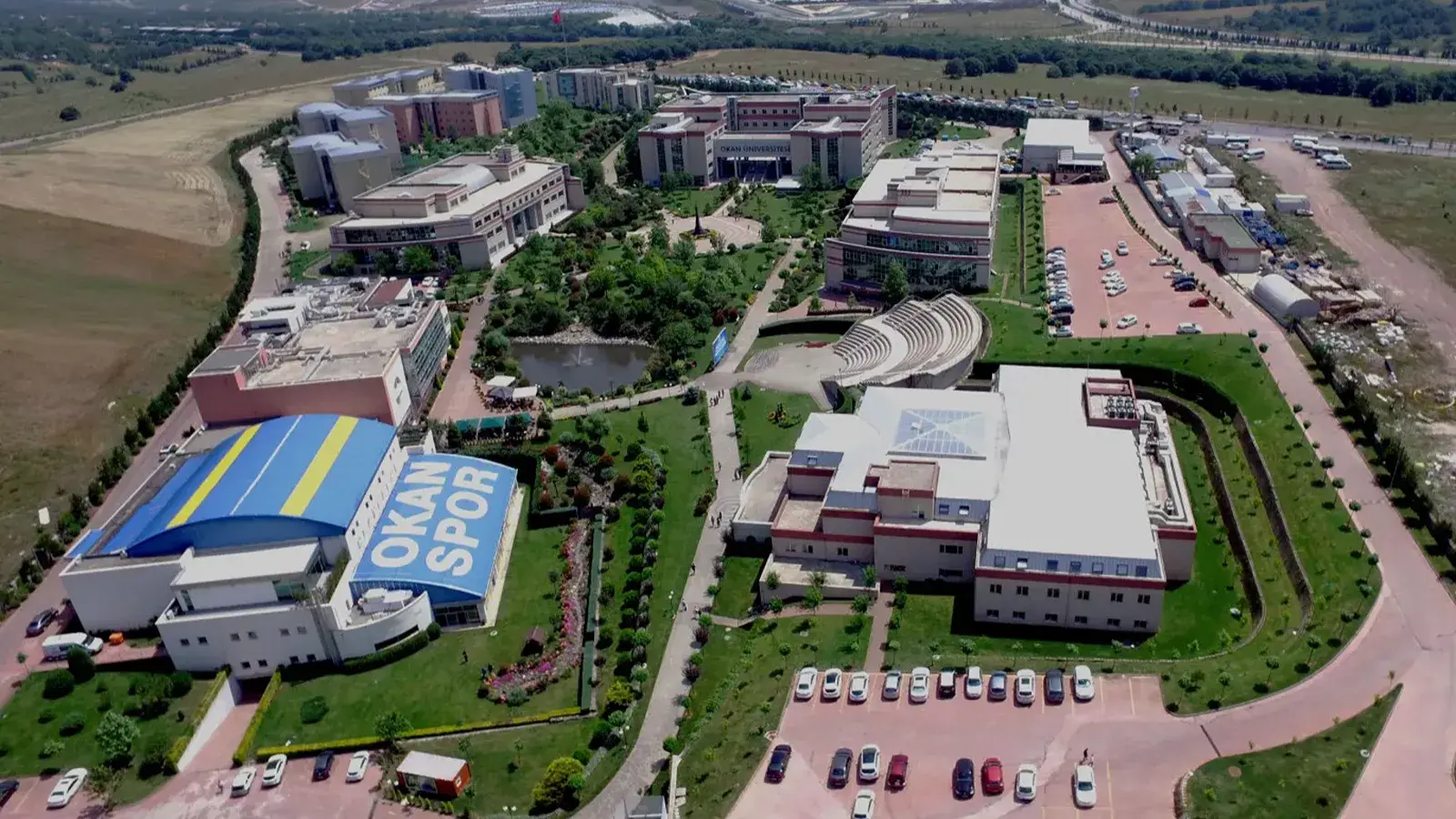
This 2026 guide is written for prospective students weighing a master’s in sports physiology in Istanbul. Because the choice is narrow, we will not pretend otherwise. Instead, we explain who the program suits, what you actually study, the all-important language reality (it is Turkish-taught), the costs of studying and living in Istanbul, scholarships, recognition, visas and residence, and the careers the degree opens. We also point you toward related fields that widen your options if a single program feels too narrow. Click the university name to open its full profile, and compare every program in our programs explorer.
Who This Program Is For
A master’s in sports physiology is a postgraduate degree, so you need a relevant bachelor’s first. Typical entrants hold an undergraduate degree in sport sciences, exercise and coaching, physical education, physiotherapy, nursing, biology or medicine. If your first degree gave you a foundation in human anatomy, physiology or movement science, you are well positioned. The program is designed for people who want to understand the body under physical stress at a deep, evidence-based level rather than simply to coach or instruct.
This degree tends to attract a few distinct groups. The first is sport science and physical education graduates who want to specialise and move from general coaching into performance science, testing and conditioning. The second is health professionals, physiotherapists, nurses and sometimes doctors, who want to add exercise physiology to their clinical toolkit, particularly for rehabilitation, cardiac and metabolic health, and athletic recovery. The third is graduates aiming at research or an academic career, who treat the master’s as the stepping stone to a PhD and a life in laboratories and teaching.
If you simply want to become a personal trainer or a fitness coach, a master’s in sports physiology is more than you need and is arguably the wrong tool. This is a science degree, heavy on physiology, laboratory assessment and research methods. It rewards people who enjoy data, measurement and the mechanics of how training produces adaptation. If that description excites you, read on. If it does not, the related fields at the end of this guide may suit you better.
Why Study Sports Physiology in Istanbul
Istanbul is the natural home for this kind of program in Türkiye. It is the country’s largest city, its sporting capital and the base for many of its biggest football, basketball and athletics organisations. A city of this size generates real demand for performance science: professional clubs, private performance laboratories, rehabilitation centres, fitness chains and a growing health and wellness sector all draw on people who understand exercise physiology. Studying here means studying where the jobs and the applied opportunities concentrate.
There is also the academic and lifestyle dimension. Istanbul hosts a large number of universities and one of the biggest international student communities in the region, so settling in is straightforward and there is an established support network for newcomers. The city is vibrant, historic and well connected, with a warm climate and a cost of living far below comparable European capitals. For a postgraduate student, that combination of affordability, scale and energy is hard to beat.
Finally, there is value. A master’s in sports physiology in Istanbul costs a fraction of what an equivalent postgraduate degree costs in Western Europe, North America or Australia, while still being delivered in a faculty with laboratory facilities and clinical or sporting partnerships. For students who want a respected, science-led postgraduate qualification without heavy debt, the financial case is strong.
Is a Master’s in Sports Physiology Worth It?
For the right person, yes, and the key phrase is “the right person.” If your goal is performance science, applied physiology, research or an academic pathway, the degree is a genuine specialisation that sets you apart from general fitness and coaching qualifications. It signals that you can design and interpret physiological testing, understand training adaptation at a systems level, and read and conduct research. Those are valuable, transferable competencies.
The return on investment is helped enormously by Istanbul’s low tuition and living costs. At $3,500 to $4,500 a year, the total outlay for the degree is modest by international standards, and the cost of living is among the lowest of any major city offering postgraduate study in this field. That keeps the financial risk low even if your career path takes a few years to mature.
Be honest with yourself about two things, though. First, this is a narrow, specialised field, and the number of dedicated sports physiology roles is smaller than, say, physiotherapy or nutrition. Many graduates build careers by combining sports physiology with a clinical or coaching base. Second, the program is Turkish-taught, so the language commitment is real. If you are clear-eyed about both, and your interests genuinely lie in the science of performance, a master’s in sports physiology can be very worthwhile.
How Long Is the Program and How Is It Structured?
A master’s in sports physiology in Türkiye typically runs around two years, and Istanbul Okan University offers both thesis and non-thesis options, which is an important choice to understand before you apply.
The thesis option is the traditional, research-oriented route. It usually involves a year of taught coursework followed by a year focused on an original research project, supervised by a faculty member, that you write up and defend as a thesis. This is the path to choose if you want to continue to a PhD, work in research, or move into academia, because it gives you supervised, hands-on research experience and a substantial written output.
The non-thesis option is more coursework-heavy and applied. It generally replaces the research thesis with additional taught modules and a smaller term project or report, and it often takes a little less time. This route suits people who want the knowledge and the qualification for applied or professional work, in clubs, labs or fitness and rehabilitation settings, rather than a research career. It is the more practical, faster path to the credential.
🔬Choose THESIS if…
- You want a PhD, research or academia
- You want supervised, hands-on research experience
🏟️Choose NON-THESIS if…
- You want applied work in clubs, labs or rehab settings
- You want the faster, more practical path to the credential
Either way, you should plan for roughly two years of full study, plus a possible Turkish preparatory year beforehand if your Turkish is not yet at the required level. That preparatory year, where needed, is the single biggest variable in your overall timeline, so factor it in honestly from the start.
What You Study
The curriculum is built on a foundation of physiology and layers applied performance science on top. While exact module names vary, a master’s in sports physiology covers a recognisable core that you can expect to encounter in some form.
Exercise physiology is the backbone: how muscles, the cardiovascular system and metabolism respond to acute exercise and adapt to repeated training. You study cardiopulmonary and metabolic responses to exercise in detail, including oxygen uptake, energy systems, lactate dynamics and how the heart, lungs and muscles work together under load.
Strength and conditioning science translates physiology into training design, covering the principles of overload, periodisation, power, endurance and the science behind programming for athletes. You also get the basics of biomechanics, enough to understand movement, force and the mechanical demands of sport, which complements the physiological side.
Sports nutrition is usually part of the picture, linking diet, hydration, supplementation and body composition to performance and recovery. Recovery science examines fatigue, adaptation, sleep, and the methods used to help athletes bounce back between sessions. A defining feature of the degree is testing and laboratory assessment: learning to measure fitness, capacity and physiological markers using the equipment and protocols of a performance lab, then interpreting the results.
Underpinning all of this is research methods and statistics, which teaches you to read, design and critically evaluate studies, the skill that distinguishes a master’s graduate from a certificate holder. If you take the thesis route, the program culminates in your thesis, an original research project that pulls these threads together into a piece of supervised, defendable work.
Language of Instruction: An Honest Look
This is the single most important practical point in the whole guide, so we will be direct about it. The master’s in sports physiology at Istanbul Okan University is Turkish-taught. It is not an English-medium program. That means your coursework, lectures, reading, assessments and, on the thesis route, much of your research interaction will be in Turkish.
In practice you need a solid command of Turkish, generally around B2 to C1 level, to follow a science-heavy master’s comfortably. If you do not have that yet, the standard solution is a one-year Turkish preparatory year before the master’s begins, which most universities offer or can direct you to. That adds a year to your timeline but is often the difference between struggling and thriving.
Language check: this program is Turkish-taught — plan for roughly B2 to C1 Turkish, or a one-year Turkish preparatory year before the master's begins.
Do not underestimate this. A postgraduate science degree is demanding even in your first language, and sports physiology is dense with technical vocabulary. If you are not willing to commit to learning Turkish to a genuinely functional level, this specific program is probably not the right choice, and you should look at related English-taught fields, some of which we link at the end. Being honest about the language requirement now will save you a great deal of difficulty later.
Universities Offering Sports Physiology in Istanbul: Tuition Compared
Here is the candid reality of the market in our catalogue: there is one option in Istanbul, and the table reflects exactly that.
| University | City | Language | Levels | Tuition (whole program) |
|---|---|---|---|---|
| Istanbul Okan University | Istanbul | Turkish | Master | $3,500 to $4,500 |
We will not inflate this into a longer list than the data supports. Only one university in our catalogue currently offers a master’s in sports physiology in Istanbul, which is Istanbul Okan University. That is genuinely the niche nature of the field. The good news is that related fields, such as physiotherapy and rehabilitation and broader sport sciences, widen your options considerably, both in Istanbul and across Türkiye, if a single dedicated program feels too narrow. Browse and compare everything in our programs explorer to see the full range.
Tuition Fees in Istanbul (2026)
Tuition for the master’s in sports physiology at Istanbul Okan University is $3,500 to $4,500 for the whole program — not per year — with the exact figure depending on whether you take the thesis or non-thesis track. Okan prices its master’s degrees for the entire course of study, so that is the full tuition for the roughly two-year degree, before living costs.
By international standards, this is very affordable for a postgraduate qualification in a specialised science field. An equivalent master’s in sports or exercise physiology in the United Kingdom, the United States, Canada or Australia would typically cost several times this, often before living expenses are even counted. The thesis and non-thesis options are usually priced within the same band, so the choice between them should be driven by your career goals rather than by a large price gap.
Always confirm the current figure and what it includes directly before you commit, since tuition can change between intakes and may be quoted per year or per semester. For broader context on how Turkish tuition and funding work across fields, see our guide to scholarships and tuition.
Cost of Living for Students in Istanbul
For most students, living costs matter as much as tuition, and here Istanbul is a real advantage. A student can expect to spend roughly $400 to $700 a month in Istanbul, depending heavily on lifestyle, neighbourhood and accommodation choices. Over a year, that works out to something in the region of $4,800 to $8,400, which is modest for a major European city.
Accommodation is the biggest single cost. University dormitories and shared student flats are the most economical options, while a private studio in a central district costs considerably more. Living slightly outside the very centre, and sharing, brings the monthly figure toward the lower end of the range. Food is affordable, especially if you cook and shop at local markets, and Istanbul’s public transport is extensive and cheap, with student discounts that make getting around inexpensive.
The practical takeaway is that the combination of low tuition and low living costs makes Istanbul one of the most budget-friendly cities anywhere for a specialised postgraduate degree. A careful student can complete the entire master’s, tuition and living costs included, for less than a single year of study would cost in many Western countries.
Scholarships and Funding
Funding for a niche, Turkish-taught master’s like this is more limited than for large undergraduate programs, so set realistic expectations. There is no single guaranteed scholarship that covers everyone, but several avenues are worth pursuing.
Private universities such as Istanbul Okan often offer their own merit-based tuition discounts or partial scholarships, particularly for strong applicants, so always ask the admissions office directly what is available for your intake. Government-funded routes such as Türkiye Scholarships primarily target certain levels and fields and are highly competitive, but it is worth checking current eligibility for postgraduate study. Because the tuition here is already low, even a partial discount can meaningfully reduce your total cost.
Beyond formal scholarships, some students fund their studies through part-time work within the limits their visa and residence permit allow, through family support, or through employer sponsorship if they are already working in a related health or sport role. Our scholarships and tuition guide explains the broader funding landscape in Türkiye and is a good place to start your research. The key is to treat funding as something to assemble from several sources rather than expecting one award to cover everything.
Recognition and Accreditation: An Honest Look
This is a point where precision matters, so we will be careful. A master’s in sports physiology from a recognised Turkish university is an academic degree recognised by YÖK, Türkiye’s Council of Higher Education, which oversees and accredits universities and their programs. That recognition is what gives the qualification its academic standing, both within Türkiye and as a basis for further study such as a PhD.
What an academic degree does not automatically grant is a clinical practice licence. Sports physiology overlaps with health, but it is not, in itself, a regulated clinical profession in the way that, for example, physiotherapy or medicine is. If your goal involves regulated clinical practice, that is governed by separate professional licensing rules, which depend on your underlying clinical qualification and the country where you intend to work. In other words, the master’s deepens your knowledge and academic credentials, but it does not, on its own, turn you into a licensed clinician.
The practical advice is to be clear about your end goal. If you want to work in performance science, research, conditioning or fitness, the academic recognition of the degree is exactly what you need. If you intend to practise in a regulated clinical role, check the licensing requirements of your target country carefully and understand which qualification, not just this master’s, provides that licence. Honesty about this distinction now prevents disappointment later.
Admission Requirements
While exact requirements vary by intake, a master’s in sports physiology generally calls for the following, and you should confirm the current details with the university before applying.
You will need a relevant bachelor’s degree, typically in sport sciences, exercise and coaching, physical education, physiotherapy, nursing, biology, medicine or a closely related field. Universities want to see that your undergraduate background gave you a foundation in physiology, anatomy or movement science, since the master’s builds directly on that. You will usually submit your degree certificate and academic transcript, often with official translation and the appropriate authentication.
The decisive requirement for this program is Turkish language proficiency, generally around B2 to C1, demonstrated through a recognised test or the university’s own assessment. If you do not meet the language standard, admission may be conditional on completing a Turkish preparatory year first. Some programs may also ask for a statement of purpose, references, or an interview, particularly for the thesis route where a supervisor needs to assess your research fit.
Practical documents typically include a valid passport, passport photographs, and the application form and fee. Requirements differ between the thesis and non-thesis tracks, so read the specific criteria for the option you want and contact the admissions office early to clarify anything that is unclear.
How to Apply: Timeline
Plan backwards from your intended start date and give yourself plenty of margin, especially if you may need a preparatory year. A realistic timeline looks roughly like this.
Around nine to twelve months before you intend to start, research the program, confirm the entry requirements directly with the university, and assess your Turkish level honestly. If you need to improve your Turkish, this is when to begin, because language preparation is the slowest part of the process.
Around six months before, gather and prepare your documents: degree certificate, transcript, passport, language evidence, and any statement of purpose or references. Arrange official translations and authentication where required, as these can take time. Around three to six months before, submit your application within the university’s intake window, then respond promptly to any requests for clarification, conditional offers or interviews.
Once you receive an offer and acceptance, move quickly to the visa and residence steps below, since these have their own lead times. Throughout, the single most common cause of delay is underestimating either document authentication or language readiness, so front-load both. If you would like help navigating the steps, our team can guide you; you can book a free consultation at any stage.
Student Visa and Residence Permit
International students normally need a student visa to study in Türkiye, which you apply for at a Turkish consulate or embassy in your home country after receiving your official letter of acceptance from the university. You apply for the visa from outside Türkiye, so do not travel before it is issued. The exact documents vary by country, but typically include your acceptance letter, passport, photographs, proof of funds and the application form.
After you arrive in Türkiye and enrol, you apply for a residence permit, which is what allows you to stay legally for the duration of your studies. This is done through the relevant migration authority, and your university’s international office usually helps students through the process, which involves your acceptance and enrolment documents, proof of address, health insurance and the applicable fees.
Keep your documents organised and your permit valid throughout your stay, and renew it on time as needed. Rules and fees can change, so always rely on the current official guidance and your university’s international office, which deals with these procedures constantly. For a fuller overview of moving to Türkiye as a student, see our guide on how to study in Türkiye.
Careers After a Master’s in Sports Physiology
A master’s in sports physiology opens a set of specialised, science-led career paths, though it helps to think of them as a spectrum rather than a single job title. At the applied end are roles in performance laboratories and sports clubs, where physiologists design and run fitness testing, monitor training load, advise on conditioning and recovery, and help athletes and teams perform and stay healthy. Istanbul’s concentration of professional clubs and performance facilities makes it a relevant place to build this kind of career.
In the rehabilitation and fitness sector, graduates work with clinical and wellness teams on exercise-based programs for recovery, cardiac and metabolic health, and general population fitness, often alongside physiotherapists and other health professionals. Here the degree pairs especially well with a clinical undergraduate background. For those drawn to discovery, research roles in universities, institutes and industry use exactly the testing and methods skills the master’s develops.
Finally, the degree is a natural springboard to academia and a PhD. If you take the thesis route and enjoy research, the master’s is the standard stepping stone toward doctoral study, a research career and university teaching. Across all of these paths, graduates who combine sports physiology with a complementary base, in coaching, physiotherapy, nutrition or another health field, tend to have the widest and most resilient options. The specialisation is most powerful when it sits on top of a broader professional foundation.
Türkiye’s Sports and Health Sector
It helps to understand the wider context the degree feeds into. Türkiye has a large and growing sports and health economy. Football is a national passion with major clubs and a deep professional infrastructure, basketball and volleyball are strong, and athletics, combat sports and individual disciplines all have established programs. These organisations increasingly invest in sports science, conditioning and performance support, which is precisely the territory of a sports physiologist.
In parallel, Türkiye has a modern, expanding healthcare system and a significant health and wellness tourism sector, including rehabilitation and physical therapy services that attract patients from across the region. An ageing population and rising interest in fitness and preventive health are increasing demand for exercise-based care and performance science across both clinical and commercial settings. Istanbul, as the country’s largest city and sporting hub, concentrates much of this activity.
For a graduate, the practical meaning is that the ecosystem around the degree is real and growing, even if the number of jobs labelled precisely “sports physiologist” is modest. The opportunities multiply when you read the sector broadly, across clubs, clinics, labs, fitness businesses and research, and position yourself at the intersection of science and human performance. That breadth is one of the quiet strengths of this specialisation.
How to Choose the Right Program
Because the catalogue offers a single dedicated option in Istanbul, choosing well is less about comparing many programs and more about confirming that this path fits you. Start with your goal. If you want research or academia, prioritise the thesis route and ask about supervisors and laboratory facilities. If you want applied or professional work, the non-thesis route may serve you better and faster. Let the goal drive the track.
Next, be ruthlessly honest about language. Confirm the Turkish proficiency required, assess where you currently stand, and decide whether you are ready to commit to B2 to C1 or to complete a preparatory year. This single factor determines whether the program will be a good experience or a constant struggle. Then look at facilities and faculty: a sports physiology degree is only as strong as its laboratory access and the expertise of the people supervising it, so ask specific questions about testing equipment, lab time and staff backgrounds.
Finally, weigh the practicalities: total cost including any preparatory year, living arrangements, and how the degree connects to where you want to work afterward. And keep the alternatives in view. If a single dedicated program feels too narrow, the related fields below may give you more flexibility while still leading toward performance and health. Comparing options openly, including in our programs explorer, is the best way to make a confident decision.
Common Mistakes Applicants Make
The most common and damaging mistake is underestimating the language requirement. Applicants see an affordable, appealing program and gloss over the fact that it is Turkish-taught, then struggle once they arrive. Treat Turkish proficiency as a core entry requirement from day one, not an afterthought.
A second mistake is confusing an academic degree with a clinical licence. As we explained above, the master’s is a YÖK-recognised academic qualification, but it does not by itself make you a licensed clinician. Applicants who plan to practise in a regulated role must check the separate licensing rules for their target country and their underlying clinical qualification, ideally before they enrol.
DON’T
- Gloss over the Turkish-taught language requirement
- Confuse the academic degree with a clinical licence
- Pick a track that doesn't match your goal
- Leave translations and authentication too late
DO
- Treat Turkish proficiency as a core entry requirement
- Check your target country's licensing rules before enrolling
- Let research vs applied goals drive the thesis choice
- Front-load document preparation
Other frequent errors include choosing the wrong track, picking non-thesis when you actually want a research and PhD path, or vice versa; expecting abundant scholarships for a niche postgraduate program and not budgeting realistically; leaving document authentication and translation too late, which delays applications and visas; and viewing the field too narrowly, fixating on a single rare job title instead of the broad ecosystem of clubs, clinics, labs and research where the skills apply. Avoiding these mistakes is mostly a matter of honest planning and asking the university direct questions early.
Related Programs You Might Consider
If a single dedicated sports physiology program feels too narrow, or you are not committed to studying in Turkish, several closely related fields widen your options considerably while keeping you in the same broad territory of movement, performance and health.
Physiotherapy and rehabilitation is the most natural neighbour, a clinical, hands-on field with far more universities, including English-taught options, and a clear licensed-profession pathway. Nutrition and dietetics is another strong adjacent field, deeply connected to performance and recovery and offered widely across Türkiye. And if your interests run toward the deeper clinical and medical science of the body, our guide to studying medicine in Türkiye covers that route in full. Reading across these guides will help you place sports physiology in context and choose the path that genuinely fits your goals. Another allied-health option on the therapy side is a bachelor’s in language and speech therapy in Ankara, which our separate guide covers in full.
Frequently Asked Questions
Which university in Istanbul offers a master’s in sports physiology?
In our catalogue, Istanbul Okan University is the one university in Istanbul offering a master’s in sports physiology, with tuition of $3,500 to $4,500 for the whole program and both thesis and non-thesis options. It is a niche, specialised field, which is why the choice is narrow.
How much does it cost?
Tuition is $3,500 to $4,500 for the whole program, not per year, so that is the full tuition for the roughly two-year degree before living costs. Living in Istanbul typically adds $400 to $700 a month. Overall, it is very affordable by international standards for a specialised postgraduate degree.
Is the program taught in English?
No. The program is Turkish-taught. You generally need Turkish at around B2 to C1 level, and if you are not there yet, you would usually complete a one-year Turkish preparatory year first. This is the single most important factor to plan for.
What bachelor’s degree do I need to apply?
Typical entrants hold a bachelor’s in sport sciences, exercise and coaching, physical education, physiotherapy, nursing, biology or medicine. The key is an undergraduate foundation in physiology, anatomy or movement science, since the master’s builds directly on it.
Should I choose the thesis or non-thesis option?
Choose the thesis option if you want research, academia or a PhD, because it gives you supervised research experience. Choose the non-thesis option if you want the knowledge and qualification for applied or professional work; it is more coursework-based and often a little faster.
Will this degree let me work as a licensed clinician?
Not by itself. The master’s is a YÖK-recognised academic degree, but clinical practice is governed by separate professional licensing that depends on your underlying clinical qualification and the country where you intend to work. Check those rules carefully if clinical practice is your goal.
What jobs can I get afterwards?
Roles include performance labs, sports clubs, rehabilitation and fitness settings, research, and academia, plus a clear pathway to a PhD. Graduates who combine sports physiology with a clinical or coaching base tend to have the widest options.
How long does the whole process take?
The degree itself is around two years. Add a Turkish preparatory year if your language is not yet strong enough, and allow roughly nine to twelve months beforehand for research, documents, application and visa steps. Front-loading language and document preparation prevents most delays.
Ready to take the next step toward a master’s in sports physiology in Istanbul, or to explore the related fields that might suit you even better? Book a free consultation with our advisors, and compare every option in our programs explorer.
Have a question about this article?
Our advisors will guide you for free so you can choose the best path.
Free consultationWhy students choose us
Real partnerships, honest pricing, and support that doesn't stop at admission.
Scholarships & smart discounts
We match you with merit scholarships (often 25–100%) plus sibling and early-payment discounts, so you pay the lowest fair price for your program.
Free, end-to-end guidance
As an authorized agent, our advice and application support cost you nothing. We prepare and submit everything for you — no guesswork.
57 partner universities
Direct partnerships across Türkiye and Northern Cyprus with 5,500+ programs. We find the program that fits you, not just any offer.
Transparent, honest fees
Every tuition figure comes straight from our live catalog and is shown upfront. No hidden costs, no surprises before you commit.
No entrance exam needed
Most private universities admit you on your academic record — many fully in English — so you can apply without YÖS or SAT.
With you to visa & arrival
From choosing a program to your student visa, residence permit and settling in, we stay by your side at every step.