Everything to Know About a Neuroscience Master's in Istanbul (2026)

The human brain is often called the most complex object in the known universe, and understanding it is one of the great scientific frontiers of our time. Neuroscience, the study of the brain and nervous system, asks how billions of neurons give rise to thought, emotion, memory, perception, and behaviour, and how things go wrong in neurological and psychiatric conditions. It is a field of enormous scientific excitement and growing importance, sitting at the meeting point of biology, medicine, psychology, and increasingly computation and artificial intelligence. For anyone fascinated by the brain and drawn to research, a master’s in neuroscience is a gateway into this frontier, and Istanbul, with several universities investing in the field, is a serious place to pursue it.
In our catalogue, a master’s in neuroscience in Istanbul is offered by several universities, with annual tuition ranging widely from roughly $3,900 to $40,000 depending on the institution and program. Notably, some universities offer the field in English as well as Turkish, and several offer it at both master’s and doctoral level, giving a clear pathway for those who want to continue to a PhD. You can explore the full, filterable picture on our programs explorer.
This guide walks through everything a prospective student needs to weigh: who the program is for, what you actually study, the language options and what they mean for you, the real costs of studying and living in Istanbul, how recognition works, the admission and visa steps, and where the qualification can take you afterwards. The aim is a realistic picture, not a sales pitch, so you can decide whether this path fits your goals.
Who This Program Is For
A master’s in neuroscience is a postgraduate program that builds on an existing bachelor’s degree. Neuroscience is deeply interdisciplinary, drawing on biology, medicine, psychology, chemistry, and computational science, so entrants come from a correspondingly varied set of backgrounds: medicine, biology, molecular biology and genetics, psychology, pharmacy, biomedical engineering, and other life or health sciences, and sometimes related quantitative fields. What unites them is a fascination with the brain and nervous system and a desire to study it scientifically.
This program suits several kinds of people. It suits science and health graduates who want to specialise in the study of the brain and nervous system. It suits psychology graduates drawn to the biological basis of mind and behaviour. It suits medical and health professionals who want to deepen their understanding of the nervous system for research or clinical research purposes. It suits those aiming at a research career, since a master’s is the standard step toward a PhD and a future in scientific research. And it suits anyone with the scientific background and genuine curiosity to engage with one of the most exciting fields in modern science.
It is important to be honest about what neuroscience is and is not. It is a research science focused on understanding the brain and nervous system. It is not, by itself, clinical training to become a neurologist, neurosurgeon, or psychiatrist, which are medical specialisations requiring a full medical degree followed by specialist training. A master’s in neuroscience deepens scientific understanding and prepares you for research, not for clinically diagnosing and treating patients. If your goal is to become a clinician treating neurological or psychiatric conditions, the route is medicine and specialist training, and you should read our guide to studying medicine in Turkey instead. Neuroscience is a distinct and valuable scientific path, and it is worth being clear about that distinction.
Why Study Neuroscience in Istanbul
Istanbul has become a genuine centre for neuroscience study in Türkiye, with several universities investing in the field, building laboratories, and offering programs at master’s and doctoral level. Some institutions, in particular, have made the brain and behavioural sciences a strategic focus, developing dedicated faculties, research centres, and expertise. For a research-oriented field, proximity to active laboratories, research groups, and a growing scientific community is a real advantage, and Istanbul increasingly offers that.
The presence of English-medium options is another draw. Because some universities offer neuroscience in English, the field is accessible to international students who do not work in Turkish, which aligns with the international nature of scientific research, where English is the dominant language of publication and collaboration. For an international student wanting to study the brain at a serious institution without first mastering Turkish, this is a significant opportunity.
The cost picture varies widely, which we discuss below, but the broader economics of studying in Türkiye are favourable. Many programs are accessible by international standards, and Istanbul’s cost of living is lower than most Western capitals, which makes a postgraduate science degree more manageable. For students weighing the total cost, especially if they continue to a PhD, this matters.
Finally, there is the broader context. Türkiye has invested heavily in health and scientific research over the past two decades, and neuroscience, given its importance to medicine, mental health, and even technology, is a field on the rise. Globally, the brain sciences are among the most dynamic and well-funded areas of research, driven by the importance of understanding neurological and psychiatric conditions and by the growing links between neuroscience and artificial intelligence. Studying the field in a city investing in it places you within a discipline whose relevance is growing.
Is a Master’s in Neuroscience Worth It?
Whether a degree is “worth it” depends on your goals, your starting point, and the alternatives. For neuroscience, the honest answer is that it is worth it for people genuinely drawn to research on the brain and nervous system, and especially for those aiming at a research or academic career, who understand what the degree offers.
On the positive side, neuroscience is an exciting, important, and growing field. A master’s gives you specialised knowledge of the brain and nervous system and, crucially, research training: experimental design, laboratory or computational methods, data analysis, and scientific writing, skills that are valuable and transferable. For those aiming at a research career, the master’s is the necessary step toward a PhD and work in academia, research institutes, or industry. The field’s links to medicine, mental health, pharmaceuticals, and increasingly technology and artificial intelligence give it broad relevance and a promising trajectory. Doing it in Istanbul, with English options and often at an accessible cost, makes it more achievable than in many places.
On the realistic side, weigh a few things. Neuroscience is research-oriented, so its value lies mainly in research and academic paths or research-adjacent industry roles, rather than in a direct clinical or vocational application. As with any research master’s, the value depends on genuine engagement and, often, on continuing to a PhD for the fullest research careers. And the field is demanding, requiring real scientific aptitude and dedication. Approached as serious preparation for a research career or a deeper scientific understanding, it is genuinely worth it. Approached vaguely, or as a substitute for clinical training it cannot provide, it disappoints. The clearer your scientific goal, the better the return.
How Long Is the Program and How Is It Structured?
A master’s in neuroscience in Türkiye typically takes about two years of full-time study, though the exact length depends on the track and on whether you choose a thesis or non-thesis option. Several universities in our catalogue offer the field at both master’s and doctoral level, so there is a clear pathway from the master’s to a PhD for those who want to pursue a research career.
The thesis track is the more research-intensive option, combining taught coursework with a substantial research project written up and defended as a master’s thesis. This is the route to choose if you intend to continue to a PhD or want rigorous research training, since it develops the skills of independent scientific research, whether laboratory-based, clinical, or computational. The non-thesis track is more coursement-focused, suiting those who want the specialised knowledge and qualification primarily for professional or applied reasons. For a research-oriented field like neuroscience, the thesis track is generally the more valuable choice for those serious about research.
Because neuroscience is interdisciplinary and research-driven, the program typically combines coursework across the relevant disciplines with significant laboratory, clinical, or computational research training. You learn the methods of the field, from molecular and cellular techniques to brain imaging and behavioural and computational approaches, depending on the program’s focus, and apply them in your research. When you consider a program, look closely at its research focus, the laboratories and methods available, and the faculty’s areas of expertise, since these shape what you can actually study and which research directions are open to you.
What You Study
The exact curriculum varies by university and the program’s focus, but a master’s in neuroscience covers a recognisable core spanning the levels at which the brain and nervous system can be studied, from molecules to behaviour. The subjects below appear, in some form, across most programs.
Cellular and molecular neuroscience examine the building blocks of the nervous system: neurons and other cells, how they work, how they communicate through electrical and chemical signals, and the molecular processes underlying brain function.
Systems and cognitive neuroscience study how networks of neurons and brain regions give rise to functions like perception, movement, memory, attention, and decision-making, bridging biology and the study of mind and behaviour.
Neuroanatomy and neurophysiology ground you in the structure and function of the nervous system: how the brain and nervous system are organised and how they operate.
Neuropharmacology covers how drugs affect the nervous system, central both to understanding brain function and to developing treatments for neurological and psychiatric conditions, an area linking neuroscience to medicine and the pharmaceutical industry.
Research methods and neuroscience techniques are the practical heart of the field, including laboratory methods, brain imaging, electrophysiology, behavioural testing, and increasingly computational and data-analysis methods, depending on the program.
The neuroscience of disease examines what goes wrong in neurological and psychiatric conditions, from neurodegenerative diseases to disorders of mood and cognition, an area of great scientific and medical importance.
Computational neuroscience and the brain-technology interface are increasingly important, exploring how the brain can be understood and modelled computationally, and the growing connections between neuroscience and artificial intelligence.
Research methods, statistics, and the thesis complete the program for thesis students, training you to design studies, analyse data, and produce original research. If your interest is more in the psychological side of mind and behaviour, our guide to studying psychology in Turkey covers a closely related field, and if it is in the molecular and genetic basis of life, our guide to molecular biology and genetics in Turkey is a useful companion.
Language of Instruction: English and Turkish Options
This is an area where neuroscience offers welcome flexibility, which matters for international students. In our catalogue, the field is available in both English and Turkish depending on the university, so postgraduate study of the brain is accessible both to those who work in Turkish and to those who work in English.
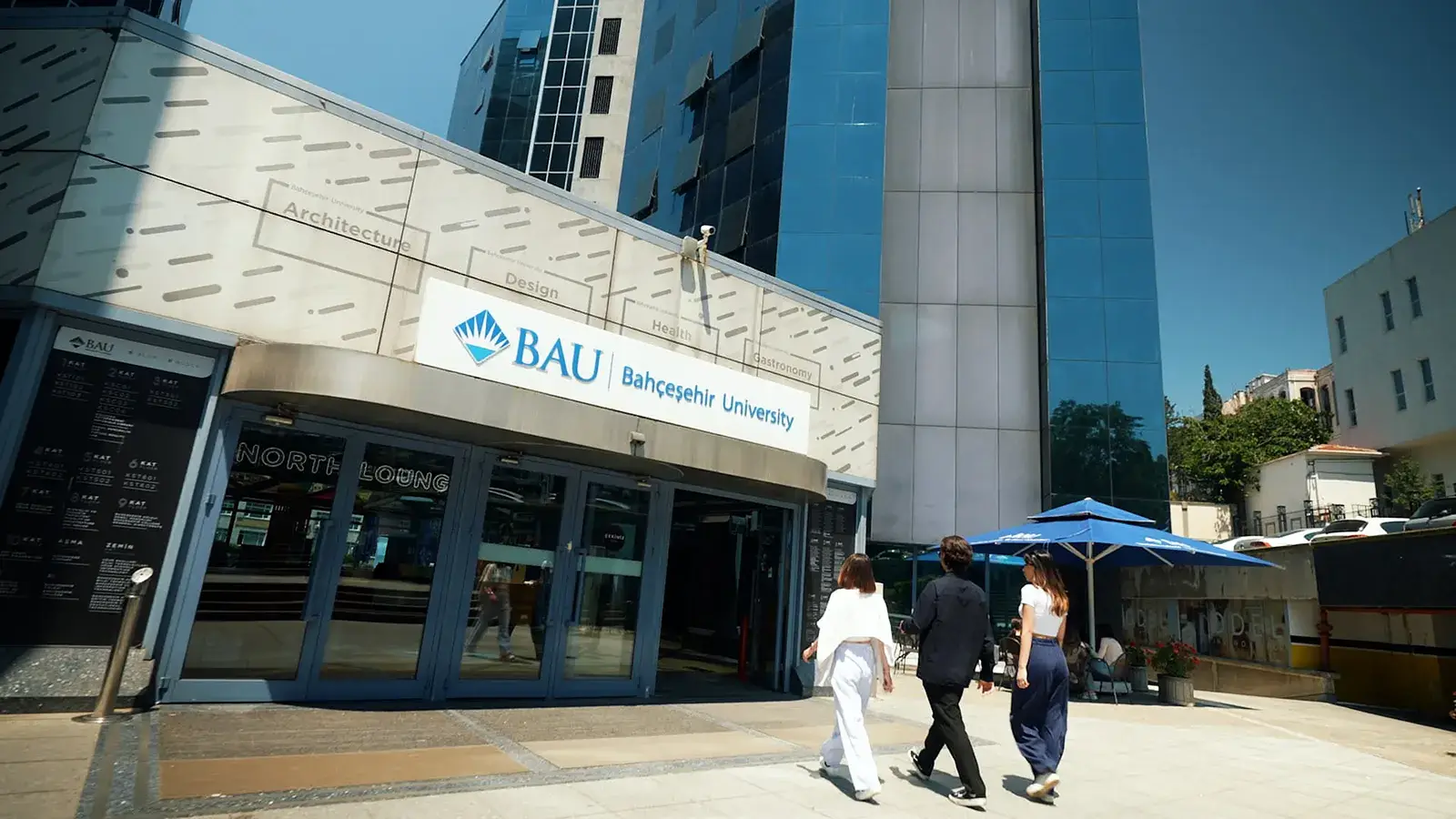
Some universities, including Bahcesehir University and Uskudar University, offer neuroscience in English as well as Turkish, while others offer it in Turkish. An English-medium option at a serious institution removes the single biggest barrier that affects many other specialised programs, and it aligns well with the international nature of scientific research, where English is the dominant language of publication, conferences, and collaboration. For an international student wanting to study neuroscience without first mastering Turkish, this is a real and valuable opportunity, and it reflects how science is actually conducted globally.
A Turkish-medium option is also available, at universities such as Istanbul Atlas and Istinye, and as a track at others. This suits students who already speak Turkish or who prefer to study in Turkish. For Turkish-medium study, the usual advice applies: if your Turkish is not strong, plan to reach roughly a B2 to C1 level, possibly through a one-year preparatory program, before you can study comfortably.
The practical takeaway is to decide early which language suits your goals and existing skills, then confirm the language of any specific program directly, since some universities offer both. If you do not speak Turkish and want to study now, the English-medium options at Bahcesehir and Uskudar are the natural focus. If you are comfortable in Turkish, the full range is open to you. If you would like help matching a program to your language profile and research interests, you can contact us and we will point you in the right direction.
Tip: if you do not speak Turkish and want to study now, the English-medium options at Bahcesehir and Uskudar are the natural focus — for Turkish-medium study, plan to reach roughly B2 to C1, possibly through a one-year preparatory program.
Universities Offering Neuroscience in Istanbul: Tuition Compared
Here are the Istanbul universities in our catalogue that offer neuroscience, with their levels, language, and tuition. Note the mix of English and Turkish options and the master’s-to-PhD pathways.
| University | City | Language | Levels | Tuition/yr |
|---|---|---|---|---|
| Uskudar University | Istanbul | English/Turkish | Master, PhD | $3,900 to $9,000 |
| Istanbul Atlas University | Istanbul | Turkish | Master | $4,766 to $6,674 |
| Istinye University | Istanbul | Turkish | Master, PhD | $8,500 to $12,500 |
| Bahcesehir University | Istanbul | English/Turkish | Master, PhD | $12,000 to $40,000 |

Four Istanbul universities in our catalogue offer neuroscience. Uskudar University, which has a particular strength and focus in the brain and behavioural sciences, offers both English and Turkish options at master’s and doctoral level, with tuition from a notably affordable $3,900. Istanbul Atlas University offers a Turkish-taught master’s in the mid-range, and Istinye University offers Turkish master’s and doctoral programs at a higher range. Bahcesehir University offers English and Turkish options across master’s and doctorate, at the premium end up to $40,000. Several also offer the PhD, giving a clear pathway for research careers. The full, filterable list, where you can compare these and check the latest details, is in the programs explorer.
Tuition Fees in Istanbul (2026)
For the 2026 intake, tuition for a master’s in neuroscience in Istanbul in our catalogue ranges widely, from about $3,900 to $40,000 per year, one of the broader spreads, reflecting differences in institution, level, language, and program. At the affordable end, Uskudar University offers options from around $3,900, including English-medium study. Istanbul Atlas sits in the mid-range, Istinye higher, and Bahcesehir at the premium end, with the upper figures reflecting its standing and English-medium programs.
A few things are worth understanding about these numbers. First, they are annual figures, so a two-year master’s costs roughly twice the yearly amount, before living expenses, and a doctorate accumulates over more years. Second, tuition can change from year to year, and the exact fee depends heavily on the specific program, level, and language, as well as any institutional discounts or funding, so always confirm the current figure directly. Third, given the wide range, it is worth matching the cost to your needs: an affordable, strong program like Uskudar’s may meet your goals without paying a premium, while a higher-priced option may be justified by particular strengths or resources you need.
For a fuller picture of how fees and funding work across Turkish universities, including the kinds of discounts and arrangements that are sometimes available, see our dedicated guide to scholarships and tuition. It is worth reading before you make a final decision, because the headline tuition is not always the whole story.
Cost of Living for Students in Istanbul
Tuition is only one part of your budget. As a rough guide, a student in Istanbul can expect to spend somewhere between $400 and $700 a month on living costs, depending heavily on lifestyle and, above all, on accommodation. Over a year, that works out to roughly $4,800 to $8,400, which deserves careful planning alongside tuition, especially over the full length of a master’s or, if you continue, a doctorate.
Accommodation is the biggest single variable. University dormitories and shared flats are the most economical options, while a private apartment in a central, sought-after neighbourhood costs considerably more. Where you live also affects your transport costs and your proximity to the laboratories and research facilities your study depends on, which is a real consideration for a research student. Food is reasonable if you cook and shop at local markets, and more expensive if you eat out frequently. Public transport in Istanbul is extensive and student discounts help keep costs down, but the city is large.
Other regular expenses include health insurance, which is required for your residence permit, mobile and internet, books, and personal spending. None of these is individually large, but together they add up, so build them into your plan. The overall message is that Istanbul is affordable by the standards of major international cities, but “affordable” still means budgeting carefully and being realistic about how your choices, especially housing, drive your monthly total.
Scholarships and Funding
Funding for postgraduate study in Türkiye comes from several directions, and it is worth understanding the landscape before assuming you will pay full price, particularly if you intend to continue to a PhD. The most prominent government scheme is Türkiye Bürsları, the national scholarship program, which is competitive and, for successful applicants, covers tuition along with a stipend and other benefits, including at master’s and doctoral levels. For postgraduate science study, this kind of support can be transformative, so it is well worth a serious application if your profile is strong.
Beyond the national scheme, universities often offer their own discounts, and for research students, particularly at doctoral level, funding and assistantships, since departments value good research students who contribute to laboratories and projects. It is always worth asking the university directly about the funding available for its programs, as the effective cost can be very different from the published tuition. For research-focused or doctoral study in particular, this conversation should be part of your decision from the start.
For a thorough overview of the options, eligibility, and how to approach funding strategically, read our guide to scholarships and tuition. And if you would like personalised help identifying which funding routes realistically fit your background and research plans, you can book a free consultation and we will talk it through honestly.
Recognition and Accreditation: An Honest Look
Recognition is a question every serious applicant should ask, and it deserves an honest answer. The universities in our catalogue operate within the Turkish higher education system and are recognised by YÖK, the Council of Higher Education, which governs and accredits universities in Türkiye. A degree from a YÖK-recognised university is a legitimate, accredited qualification, recognised internationally as a Turkish higher education degree.
For neuroscience specifically, recognition is generally less fraught than in the licensed clinical professions, because this is a research science rather than a regulated clinical practice. There is no separate professional licence to practise neuroscience as a researcher; the value of the degree lies in the knowledge and research skills it certifies and in what you can do with them, demonstrated through your research, publications, and scientific work. That makes the qualification relatively portable within the international world of science, and the English-medium options in particular align well with how research is conducted globally.
One honest distinction is worth noting. If your interest in neuroscience is ultimately connected to clinical practice, treating patients with neurological or psychiatric conditions, remember that this is a research degree, not a clinical qualification, and clinical practice requires separate medical training and licensing specific to each country. But for the core destinations of neuroscience, research and academia, and research-adjacent roles in industry, what matters is your scientific ability and accomplishment, demonstrated through your work, rather than a clinical licence. For an academic or research career, an accredited degree plus strong research is what counts, and that is achievable in Istanbul.
Admission Requirements
Admission requirements vary by university, but for a master’s in neuroscience you can expect most of the following. First, you need a relevant bachelor’s degree, and because the field is interdisciplinary, programs accept graduates from a range of backgrounds: medicine, biology, molecular biology, psychology, pharmacy, biomedical engineering, and other life, health, or related quantitative sciences. Your background should provide a scientific foundation the master’s can build on. A strong academic record strengthens your application, particularly for the thesis track or if you intend to continue to a PhD.
You will need to submit your academic transcripts and degree certificate. For English-medium programs, you will typically need to demonstrate English proficiency, often through a test such as IELTS or TOEFL, unless you qualify for an exemption. For Turkish-medium study, you should expect to demonstrate Turkish proficiency or complete a preparatory year. For thesis-track or research-oriented admission, a statement of purpose explaining your research interests, and sometimes a preliminary research direction, may be expected, along with letters of recommendation, and some programs require an interview.
Requirements differ between institutions and tracks and can change between intakes, so always confirm the current, exact list with the specific university or with us before you assemble your file. Given the interdisciplinary nature of the field, if your first degree is in a less obviously related area, it is worth confirming your eligibility and any prerequisites directly. If you would like help checking your eligibility and shaping a strong application, get in touch and we will give you an honest assessment.
How to Apply: Timeline
While exact dates vary, a realistic timeline for a master’s intake looks something like this. Start your research roughly nine to twelve months before you intend to begin, comparing programs and their research focuses, deciding between English and Turkish options, weighing the universities in our catalogue, and, if you lean toward research or a PhD, considering the faculty and laboratories in your area of interest. If you need a Turkish preparatory year, factor it into your whole schedule.
Six to nine months before you start, prepare your documents. Gather and, where required, translate and certify your transcripts and degree certificate, sit any language test you need, sort out your passport, and write your statement of purpose, shaping a research direction if you are aiming at the thesis track. If you are applying for scholarships such as Türkiye Bürsları, note that these often have their own earlier deadlines, so check them well in advance.
Three to six months before, submit your applications. Many private universities have rolling or multiple intake windows, but applying earlier gives you more time for the visa and residence steps. Once you receive an offer and an acceptance letter, you move into the visa and travel phase, which we cover next. Throughout, keep digital and physical copies of everything, and confirm each requirement directly with the university. If managing this feels overwhelming, that is exactly the kind of thing we help with, so reach out and we can guide you step by step.
Student Visa and Residence Permit
Once you have an official acceptance letter from a Turkish university, the visa and residence process follows a well-trodden path, but it requires attention to detail and timing. The first step for most international students is to apply for a student visa at the Turkish embassy or consulate in your home country. You generally cannot enter Türkiye to study long-term on a tourist arrangement and then convert it, so the student visa from your home country is the proper route. You will need your acceptance letter, a valid passport, proof of funds, and the other documents the consulate specifies.
After you arrive in Türkiye and settle in, you must apply for a residence permit, the ikamet, within the period set by the authorities. This legalises your stay for the duration of your studies. The application involves registering with the migration authority, providing your acceptance and enrolment documents, proof of accommodation, valid health insurance, and the relevant fees. Your university’s international student office is usually a major help here and handles these applications routinely for incoming students.
The two pieces of advice that matter most are to start early and to keep your documents in order. Visa and residence processes can take time, and missing a deadline or a required document causes avoidable stress. Keep multiple copies of everything, follow the instructions your university gives you, and ask for help when you are unsure. If you want a clearer overview of what studying in Türkiye involves end to end, our study in Turkey guide pulls the practical pieces together in one place.
Careers After a Master’s in Neuroscience
A master’s in neuroscience opens onto a range of careers centred on research and the scientific understanding of the brain. The most direct path is research itself, in academia, research institutes, and laboratories, studying the brain and nervous system. For this path, the master’s is typically a step toward a PhD, which is the standard qualification for an independent research career, and several universities in our catalogue offer that doctoral pathway, allowing you to continue at the same institution.
Beyond academic research, neuroscience expertise is valued in several industries. The pharmaceutical and biotechnology industries employ neuroscientists in research and development, particularly for treatments targeting the nervous system, and in clinical research roles supporting trials. The growing field linking neuroscience and technology, including brain-computer interfaces, neurotechnology, and the intersection with artificial intelligence, offers emerging opportunities for those with the right skills. Roles in scientific communication, data analysis, and research support also draw on neuroscience training.
It is honest to say that the fullest research careers in neuroscience usually require a PhD, so the master’s is often a stepping stone rather than an endpoint for those aiming at independent research. It is also worth repeating that neuroscience is a research science, so clinical careers treating patients require separate medical training. That said, the research skills the master’s builds, experimental design, data analysis, scientific reasoning, and technical methods, are valuable and transferable well beyond neuroscience itself. The field’s growing importance to medicine, mental health, technology, and our understanding of ourselves gives it a promising trajectory. As always, plan with a clear sense of whether you are aiming at research, industry, or further study.
How to Choose the Right Program
With several universities offering neuroscience in Istanbul, choosing well means matching a program to your goals. Start with language and level: decide whether you want or need English-medium study, whether you are aiming at a master’s or eventually a PhD, and filter accordingly. If you do not speak Turkish, the English-medium options at Uskudar and Bahcesehir are the natural focus; if you are comfortable in Turkish, the full range is open.
Next, and crucially for a research field, weigh the research focus and resources of each program. Neuroscience is broad, and programs differ in their emphasis, some more molecular and cellular, others more cognitive, clinical, or computational. Look closely at the faculty’s research areas, the laboratories and methods available, and whether they align with your interests, since this shapes what you can actually study. The presence of a research environment and potential supervisors in your area of interest is especially important if you intend to pursue a thesis or continue to a PhD.
Then weigh the practical factors: total cost including living expenses, which varies widely in this field, the funding available especially if you continue to research, the thesis versus non-thesis decision based on whether you lean toward research, and the campus and its facilities. Uskudar’s particular strength in the brain and behavioural sciences, and its affordable English option, make it a natural starting point for many, but the right choice depends on your specific interests and goals. If you would like a second opinion that weighs all of this against your situation, that is precisely what we do, so book a free consultation.
Common Mistakes Applicants Make
A few recurring mistakes are worth flagging. The first, and most important, is confusing neuroscience with clinical neurology or psychiatry. Neuroscience is a research science, not clinical training to diagnose and treat patients, which requires a medical degree and specialist training. Applicants sometimes pursue neuroscience expecting it to lead to clinical practice; be clear that it leads to research, and if clinical practice is your goal, medicine is the route.
“A neuroscience master's leads to clinical practice as a neurologist or psychiatrist.”
Neuroscience is a research science — clinically diagnosing and treating patients requires a full medical degree followed by specialist training.
A second mistake is not matching the program’s research focus to your interests. Neuroscience is broad, and a program strong in one area may be less suited to another. Some applicants choose by name or cost without checking whether the research focus, faculty, and laboratories fit their interests, which matters greatly in a research field, especially if you intend to do a thesis or continue to a PhD. A third mistake is overlooking the language choice; since both English and Turkish options exist, confirm which a specific program uses before applying.
Other frequent missteps include not investigating funding for what may become a multi-year research path, choosing on price alone in a field with a very wide cost range, and underestimating the value of continuing to a PhD for the fullest research careers. Finally, many applicants fail to confirm current details, including the exact language, level, and research focus, directly with the university. These change, so always verify before you commit. Avoiding these mistakes will save you time, money, and disappointment.
Related Programs You Might Consider
If you are weighing neuroscience against neighbouring fields, several of our other guides may help you compare. If your interest is more in the mind, behaviour, and mental processes than the biology of the brain specifically, our guide to studying psychology in Turkey covers a closely related field. If you are drawn to the molecular and genetic foundations of life that underpin much of neuroscience, our guide to molecular biology and genetics in Turkey is a useful companion.
If your ultimate interest is clinical, treating patients with conditions of the brain and nervous system, the route is a full medical degree, covered in our guide to studying medicine in Turkey, followed by specialist training. And if you are drawn to the laboratory and diagnostic side of the health sciences more broadly, our guide to medical microbiology in Istanbul covers a related research-and-laboratory path. Reading across these guides can help you confirm that neuroscience really is the right fit, or point you toward a neighbouring field. The programs explorer lets you compare all of these side by side. There is also an administrative side to healthcare: our guide to the associate in health information systems in Istanbul introduces the two-year program behind hospital data and records.
Frequently Asked Questions
Can I study neuroscience in English in Istanbul?
Yes. Some universities, including Uskudar University and Bahcesehir University, offer neuroscience in English as well as Turkish, which makes the field accessible to international students who do not work in Turkish. This aligns well with the international nature of scientific research. Turkish-medium options are also available at other universities for those who prefer them.
Do I need a medical degree to study neuroscience?
No. Neuroscience is interdisciplinary and accepts graduates from a range of backgrounds, including biology, molecular biology, psychology, pharmacy, biomedical engineering, and other life, health, or related sciences, as well as medicine. What matters is a relevant scientific foundation and a genuine interest in the brain and nervous system. You do not need to be a medical graduate.
Is neuroscience the same as becoming a neurologist?
No. Neuroscience is a research science focused on understanding the brain and nervous system. Becoming a neurologist, neurosurgeon, or psychiatrist, who clinically diagnose and treat patients, requires a full medical degree followed by specialist training, which is a separate path. A neuroscience master’s prepares you for research, not clinical practice.
How much does it cost?
In our catalogue, master’s tuition in Istanbul ranges widely, from about $3,900 to $40,000 a year, driven by the institution, level, and language. Uskudar University offers affordable options, including in English, from around $3,900, while premium programs at Bahcesehir reach much higher. On top of tuition, budget around $400 to $700 a month for living costs, and ask about funding, which can substantially reduce the cost.
How long does the master’s take, and do I need a PhD?
The master’s takes about two years of full-time study. For an independent research career in neuroscience, a PhD is generally the standard qualification, so the master’s is often a stepping stone, and several universities in our catalogue offer the doctoral pathway. Whether you need a PhD depends on your goals: research careers usually require it, while some industry and research-support roles may not.
What jobs can I do after graduating?
Common destinations include research in academia and research institutes (often after continuing to a PhD), roles in the pharmaceutical and biotechnology industries, clinical research support, the emerging field of neurotechnology and brain-computer interfaces, and scientific communication and data analysis. The research skills are also transferable beyond neuroscience. Clinical careers treating patients require separate medical training.
Which university is best for neuroscience in Istanbul?
The right choice depends on your interests, language, and budget rather than any single ranking. Uskudar University has a particular strength and focus in the brain and behavioural sciences and offers affordable English and Turkish options, making it a natural starting point for many. Other universities offer their own strengths and price points. Compare the research focus, faculty, and facilities in your area of interest, which matter most in a research field.
Choosing where and how to pursue a master’s in neuroscience is a significant decision, and you do not have to make it alone. If you would like honest, personalised guidance on which program fits your background, research interests, language, and budget, book a free consultation. You can also browse and compare every option, including the universities discussed here, in our programs explorer.
Have a question about this article?
Our advisors will guide you for free so you can choose the best path.
Free consultationWhy students choose us
Real partnerships, honest pricing, and support that doesn't stop at admission.
Scholarships & smart discounts
We match you with merit scholarships (often 25–100%) plus sibling and early-payment discounts, so you pay the lowest fair price for your program.
Free, end-to-end guidance
As an authorized agent, our advice and application support cost you nothing. We prepare and submit everything for you — no guesswork.
57 partner universities
Direct partnerships across Türkiye and Northern Cyprus with 5,500+ programs. We find the program that fits you, not just any offer.
Transparent, honest fees
Every tuition figure comes straight from our live catalog and is shown upfront. No hidden costs, no surprises before you commit.
No entrance exam needed
Most private universities admit you on your academic record — many fully in English — so you can apply without YÖS or SAT.
With you to visa & arrival
From choosing a program to your student visa, residence permit and settling in, we stay by your side at every step.